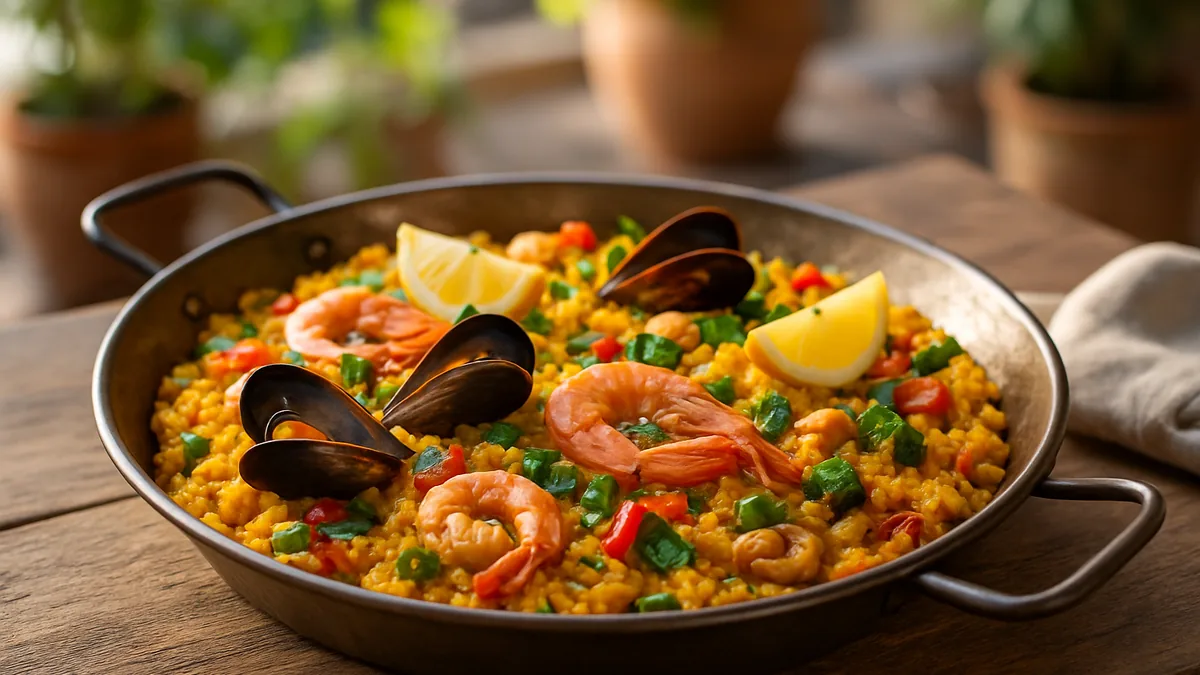
Spanish paella is a traditional rice dish originating from Valencia, Spain, renowned for its vibrant saffron-infused rice and combination of proteins and vegetables cooked in a wide, shallow pan called a paellera. It is a cultural symbol and a communal meal that brings together family and friends. The classic Valencian version includes chicken, rabbit, and green beans, but seafood paellas have become popular worldwide.
Home cooks often struggle with paella because it requires precise control over liquid absorption and heat distribution to achieve the hallmark texture, especially the socarrat—the crispy caramelized rice bottom. Overcooked rice becomes mushy, and insufficient heat prevents socarrat formation. Uneven cooking can leave some ingredients underdone while others dry out.
This recipe provides a detailed, step-by-step approach to making Spanish paella with saffron, chicken, seafood, and vegetables, guiding you through ingredient preparation, cooking sequences, and timing to achieve authentic flavor and texture in about 75 minutes. It yields 4 servings and includes clear instructions on achieving the socarrat crust, seasoning balance, and ingredient layering.
- Prep25 min
- Cook50 min
- Total1 hr 15 min
- Serves4 servings
- CourseMain Course
- CuisineSpanish
Written by Anisha Akter · Updated 12 September 2026
Why This Spanish Paella Recipe Works
- Sautéing ingredients in stages develops complex flavors through Maillard reactions without overcrowding the pan, ensuring even browning.
- Simmering rice uncovered allows precise control of liquid absorption, preventing mushy texture by maintaining the perfect ratio of broth to rice.
- Adding saffron steeped in warm broth disperses its flavor and color evenly throughout the rice, maximizing aromatic compounds.
- Using a wide, shallow paella pan promotes even heat distribution and moisture evaporation critical for forming the socarrat crust.
- Resting the paella off heat allows residual steam to finish cooking the rice gently and helps the socarrat consolidate without burning.
Ingredients and Why They Matter
The following ingredients are measured to balance authentic flavor and texture for four servings of Spanish paella.
- 1½ cups (300 g) bomba or short-grain paella rice
- 4 cups (960 ml) chicken broth, low sodium
- ½ teaspoon saffron threads
- 2 tablespoons (30 ml) olive oil, preferably extra virgin
- 1 medium onion, finely chopped (about 150 g)
- 1 medium red bell pepper, sliced into strips (about 120 g)
- 2 cloves garlic, minced
- 1 medium tomato, grated or finely chopped (about 100 g)
- 1 teaspoon smoked paprika (pimentón)
- ½ teaspoon salt, adjust to taste
- ¼ teaspoon freshly ground black pepper
- 1½ cups (225 g) skinless, boneless chicken thighs, cut into 1-inch pieces
- ½ cup (75 g) green beans, cut into 1-inch pieces
- ½ cup (75 g) peas, fresh or frozen
- 8 large shrimp, peeled and deveined, tails on
- 8 mussels, cleaned and debearded
- 1 lemon, cut into wedges for serving
- Fresh flat-leaf parsley, chopped, for garnish
- 1 wide, shallow paella pan, about 14-16 inches (35-40 cm) in diameter
Key Ingredient Notes
Bomba rice — Bomba rice is a short-grain variety that absorbs liquid without bursting, allowing each grain to remain separate and firm, essential for paella’s texture; substituting with other short-grain rice like Arborio will result in a creamier texture more like risotto, which is not traditional.
Saffron threads — Saffron provides the distinctive aroma, color, and subtle bitterness that define paella; it contains crocin and safranal compounds that dissolve in warm liquid to infuse rice evenly. Use high-quality saffron threads, and avoid powder to prevent adulteration; turmeric is a common but inadequate substitute as it lacks the flavor complexity.
Paella pan — A wide, shallow paella pan (about 14-16 inches diameter) ensures even heat distribution and promotes evaporation, crucial for forming the socarrat; using a deep or small pan traps steam and prevents crust formation, altering texture significantly.
Chicken broth — Using homemade or high-quality low-sodium chicken broth provides a savory base that complements the paella ingredients without overpowering them; water or pre-seasoned broth can lead to bland or unbalanced flavor. Vegetable broth can be substituted for a pescatarian version but changes the flavor profile.
Step-by-Step Instructions
- Start by soaking saffron threads in ¼ cup (60 ml) of warm chicken broth to extract maximum color and flavor; set aside for at least 15 minutes before cooking.
- Heat the paella pan over medium-high heat and add olive oil, swirling to coat the surface evenly; this prevents sticking and promotes even cooking.
- Add chicken pieces in a single layer and sear without moving them for 4-5 minutes until golden brown on one side; then turn to brown evenly on all sides; remove and set aside.
- In the same pan, add chopped onion and sauté over medium heat until translucent and softened, about 5 minutes, releasing sweetness without browning.
- Add minced garlic and sliced red bell pepper, cooking for another 2 minutes until fragrant and slightly softened, enhancing aromatic complexity.
- Add grated tomato and smoked paprika, cooking the mixture down until most liquid evaporates and the base thickens, about 6-8 minutes; this concentrates flavor and reduces acidity.
- Return the browned chicken to the pan along with green beans and peas, stirring briefly to combine and warm through, distributing ingredients evenly.
- Pour in the remaining chicken broth along with saffron-infused broth, stir gently to combine, and bring to a simmer; this step distributes saffron compounds through the liquid evenly.
- Evenly spread the rice in a thin layer over the broth without stirring; distributing rice evenly prevents clumping and ensures uniform cooking.
- Simmer uncovered over medium heat without stirring for 15 minutes; this allows rice to absorb broth and begin forming a crust on the bottom as moisture evaporates.
- Arrange shrimp and mussels on top of the rice during the last 10 minutes of cooking, allowing seafood to steam and cook through without overcooking.
- Increase heat to medium-high for the final 5 minutes to encourage socarrat formation; listen for a subtle crackling sound indicating the crust is forming; avoid burning by monitoring closely.
- Remove from heat and cover loosely with a clean kitchen towel; let rest for 5-10 minutes to allow residual steam to finish cooking and the socarrat to set.
- Garnish with chopped parsley and lemon wedges before serving; squeezing lemon over enhances brightness and balances richness.
Food safety note: To ensure food safety, cook chicken to an internal temperature of 165 °F (74 °C) and seafood until opaque and firm. Avoid cross-contamination by using separate cutting boards for raw meat and seafood. For more details on safe cooking temperatures, see FoodSafety.gov.
Common Mistakes and How to Avoid Them
Adding rice too early
Adding rice before the broth is simmering traps starch and leads to uneven cooking and clumping; always add rice to hot broth to ensure immediate absorption and even cooking.
Stirring rice during cooking
Stirring rice after adding broth releases starch, making the dish mushy and preventing socarrat formation; avoid stirring rice once broth is added to preserve grain integrity.
Overcrowding the pan
Overloading the paella pan with ingredients lowers the pan temperature and causes steaming rather than sautéing or browning, affecting flavor and texture; use correct pan size and portion ingredients to maintain even heat and moisture evaporation.
Using wrong rice type
Using long-grain or non-absorbent rice results in dry, separate grains without desired creaminess and socarrat; use bomba or similar short-grain rice designed for paella to ensure proper liquid absorption and texture.
Tips for Best Results
- Toast saffron threads briefly in a dry pan before soaking to release more aroma and flavor.
- Use a burner that matches the diameter of your paella pan to ensure even heat distribution and prevent hot spots.
- Clean mussels properly by scrubbing and debearding to avoid grit in the dish.
- Add seafood towards the end to prevent overcooking and maintain texture.
- Use fresh lemon wedges to brighten the flavors immediately before eating, balancing the rich rice and seafood.
Variations to Try
Seafood-only paella — Omit chicken and replace with additional seafood such as clams, squid, and fish fillets, adjusting cooking times accordingly to prevent overcooking delicate seafood.
Vegetarian paella — Replace chicken and seafood with artichoke hearts, roasted red peppers, and a variety of seasonal vegetables; use vegetable broth and add smoked paprika for depth.
Paella with rabbit — Include cut rabbit pieces along with chicken for a traditional Valencian mix; brown rabbit first and adjust cooking time to ensure tenderness.
Gluten-free paella — Ensure all ingredients, including broth and spices, are certified gluten-free; paella rice is naturally gluten-free, so no substitutions needed.
Storage, Freezing and Reheating
- Store leftover paella in an airtight container in the refrigerator for up to 2 days; rice texture will soften upon refrigeration.
- Reheat gently in a wide pan over low heat with a splash of broth to restore moisture, avoiding microwaving which can unevenly heat and dry out the rice.
- Paella does not freeze well because rice texture deteriorates and seafood can become rubbery; if freezing is necessary, omit seafood and add it fresh when reheating.
Frequently Asked Questions
What type of rice is best for Spanish paella?
Bomba rice or similar short-grain rice is best for paella because it absorbs liquid well without bursting, maintaining separate grains and allowing the formation of socarrat.
How do I achieve the socarrat without burning the paella?
To create socarrat, increase heat in the final minutes to medium-high and listen for a subtle crackling; do not stir the rice, and remove from heat before any burning odor appears.
Can I make paella without a paella pan?
While a wide, shallow paella pan is ideal for even heat and socarrat, a large heavy skillet or frying pan can work if it is at least 12 inches in diameter and heats evenly.
Is it necessary to soak saffron before adding?
Soaking saffron in warm broth before adding helps to evenly distribute its color and flavor throughout the rice, maximizing aromatic compounds.
How long can I store leftover paella?
Leftover paella should be refrigerated promptly and consumed within 2 days to maintain safety and quality; avoid storing longer to prevent bacterial growth.
Can I prepare paella ingredients in advance?
You can chop vegetables and measure spices ahead of time, but add rice and broth fresh when cooking; avoid pre-cooking seafood or rice to preserve texture.

Hi! I’m the creator of scooks (Simple Cooks).I share easy, practical recipes and simple cooking ideas to help you enjoy everyday home cooking with confidence.
Happy cooking! 🍽️