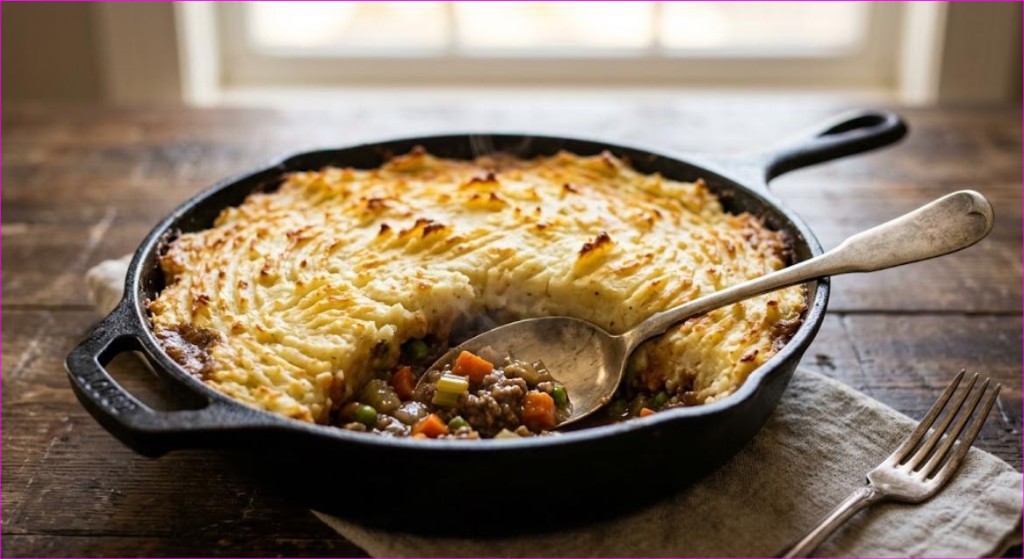
Shepherd’s pie is lamb under mashed potato. Cottage pie is beef under mashed potato. The distinction matters to anyone who grew up in Britain and matters not at all to the flavour, but it is worth knowing before you argue about it in a comment section. This recipe is for the lamb version, with a note on how to make the beef one.
The two things that separate a good shepherd’s pie from a mediocre one are the thickness of the filling and the behaviour of the topping. A loose filling means the mash sinks into it and the pie has no layers. A wet, over-worked mash spreads thin and never browns. Get both right and you have one of the best cold-weather dinners in the repertoire.
This takes about 70 minutes and serves six from a standard 9×13 dish or a 3-quart casserole. The filling can be made two days ahead, which makes it a practical thing to assemble after work.
- Prep25 min
- Cook45 min
- Total1 hr 10 min
- Serves6 servings
- CourseMain Course
- CuisineBritish
Written by Anisha Akter · Updated 23 September 2026
Why This Shepherds Pie Recipe Works
- The lamb is browned hard before any liquid goes in, building the fond that gives the gravy its depth.
- A proper roux-thickened gravy holds its shape under the potato instead of soaking into it.
- The mash is made with warm milk and butter and stopped as soon as it is smooth, so it stays fluffy rather than gluey.
- An egg yolk in the mash helps it set and brown into a burnished crust.
- Forking ridges across the top creates the crisp peaks that are the best part of the dish.
Ingredients and Why They Matter
Ground lamb is what makes this a shepherd’s pie. Everything else is adjustable, but here are the choices that matter.
- 2 lb (900 g) russet or Yukon Gold potatoes, peeled and cut into 2-inch chunks
- 5 tbsp (70 g) unsalted butter, divided
- 1/2 cup (120 ml) whole milk, warmed
- 1 egg yolk
- 1 1/2 lb (680 g) ground lamb
- 1 large onion, finely diced
- 2 carrots, diced small
- 3 cloves garlic, minced
- 2 tbsp tomato paste
- 2 tbsp all-purpose flour
- 1 1/4 cups (300 ml) beef or lamb stock, warm
- 1 tbsp Worcestershire sauce
- 1 tsp fresh thyme leaves
- 1 tsp fresh rosemary, chopped
- 1 cup (140 g) frozen peas
- Salt and freshly ground black pepper
Key Ingredient Notes
Ground lamb. Lamb has a distinctly grassy, mineral flavour that stands up to rosemary and Worcestershire in a way beef does not. If lamb is hard to find or too strong for your table, ground beef makes an excellent cottage pie by the same method.
Russet potatoes. High-starch russets mash into a light, fluffy texture that holds ridges under the broiler. Waxy potatoes like red bliss turn dense and sticky when mashed. Yukon Golds sit in between and are a good compromise.
Tomato paste. Two tablespoons cooked until it darkens gives the gravy colour and a savoury backbone. Without it the filling tastes thin and greyish, no matter how long you simmer it.
An egg yolk in the mash. The yolk adds fat and protein that set in the oven, giving the topping a golden, slightly crisp surface rather than a pale steamed one. It is a classic French trick and it works.
Step-by-Step Instructions
- Put the potatoes in a large pot, cover with cold salted water, bring to the boil and simmer 15 to 18 minutes until a knife slides in with no resistance. Starting in cold water means they cook evenly from the outside in.
- Drain the potatoes well and return them to the hot dry pot for a minute to steam off surface moisture. Mash them, then beat in 4 tablespoons of butter, the warm milk and the egg yolk. Season generously with salt and pepper and set aside.
- Heat the remaining tablespoon of butter in a large skillet over high heat. Add the lamb in one layer and leave it for 3 minutes to brown before breaking it up. Cook 5 minutes more, then drain off all but 2 tablespoons of fat.
- Reduce the heat to medium. Add the onion and carrot and cook 7 minutes until softened. Add the garlic and cook 30 seconds more.
- Stir in the tomato paste and cook 2 minutes, scraping the bottom, until it darkens to a brick colour.
- Sprinkle over the flour and stir for 1 minute to cook it out.
- Add the warm stock gradually, stirring to keep it smooth, then the Worcestershire, thyme and rosemary. Simmer 8 to 10 minutes until the gravy is thick enough to coat the meat rather than pool around it.
- Stir in the frozen peas, taste and adjust the seasoning, then take the pan off the heat. Heat the oven to 400°F (200°C).
- Spread the filling in a 3-quart baking dish and level it. Let it cool for 10 minutes so the mash does not sink straight in.
- Spoon the mash over the filling in dollops around the edge first, then fill in the middle, and spread it gently to the edges so it seals all the way around. Drag a fork across the surface to create ridges.
- Bake for 30 minutes, then broil for 3 to 5 minutes until the ridges are deep golden. Rest 10 minutes before serving.
Common Mistakes and How to Avoid Them
Filling that is too loose If the gravy pools, the mash sinks and you get one muddled layer instead of two. Simmer until the filling holds a shape when you push it to one side of the pan with a spoon.
Spreading mash onto hot filling Hot filling melts the base of the mash and pulls it down. Let the filling sit for ten minutes, then place the mash in dollops rather than dumping it in the middle and pushing outward.
Over-mashing the potatoes Beating potatoes with a mixer or food processor ruptures the starch cells and produces a gluey paste that will never brown. Use a ricer or a hand masher and stop the moment they are smooth.
Not sealing the mash to the edges If the topping does not touch the dish all the way around, the filling bubbles up over the sides and the top slides. Spread it right to the rim and press gently.
Tips for Best Results
- Warm the milk before adding it to the potatoes. Cold milk cools the mash and makes it harder to beat smooth without over-working it.
- Add a handful of grated sharp cheddar to the mash if you like. It is not traditional but it browns beautifully.
- If your filling is stubbornly thin, mix a teaspoon of cornstarch with a tablespoon of cold water and stir it in, simmering for a minute.
- Assemble in individual ramekins for a dinner party. They bake in 20 minutes and look far more considered than a scoop from a dish.
- Put the dish on a baking sheet. Shepherd’s pie almost always bubbles over at the edges.
Variations to Try
Cottage pie. Use ground beef instead of lamb and swap the rosemary for a bay leaf. Everything else stays the same.
Guinness shepherds pie. Replace half the stock with stout. Simmer an extra five minutes to cook off the alcohol and concentrate the malt flavour.
Vegetarian shepherds pie. Use brown or green lentils with finely chopped mushrooms in place of the lamb, and vegetable stock with a teaspoon of soy sauce for depth.
Sweet potato topping. Swap half the russets for sweet potato. The topping browns faster, so watch it under the broiler.
Storage, Freezing and Reheating
Refrigerate covered for up to 4 days. Reheat portions in a 350°F oven for 25 minutes, covered for the first 15.
Freeze assembled and unbaked for up to 3 months. Bake from frozen at 375°F for 75 minutes, covering the top if it browns early.
The filling alone freezes very well for 3 months, so make a double batch and freeze half for a much faster assembly later.
What to Serve With It
Frequently Asked Questions
What is the difference between shepherds pie and cottage pie?
Shepherd’s pie is made with lamb; cottage pie is made with beef. The name comes from shepherds tending sheep. The method and everything else about the dish is identical.
Why did my mashed potato topping sink?
The filling was too loose or too hot when the mash went on. Thicken the gravy properly and let the filling cool for ten minutes before topping.
Can I make shepherds pie ahead of time?
Yes. Assemble it completely, cover, and refrigerate up to two days. Bake from cold at 400°F for 45 minutes instead of 30.
What potatoes are best for the topping?
Russets give the fluffiest, most brownable mash. Yukon Golds are creamier and still work well. Avoid waxy red potatoes, which go sticky.
Should shepherds pie have cheese on top?
Traditionally no, but a layer of grated cheddar is extremely common in British home cooking and browns well. It is a matter of household preference, not correctness.
Can I use leftover roast lamb?
Yes. Chop it finely, skip the browning step, and add it with the stock. You will need a little extra fat in the pan since cooked lamb renders less.

Hi! I’m the creator of scooks (Simple Cooks).I share easy, practical recipes and simple cooking ideas to help you enjoy everyday home cooking with confidence.
Happy cooking! 🍽️