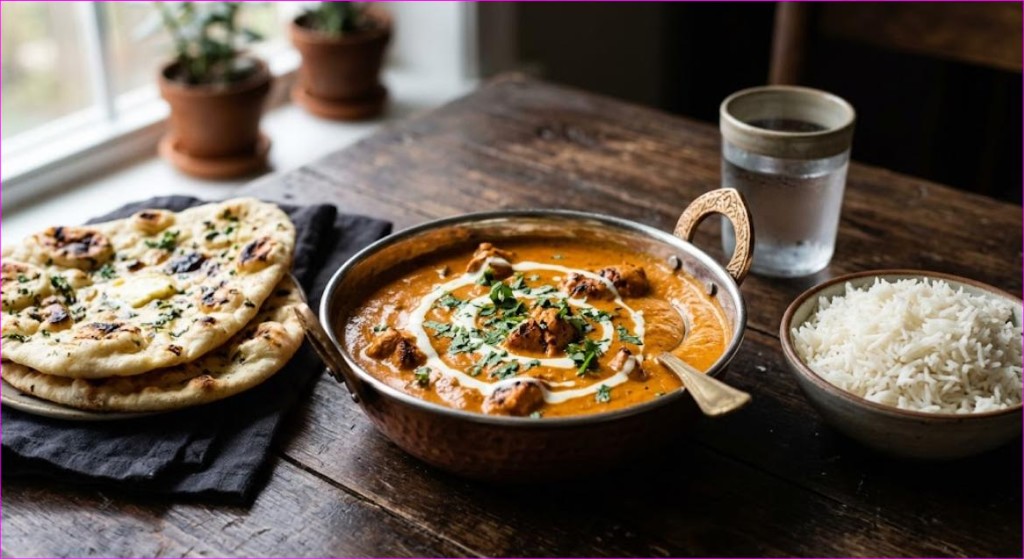
Butter chicken, or murgh makhani, was created in Delhi in the 1950s as a way to use leftover tandoori chicken. Cooks simmered the dry roasted pieces in a tomato, butter and cream sauce, and the result became one of the most recognised Indian dishes in the world. Its appeal is the balance: the sauce is rich but sharp, gently spiced rather than hot, and smooth enough to coat every piece.
Two things separate a good home version from a disappointing one. The first is the marinade — yogurt with acid and spice, given enough time to tenderise the chicken and carry flavour past the surface. The second is the sauce texture. Authentic butter chicken sauce is blended completely smooth, which is why restaurant versions have that velvet quality that a chunky home sauce never achieves.
This version takes about an hour plus marinating time, serves five with rice or naan, and gives you a sauce that holds together on reheating. Below is the full method, including the specific step where most home cooks accidentally split the cream.
- Prep25 min
- Cook35 min
- Total1 hr
- Serves5 servings
- CourseMain Course
- CuisineIndian
Written by Anisha Akter · Updated 23 September 2026
Why This Butter Chicken Recipe Works
- A yogurt and lemon marinade tenderises the chicken and seasons it all the way through, not just on the surface.
- The chicken is browned separately and added back at the end, so it never overcooks in the simmering sauce.
- The tomato base is blended smooth before the cream goes in, which is the defining texture of this dish.
- Whole spices are bloomed in butter first, releasing fat-soluble flavour compounds that water-based cooking cannot.
- Cream is added off the boil, which stops it separating into an oily, grainy sauce.
Ingredients and Why They Matter
Kashmiri chili powder is worth seeking out — it gives the sauce its signature red colour with very little heat. Notes on the other key items follow.
- 1 1/2 lb (680 g) boneless chicken thighs, cut into 1 1/2-inch pieces
- 1/2 cup (120 ml) plain full-fat yogurt
- 1 tbsp lemon juice
- 1 tbsp ginger-garlic paste
- 1 tsp Kashmiri chili powder
- 1 tsp garam masala
- 1/2 tsp ground turmeric
- 5 tbsp (70 g) butter, divided
- 1 tbsp neutral oil
- 1 large onion, roughly chopped
- 1 tbsp ginger-garlic paste (for the sauce)
- 1 tsp ground cumin
- 1 tsp ground coriander
- 1 tsp Kashmiri chili powder (for the sauce)
- 28 oz (800 g) can whole peeled tomatoes
- 1/2 cup (120 ml) heavy cream
- 1 tbsp honey or sugar
- 1 tsp dried fenugreek leaves (kasuri methi), crushed
- Salt to taste
- Fresh cilantro and basmati rice or naan, to serve
Key Ingredient Notes
Chicken thighs. Thighs stay tender and juicy through marinating, searing and simmering. Breast meat dries out at the searing stage and has no fat to protect it in the sauce. If you must use breast, cut the pieces larger and sear them for less time.
Kashmiri chili powder. This is a mild chili with intense red colour, and it is what makes butter chicken look the way it does without making it hot. Regular cayenne will give you heat and a duller colour. Paprika plus a pinch of cayenne is the closest substitute.
Kasuri methi (dried fenugreek leaves). Crushed between your palms and added at the end, this gives butter chicken its distinctive slightly bitter, maple-like aroma. It is the ingredient most home versions omit and the one most responsible for tasting restaurant-authentic.
Full-fat yogurt. The fat protects the yogurt proteins during marinating and cooking. Low-fat yogurt breaks down and makes the marinade watery, which stops it clinging to the chicken.
Step-by-Step Instructions
- Mix the yogurt, lemon juice, 1 tablespoon ginger-garlic paste, 1 teaspoon Kashmiri chili powder, garam masala, turmeric and 1 teaspoon salt in a bowl. Add the chicken and turn to coat every piece.
- Cover and refrigerate for at least 1 hour, ideally 4 to 6. Overnight is fine. The acid and the enzymes in yogurt work slowly, and longer marinating produces noticeably more tender chicken.
- Heat 1 tablespoon of butter and the oil in a large skillet over high heat. Shake the excess marinade off the chicken and sear it in two batches, 3 minutes per side, until charred in places. It does not need to be cooked through. Remove and set aside.
- Lower the heat to medium. Add 2 tablespoons of butter, then the chopped onion, and cook 8 minutes until soft and lightly golden.
- Add the second tablespoon of ginger-garlic paste and cook 1 minute. Add the cumin, coriander and Kashmiri chili powder and stir for 30 seconds in the hot butter to bloom them.
- Add the canned tomatoes, crushing them with the spoon, plus 1/2 cup water and 1 teaspoon salt. Simmer uncovered for 15 minutes until the sauce darkens and thickens and the oil starts to separate at the edges.
- Let the sauce cool for 5 minutes, then blend until completely smooth. Use an immersion blender or transfer to a jug blender in batches, venting the lid. For the silkiest result, pass it through a sieve back into the pan.
- Return the sauce to low heat. Stir in the remaining 2 tablespoons of butter and the honey.
- Take the pan off the heat for a minute, then stir in the cream. Adding cream to a boiling sauce is what causes it to split into a greasy, curdled mess.
- Return the chicken and its juices to the pan and simmer very gently for 6 to 8 minutes until cooked through. The sauce should barely bubble.
- Crush the kasuri methi between your palms and stir it in. Taste for salt and sweetness, adjust, and serve with cilantro over basmati rice or with naan.
Common Mistakes and How to Avoid Them
Boiling the sauce after adding cream Heavy cream separates above a simmer, leaving oil floating on a grainy sauce. Pull the pan off the heat, wait a minute, stir the cream in, and keep it at the barest bubble afterwards.
Skipping the blending step A chunky onion-and-tomato sauce is a perfectly good curry but it is not butter chicken. The smooth, almost velvety texture is the defining characteristic, and it takes two minutes with an immersion blender.
Under-marinating the chicken Thirty minutes barely flavours the surface. An hour is the minimum for a noticeable difference, and four to six hours is where the texture really changes. Plan for it.
Not cooking the tomatoes long enough Under-cooked canned tomatoes taste sharp and metallic. Simmer until the colour deepens from bright red to brick and you can see fat separating at the edges — that is the visual cue that they are done.
Tips for Best Results
- Sear the chicken hard enough to get real char. Those blackened edges stand in for the tandoor and add smokiness the sauce cannot provide.
- If the sauce tastes sharp after blending, it needs more butter, sugar or salt rather than more cream. Cream softens texture, not acidity.
- Cashew paste — 1/4 cup of cashews soaked in hot water and blended with the sauce — adds body and a subtle sweetness, and is common in restaurant versions.
- Warm the cream slightly before adding it. Cold cream hitting warm sauce is more likely to shock and separate.
- Make the sauce a day ahead. It improves overnight, and you can sear the chicken fresh in ten minutes at dinner time.
Variations to Try
Paneer makhani. Replace the chicken with 14 oz of cubed paneer, pan-fried until golden. Skip the marinade and add the paneer in the last five minutes.
Butter chickpeas. Use two drained cans of chickpeas in place of the chicken for a vegan version, with coconut cream instead of dairy cream and oil instead of butter.
Extra-rich restaurant version. Add 1/4 cup of blended soaked cashews with the cream and finish with an extra tablespoon of butter stirred in off the heat.
Lower-fat version. Use half-and-half instead of heavy cream and reduce the butter to 3 tablespoons. Add an extra teaspoon of kasuri methi to keep the flavour full.
Storage, Freezing and Reheating
Refrigerate for up to 4 days in an airtight container. The flavour deepens overnight and many people prefer it on day two.
Reheat gently over low heat, stirring, with a splash of water or cream to loosen it. Do not let it boil.
Freeze for up to 2 months. Cream-based sauces can look slightly separated on thawing; reheat slowly and stir well and it comes back together.
What to Serve With It
Frequently Asked Questions
Why did my butter chicken sauce split?
The cream was added while the sauce was boiling, or the sauce was boiled after the cream went in. Add cream off the heat and keep the sauce at a bare simmer from then on.
Is butter chicken spicy?
No. It is mildly spiced and slightly sweet. Kashmiri chili gives colour rather than heat. If you want heat, add cayenne or a chopped green chili with the aromatics.
Can I make butter chicken without cream?
Yes. Blended soaked cashews, full-fat coconut milk or evaporated milk all work. Cashew paste is closest to the original texture and is used in many restaurant kitchens.
What is the difference between butter chicken and tikka masala?
They are close cousins. Butter chicken is smoother, sweeter and more butter-forward with a blended sauce; tikka masala usually has a chunkier sauce with visible onion and pepper and more chili heat.
How long should I marinate the chicken?
One hour minimum, four to six hours ideal, up to overnight. Beyond about twelve hours the acid starts to make the texture mealy.
What do I serve with butter chicken?
Basmati rice and naan are standard. Jeera rice, roti, or a simple cucumber raita all work well. A plain starch is best because the sauce is the main event.

Hi! I’m the creator of scooks (Simple Cooks).I share easy, practical recipes and simple cooking ideas to help you enjoy everyday home cooking with confidence.
Happy cooking! 🍽️