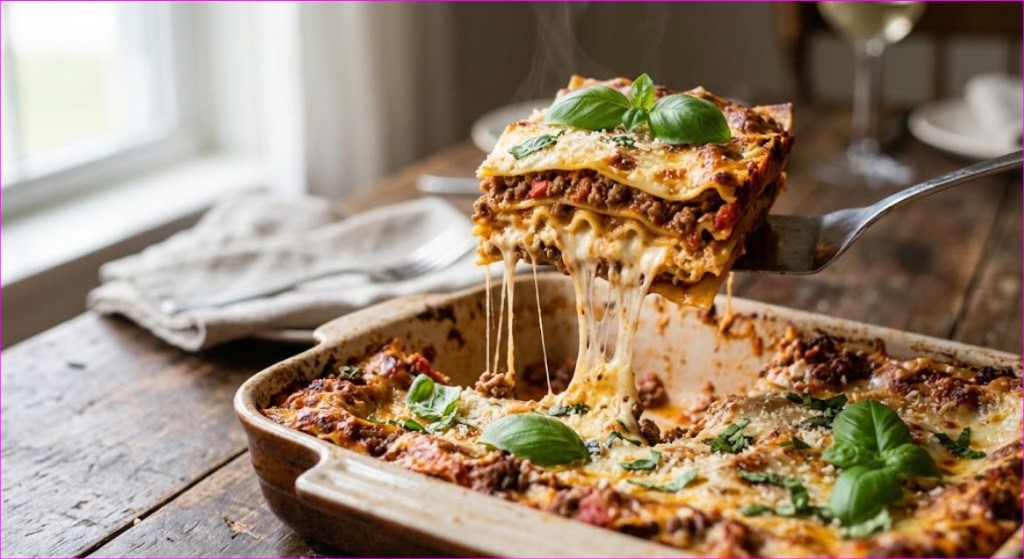
Everyone has eaten a lasagna that collapsed on the serving spoon. The flavour was fine, but the slice arrived on the plate as a landslide of noodles and orange liquid. That is a structural problem, not a seasoning problem, and it comes down to four things: how thick the meat sauce is, how much moisture the cheese layer carries, how the layers are ordered, and how long the finished dish rests.
A lasagna is a laminated structure. Each layer needs to be stiff enough to support the ones above it, and the whole thing needs time out of the oven for the starches and proteins to set. A lasagna cut at five minutes will always slump; the same lasagna cut at thirty minutes holds a sharp edge.
This recipe takes about two hours including a 45-minute sauce simmer, and makes nine substantial servings from a 9×13 dish. It is also one of the best make-ahead dishes there is — assembled and refrigerated overnight, it bakes better than it does fresh.
- Prep40 min
- Cook1 hr
- Total1 hr 40 min
- Serves9 servings
- CourseMain Course
- CuisineItalian-American
Written by Anisha Akter · Updated 23 September 2026
Why This Lasagna Recipe Works
- The meat sauce simmers until visibly thick, so it does not release liquid into the layers during baking.
- The ricotta is mixed with egg, which sets during baking and turns a loose cheese layer into a sliceable one.
- Layers start and end with sauce, so the noodles never sit directly against the hot dish and dry out.
- The dish is covered for most of the bake and uncovered at the end, giving a browned top without a dried-out interior.
- A 30-minute rest before cutting is built into the timing rather than treated as optional.
Ingredients and Why They Matter
This fills a standard 9×13-inch baking dish. The notes below cover the ingredients that most affect whether the lasagna holds together.
- 12 lasagna noodles (regular, not no-boil)
- 1 lb (450 g) ground beef (80/20)
- 1/2 lb (225 g) Italian sausage, casings removed
- 1 medium onion, finely diced
- 4 cloves garlic, minced
- 2 tbsp tomato paste
- 28 oz (800 g) can crushed tomatoes
- 1 tsp dried oregano
- 1 tsp dried basil
- 1/2 tsp red pepper flakes
- 1 tsp sugar
- 15 oz (425 g) whole-milk ricotta
- 1 large egg
- 1/2 cup (50 g) grated Parmesan, plus more for the top
- 1/4 cup chopped fresh parsley
- 1 lb (450 g) low-moisture mozzarella, shredded
- Salt and freshly ground black pepper
Key Ingredient Notes
Whole-milk ricotta. Part-skim ricotta is wetter and grainier, and it weeps during baking. Whole-milk ricotta has enough fat to set into a creamy layer. If your ricotta looks watery in the tub, drain it in a sieve for 30 minutes first.
An egg in the ricotta. This is the structural trick. The egg protein coagulates in the oven and binds the ricotta layer into something that slices instead of oozing. One egg per 15 ounces of ricotta is the right ratio.
A mix of beef and sausage. Ground beef brings body; Italian sausage brings fennel, garlic and a higher fat content that keeps the sauce from tasting lean. All beef works, but the sausage is what makes the sauce taste like a restaurant’s.
Regular noodles, not no-boil. No-boil noodles absorb liquid from the sauce as they cook, which is fine if your sauce is loose but leaves it dry if the sauce is properly thick. Regular boiled noodles give you control over the moisture balance.
Step-by-Step Instructions
- Brown the beef and sausage in a large pot over medium-high heat, breaking them up, for 8 minutes. Drain off all but about 2 tablespoons of fat.
- Add the onion and cook 5 minutes until soft. Add the garlic and cook 30 seconds more.
- Stir in the tomato paste and cook for 2 minutes, letting it darken slightly against the bottom of the pot. This concentrates its sweetness and removes the tinny raw note.
- Add the crushed tomatoes, oregano, basil, red pepper flakes, sugar, 1 teaspoon salt and plenty of black pepper. Bring to a simmer, then reduce the heat and cook uncovered for 40 to 45 minutes, stirring occasionally.
- The sauce is ready when a spoon dragged across the bottom of the pot leaves a clear trail that fills in slowly. If it is still loose, keep simmering. Thin sauce is the main cause of a sliding lasagna.
- While the sauce simmers, boil the noodles in well-salted water for 2 minutes less than the package says. Drain and lay them flat on a lightly oiled sheet so they do not stick together.
- Mix the ricotta, egg, Parmesan, parsley, 1/2 teaspoon salt and a good grind of pepper in a bowl until smooth.
- Heat the oven to 375°F (190°C). Spread a thin layer of sauce over the base of a 9×13 dish. Lay down 3 noodles, spread a third of the ricotta mixture, then a quarter of the remaining sauce, then a quarter of the mozzarella.
- Repeat twice more, then finish with a fourth layer of noodles, the last of the sauce, the remaining mozzarella and a generous dusting of Parmesan.
- Cover tightly with foil — tent it slightly so the foil does not touch the cheese — and bake for 35 minutes. Uncover and bake 20 to 25 minutes more, until the top is browned and the edges are bubbling.
- Rest the lasagna on a wire rack for at least 30 minutes before cutting. This is the step that determines whether you get slices or scoops.
Common Mistakes and How to Avoid Them
Using sauce that is too thin A watery sauce turns into a pool at the bottom of the dish and the whole structure floats apart. Simmer uncovered until the sauce mounds on a spoon. It should look thicker than you would want for spaghetti.
Leaving the egg out of the ricotta Without egg the ricotta stays loose and runs out of the slice. It is one ingredient and thirty seconds of whisking, and it transforms the texture of the finished dish.
Cutting it straight out of the oven At 200°F the cheese is molten and the starches have not set. Thirty minutes of resting lets everything firm up. If you need it hotter than that at the table, rest it 30 minutes and then warm individual slices.
Overcooking the noodles Noodles boiled to package instructions continue cooking for another hour in the oven and end up mushy. Pull them two minutes early, while they still have a distinct bite.
Tips for Best Results
- Assemble the lasagna a day ahead and refrigerate it. The layers settle, the flavours deepen, and it holds together noticeably better. Add 15 minutes to the covered bake time if baking from cold.
- Shred your own mozzarella. Pre-shredded cheese is coated in starch to stop clumping, and that starch makes the melted cheese grainy.
- Put the dish on a baking sheet. Lasagna bubbles over more often than you would expect, and cleaning a burnt oven floor takes longer than washing a sheet pan.
- If the top is browning too fast, put the foil back on for the remaining time.
- Use a sharp knife to cut the portions first, then lift them with a spatula. Trying to cut and lift in one movement is what destroys the first slice.
Variations to Try
Vegetarian lasagna. Replace the meat with 2 lb of roasted vegetables — zucchini, eggplant, bell pepper and mushroom. Roast them first to drive off water, which is critical for structure.
White lasagna. Swap the tomato sauce for a béchamel with shredded chicken and spinach. Squeeze the spinach very dry.
Spinach and ricotta. Add 10 oz of frozen spinach, thawed and squeezed bone dry, to the ricotta mixture. It adds flavour and colour without much extra moisture.
Freezer meal portions. Assemble in two 8×8 dishes instead of one 9×13. Bake one, freeze the other unbaked for up to 3 months.
Storage, Freezing and Reheating
Refrigerate covered for up to 5 days. Lasagna is one of the few dishes that genuinely tastes better on day two.
Reheat individual slices covered in a 350°F oven for 20 minutes, or in the microwave at 50 percent power with a damp paper towel over the plate.
Freeze baked or unbaked for up to 3 months. Bake an unbaked frozen lasagna from frozen at 375°F, covered, for 90 minutes, then uncovered for 20 minutes.
What to Serve With It
Frequently Asked Questions
Why is my lasagna watery?
The sauce was too thin, the ricotta was part-skim or undrained, or vegetables went in raw. Simmer the sauce until thick, use whole-milk ricotta with an egg, and pre-cook any vegetables.
How long should lasagna rest before cutting?
At least 30 minutes, and 45 is better. The structure sets as it cools. This is the single most effective thing you can do for clean slices.
Can I use no-boil noodles?
Yes, but they need a wetter sauce to hydrate properly. If you use them with the thick sauce in this recipe, add about half a cup of water to the sauce or the noodles will stay firm.
How many layers should a lasagna have?
Three layers of filling between four layers of noodles is the standard for a 9×13 dish. More layers means thinner ones, which are harder to keep intact.
Can I assemble lasagna the night before?
Yes, and it is better for it. Cover tightly and refrigerate up to 24 hours. Add 15 minutes to the covered baking time since it goes into the oven cold.
Do I have to use ricotta?
No. Many Italian-American cooks use a béchamel instead, which is smoother and never grainy. Cottage cheese blended until smooth is a common substitute too, though the flavour is tangier.

Hi! I’m the creator of scooks (Simple Cooks).I share easy, practical recipes and simple cooking ideas to help you enjoy everyday home cooking with confidence.
Happy cooking! 🍽️