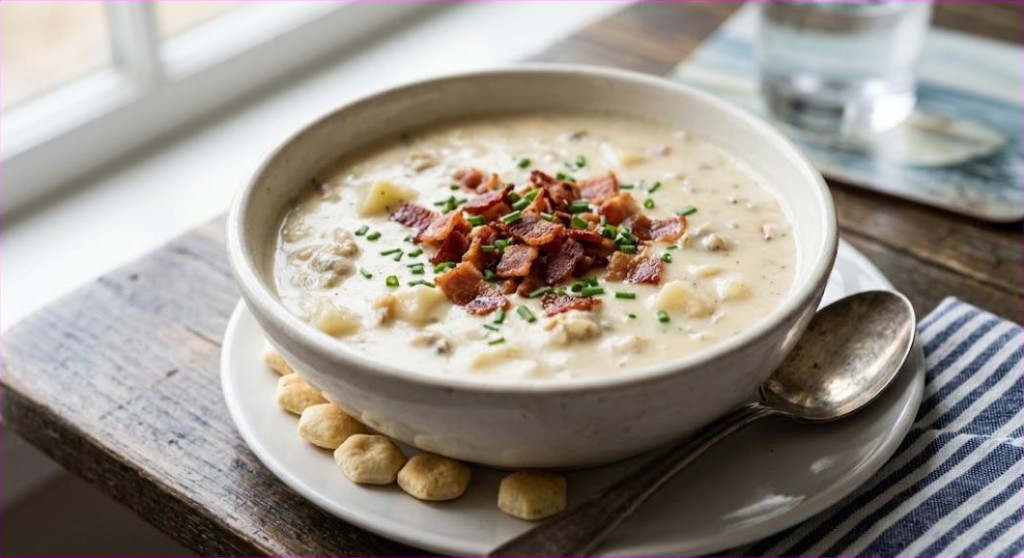
New England clam chowder is a milk-based soup of clams, potatoes, onion and salt pork, and it has been made on the American northeast coast for over two hundred years. The Manhattan version, with tomatoes, is a different soup entirely and a subject on which New Englanders have historically had strong opinions.
Good chowder is creamy but not thick like gravy, and it tastes distinctly of clams rather than of cream. The two most common home failures push in opposite directions: over-thickening with flour until it resembles wallpaper paste, and letting the dairy curdle into a broken, grainy soup.
There is also a timing problem specific to clams. They cook in about ninety seconds and turn to rubber shortly after. Any recipe that simmers clams in the soup for twenty minutes is producing something chewy. The method below adds them at the very end, which is the only way to keep them tender. Total time is about 55 minutes and it serves six.
- Prep20 min
- Cook35 min
- Total55 min
- Serves6 servings
- CourseSoup
- CuisineAmerican
Written by Anisha Akter · Updated 25 September 2026
Why This Clam Chowder Recipe Works
- Bacon or salt pork is rendered first, and everything else cooks in that fat, which is the flavour base of the chowder.
- Bottled or reserved clam juice does the heavy lifting on flavour, so the soup tastes of the sea rather than of potato.
- A light roux thickens just enough to give body without turning the soup pasty.
- The potatoes release some starch as they simmer, which adds natural thickness.
- Clams go in at the very end, off the boil, so they stay tender.
Ingredients and Why They Matter
Canned chopped clams are entirely acceptable and what most home cooks use. Fresh clams give a better result if you can get them.
- 4 oz (115 g) bacon or salt pork, diced
- 2 tbsp butter
- 1 large onion, diced
- 2 celery stalks, diced
- 3 tbsp all-purpose flour
- 2 cups (480 ml) clam juice (bottled, or reserved from canned clams)
- 1 1/2 lb (680 g) Yukon Gold potatoes, cut into 1/2-inch dice
- 1 bay leaf
- 1 tsp fresh thyme leaves
- 2 cups (480 ml) whole milk
- 1 cup (240 ml) heavy cream
- Three 6.5 oz cans chopped clams, drained (juice reserved), or 3 cups fresh chopped clams
- 1/2 tsp white pepper
- Salt to taste
- Chopped chives or parsley, and oyster crackers, to serve
Key Ingredient Notes
Clam juice. This is where the flavour comes from. Bottled clam juice is inexpensive and widely available, and the liquid from canned clams should always be reserved and used. Chowder made with only stock or water tastes like potato soup with clams in it.
Yukon Gold potatoes. Waxy enough to hold their shape through simmering, starchy enough to give the soup body. Russets break down into mush and thicken the soup unevenly; red potatoes hold their shape but contribute no thickening at all.
Bacon or salt pork. Salt pork is traditional and gives a cleaner, less smoky flavour. Bacon is what most people have and works well, though it pushes the chowder in a smokier direction. Render it slowly so the fat comes out.
White pepper. Standard in chowder, and it makes a difference. White pepper is earthier and less sharp than black, and it does not leave visible dark flecks in a pale soup.
Step-by-Step Instructions
- Cook the diced bacon or salt pork in a heavy pot over medium-low heat for 8 to 10 minutes, until the fat has rendered and the pieces are crisp. Remove the pieces with a slotted spoon and set aside, leaving the fat in the pot.
- Add the butter to the rendered fat, then the onion and celery. Cook 6 to 8 minutes over medium heat until soft but not browned.
- Sprinkle the flour over the vegetables and stir constantly for 90 seconds to cook out the raw taste.
- Whisk in the clam juice gradually, keeping it smooth. Add the potatoes, bay leaf and thyme.
- Bring to a simmer and cook uncovered for 12 to 15 minutes, until the potatoes are tender when pierced but not falling apart. Stir occasionally and scrape the bottom so nothing catches.
- Mash a few pieces of potato against the side of the pot with a spoon. The released starch thickens the chowder naturally.
- Reduce the heat to low. Stir in the milk and cream and warm gently for 4 to 5 minutes. Do not let it boil — dairy that boils in an acidic, salty soup is what curdles.
- Remove the pot from the heat. Stir in the drained clams and let them sit in the hot soup for 2 to 3 minutes. That is all the cooking they need.
- Add the white pepper, taste, and season with salt. Clam juice and bacon are both salty, so taste before adding any.
- Remove the bay leaf. Serve topped with the reserved crisp pork, chopped chives and oyster crackers.
Common Mistakes and How to Avoid Them
Simmering the clams Clams cook in under two minutes and turn rubbery almost immediately after. Add them off the heat at the very end and let residual warmth do the work.
Boiling the dairy Milk and cream break in a salty, slightly acidic soup when boiled. Keep the heat low once the dairy goes in and never let it reach more than a bare steam.
Too much flour Chowder should coat a spoon, not stand up on it. Three tablespoons of flour for eight cups of liquid is plenty. Anything more and you are making a sauce.
Using russet potatoes Russets disintegrate during simmering and turn the soup grainy and starchy. Yukon Golds hold their cubes while still contributing some thickening.
Tips for Best Results
- If the chowder is thinner than you want, mash more potato against the pot rather than adding flour. It thickens without dulling the flavour.
- Chowder is better on day two. Make it a day ahead, refrigerate, and reheat gently — but add the clams fresh on reheating if you can.
- Warm the milk and cream slightly before adding them. Cold dairy hitting a hot pot is more likely to break.
- A splash of dry sherry stirred in at the end is a traditional New England touch and lifts the whole soup.
- Serve in warmed bowls. Chowder cools fast and a cold bowl takes the edge off it immediately.
Variations to Try
Manhattan clam chowder. Tomato-based rather than creamy. Skip the flour and dairy, add a can of diced tomatoes with the clam juice, and finish with oregano.
Corn and clam chowder. Add two cups of corn kernels with the potatoes. The sweetness plays well against the salty clams.
Smoked fish chowder. Replace the clams with flaked smoked haddock or cod, added off the heat the same way.
Dairy-free chowder. Use full-fat coconut milk in place of the milk and cream. It is not traditional but it works surprisingly well with the clams and thyme.
Storage, Freezing and Reheating
Refrigerate for up to 3 days in an airtight container. The chowder thickens considerably when cold; thin it with a little milk on reheating.
Reheat gently over low heat, stirring. Never boil it, or the dairy will break and the clams will toughen further.
Freezing is not recommended. Dairy-based soups separate on thawing and potatoes turn grainy. If you must, freeze the base before the dairy and clams go in.
What to Serve With It
Frequently Asked Questions
Why did my clam chowder curdle?
The dairy boiled. Milk proteins break in a salty, slightly acidic environment at high heat. Add the milk and cream over low heat and keep the soup below a simmer from then on.
Are canned clams acceptable?
Yes, and most home chowder is made with them. Use the juice from the cans as part of your liquid. Fresh clams give better flavour and texture if you can source them easily.
Why are my clams rubbery?
They were cooked too long. Clams need about ninety seconds. Add them off the heat at the end of cooking and let the residual warmth heat them through.
What potatoes should I use for chowder?
Yukon Gold. They hold their shape while releasing enough starch to add body. Russets fall apart and make the soup grainy; red potatoes hold up but add no thickness.
How do I thicken clam chowder without flour?
Mash some of the cooked potato against the side of the pot. The released starch thickens the soup naturally and tastes cleaner than a flour roux.
What is the difference between New England and Manhattan clam chowder?
New England chowder is milk and cream based and white. Manhattan chowder is tomato based and red, with no dairy. They are distinct soups with a long-running rivalry.

Hi! I’m the creator of scooks (Simple Cooks).I share easy, practical recipes and simple cooking ideas to help you enjoy everyday home cooking with confidence.
Happy cooking! 🍽️