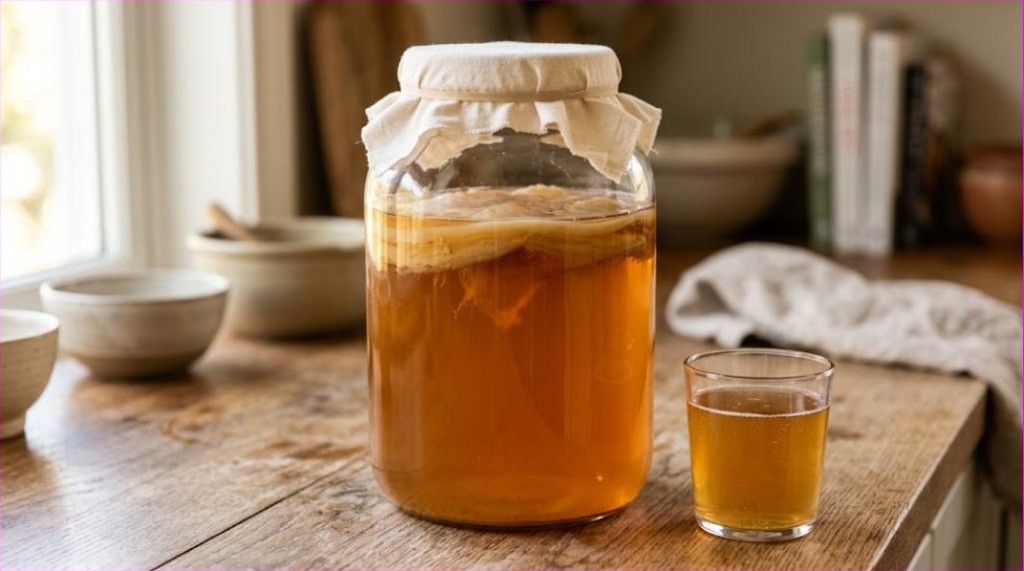
Kombucha brewing has a reputation for being finicky, but a decent starter kit removes most of the guesswork: it gives you a healthy SCOBY, the right vessel, and clear timing guidance for your first few batches. From there, the main choice is between a simple batch-brew jar and a continuous system that lets you brew and bottle at the same time.
What Actually Matters
Batch versus continuous changes your routine, not the flavour
In a batch brew you ferment a jar, remove all of it, and start again with fresh sweet tea. In a continuous brew you draw off finished kombucha from a spigot and top the vessel back up, so the culture never fully restarts. Continuous brewing suits people who drink kombucha most days, because there is always some ready. Batch brewing suits occasional drinkers and makes it easier to keep each batch’s timing and flavour consistent.
Vessel material is a safety and flavour issue
Kombucha becomes genuinely acidic, and reactive metals can leach into it and harm the culture. Glass, food-grade ceramic and food-safe plastic are the accepted materials. Spigots are the detail people overlook here, because a metal spigot sits in contact with the liquid continuously in a continuous-brew setup; plastic or stainless steel rated for food use is what you want.
The Main Kit Types and Who Each One Suits
Complete Glass Jar Starter Kit
The most common entry point — a large glass jar, a live SCOBY, starter liquid, tea, sugar, and a breathable cloth cover, everything needed for a first batch.
- Suits: First-time brewers wanting the simplest possible start.
- Key features: Glass brewing jar, live SCOBY included, cloth cover and rubber band, basic instructions.
Continuous Brew System
Uses a large vessel with a spigot near the bottom, letting you draw off finished kombucha while topping up with fresh sweet tea, so the culture never has to be fully restarted between batches.
- Suits: Regular drinkers who want an always-ready supply without restarting each time.
- Key features: Spigot-equipped vessel, larger capacity, ongoing brew rather than discrete batches.
SCOBY Hotel Kit
A dedicated smaller vessel for storing backup and extra SCOBYs in a bit of finished kombucha, keeping them healthy between brews or as a safety net if your main culture has issues.
- Suits: Anyone building up a SCOBY collection or sharing with friends.
- Key features: Smaller storage jar, keeps SCOBYs dormant but alive, useful backup system.
Flip-Top Bottling Kit
Focuses on the second fermentation stage — a set of flip-top glass bottles for carbonating and flavoring finished kombucha before it’s ready to drink.
- Suits: Brewers ready to move past first fermentation into flavored, fizzy kombucha.
- Key features: Airtight flip-top bottles, pressure-safe glass, ideal for fruit or ginger flavoring.
Wide-Mouth Fermentation Crock Kit
Swaps the standard glass jar for a wider stoneware crock, giving more surface area for the SCOBY and easier access for stirring in flavorings.
- Suits: Brewers who prefer working with a wider vessel.
- Key features: Stoneware crock, wide opening, often paired with a fitted cloth cover.
Travel or Compact Kit
A smaller-format version sized for brewing modest quantities, useful for testing the hobby before committing to a full-size setup.
- Suits: Trying kombucha brewing without a big upfront commitment.
- Key features: Smaller jar size, reduced ingredient quantities, lower cost entry point.
Flavor-Infusion Kit
Adds a curated set of dried fruits, herbs, and spices specifically chosen for second-fermentation flavoring, alongside the standard brewing basics.
- Suits: Brewers who want to experiment with flavors from the start.
- Key features: Assorted flavoring ingredients, standard brewing vessel and SCOBY, recipe cards for popular flavor combos.
What I Use and Why
I brew in batches rather than continuously, mostly because I like knowing exactly how old a given jar is. The first summer I brewed, I kept to the same timings I had used in spring and ended up with several jars of something closer to vinegar, because a warm kitchen ferments dramatically faster. Now I taste from day five onwards regardless of what the schedule says.
The second fermentation is where the kit either pays off or does not. Flip-top bottles that genuinely seal are what produce carbonation; the loosely closing bottles I started with vented everything and produced flat kombucha no matter how long I left them.
How to Choose
Before comparing specific models, it helps to narrow the field on these points:
- SCOBY quality and viability on arrival
- Batch (one-time) vs. continuous brew system
- Vessel material — glass is standard; avoid metal, which can react with the acidic brew
- Included accessories like pH strips, cloth covers, and bottles
- Clarity of instructions for first-time fermenters
Stick to glass, ceramic, or food-grade plastic for the brewing vessel — metal can react with kombucha’s acidity and is generally discouraged for direct contact with the culture. A healthy SCOBY should be cream to light brown, without fuzzy mold; if what arrives looks off, most reputable sellers offer a replacement. Budget about 7-14 days for a first fermentation batch before moving to bottling and flavoring.
Care and Common Mistakes
Keep the brewing vessel out of direct sunlight and away from the hob. Both heat and UV stress the culture, and a jar on a sunny windowsill is a common cause of a sluggish or failing ferment.
Do not seal the first fermentation vessel with an airtight lid. It needs to breathe through a cloth cover; a sealed jar builds pressure and can crack. Airtight sealing belongs only in the second fermentation, in bottles designed for pressure.
Learn the difference between kahm yeast and mould before you need to. A flat, white, slightly wrinkled film is kahm yeast and is harmless. Anything fuzzy, raised, and blue, green, black or pink is mould, and that batch and its SCOBY should be discarded rather than rinsed and reused.
Frequently Asked Questions
How long does it take to brew a batch of kombucha?
A first fermentation typically takes 7 to 14 days depending on your kitchen’s temperature and how tangy you like it, followed by an optional second fermentation of 2-5 days for carbonation and flavor.
Is it normal for a new SCOBY to look strange?
Some stringy brown bits (yeast strands) and a slightly uneven surface are completely normal. Fuzzy mold in blue, green, or black, however, means the culture should be discarded and replaced.
Can I brew kombucha in a metal container?
It’s not recommended — the acidic brew can react with reactive metals over time, potentially affecting flavor and the culture’s health. Stick to glass, food-grade ceramic, or food-safe plastic vessels.

Hi! I’m the creator of scooks (Simple Cooks).I share easy, practical recipes and simple cooking ideas to help you enjoy everyday home cooking with confidence.
Happy cooking! 🍽️