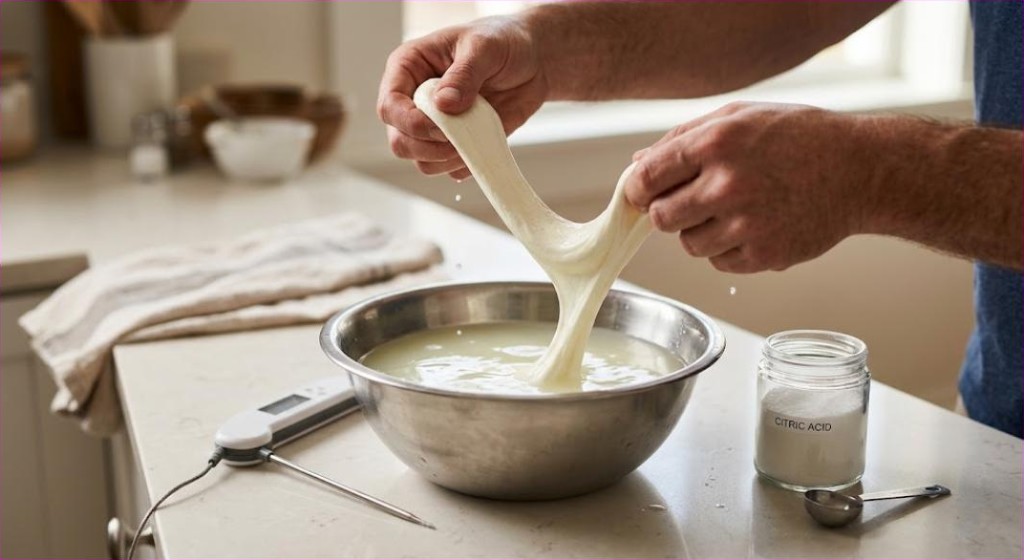
Cheese making at home sounds intimidating, but a good beginner kit strips it down to a manageable first project: usually a soft, quick cheese like mozzarella or ricotta that’s ready in under an hour. From there, kits scale up to aged cheeses that take weeks. Here’s how the main kit types differ.
What Actually Matters
Fresh cheese and aged cheese are different hobbies
Mozzarella and ricotta are finished in under an hour and need no special storage. A cheddar needs pressing, waxing and then weeks to months in a controlled environment. These are not two points on the same learning curve so much as two different commitments, and most people who give up on home cheese making did so because they started with the second one.
Milk choice decides whether it works at all
Ultra-pasteurised milk will not set into curds properly, because the high heat treatment denatures the proteins that rennet acts on. This single fact accounts for a large share of failed first attempts, and it is rarely printed prominently on a kit. Standard pasteurised or, where legal and available, raw milk both work.
What kits leave out
Most beginner kits supply the cultures, rennet and citric acid but assume you own a large non-reactive pot, an accurate dairy thermometer and butter muslin. Ordinary cheesecloth from a supermarket is usually too loose a weave to hold fine curds. Checking the included-items list against what is actually in your kitchen avoids an interrupted first session.
The Main Kit Types and Who Each One Suits
Mozzarella and Ricotta Kit
The classic entry point into cheese making — both cheeses are ready within an hour using just milk, citric acid, and rennet, with no aging or special equipment required.
- Suits: Absolute first-timers who want a quick win.
- Key features: Citric acid and rennet included, thermometer often included, no aging cave needed.
All-in-One Beginner Kit (Multiple Cheeses)
Bundles ingredients and instructions for several different quick cheeses — mozzarella, ricotta, queso blanco, paneer — so you can try a few styles before committing to more advanced projects.
- Suits: Trying several cheese types before specializing.
- Key features: Multiple recipe cards, shared basic equipment, good value for exploring the hobby.
Farmhouse Cheddar Kit
Steps up to a pressed, aged cheese, including a cheese press or press instructions, aging wax, and the longer-format culture needed for cheddar’s characteristic tang.
- Suits: Beginners ready to commit to a multi-week aging project.
- Key features: Cheese press or press plans included, aging wax, mesophilic culture.
Yogurt and Soft Cheese Kit
Focuses on cultured dairy that doesn’t require rennet at all — yogurt, cream cheese, and similar soft, spreadable cheeses.
- Suits: Those more interested in cultured dairy than firm cheeses.
- Key features: Cultures for yogurt and soft cheese, no rennet required, minimal specialized equipment.
Cheese Cave / Aging Kit
Not a starting kit but an add-on for anyone who’s outgrown quick cheeses — provides a controlled small aging environment for developing rinds over weeks or months.
- Suits: Intermediate cheese makers moving into aged varieties.
- Key features: Humidity and temperature control tools, aging mats, cheese wax or wrapping supplies.
Kefir and Cultured Dairy Kit
Centers on kefir grains and simple fermented dairy rather than formed cheese, a lower-effort way to start working with cultures.
- Suits: Anyone interested in probiotic dairy more than firm cheese.
- Key features: Live kefir grains or starter culture, minimal equipment, ongoing reusable culture.
Vegan Cheese Kit
Uses nut-based or plant-based cultures to produce dairy-free cheese alternatives, following a similar culturing process adapted for non-dairy bases.
- Suits: Plant-based cooks who still want the cheese-making experience.
- Key features: Vegan-friendly cultures, nut-based recipes, no dairy or rennet involved.
What I Use and Why
I started with a thirty-minute mozzarella kit, and my first batch was rubbery because I overworked the curd while stretching it. The instructions said to stretch until glossy; what they did not say is that every extra pull past that point tightens the protein network further. The second batch, handled about half as much, was noticeably better.
The thermometer turned out to matter more than anything else in the box. I used a meat thermometer at first, which reads slowly and lags several degrees, and my temperatures were consistently off. An inexpensive instant-read dairy thermometer fixed a problem I had been blaming on the cultures.
How to Choose
Before comparing specific models, it helps to narrow the field on these points:
- Skill level required and total time commitment
- Whether cultures and rennet are included or sold separately
- Equipment included vs. what you need to already own
- Type of cheese produced — fresh, soft-ripened, or aged
- Clarity of included instructions for first-timers
Start with a mozzarella and ricotta kit if this is your first time — it teaches the core skills (heating milk precisely, working curds) without the multi-week commitment of an aged cheese. Check whether a kit includes a dairy thermometer and cheesecloth, since those are the two items beginners most often need to buy separately. Once you’re comfortable with quick cheeses, a cheddar or other pressed-cheese kit is the natural next step.
Care and Common Mistakes
Sanitise everything that touches the milk. Not sterilise, but genuinely clean and sanitised, because you are deliberately cultivating one set of bacteria and any competing population changes the outcome. A rinse in boiling water is usually sufficient for home quantities.
Cultures are living and have a shelf life. Keep them in the freezer rather than a warm cupboard, and note that a kit sitting in a hot warehouse before delivery may arrive with reduced viability, which is worth factoring in if a first attempt fails inexplicably.
Do not rush the curd set. Cutting curds before they are firm enough gives a poor yield and a soft, wet result, and it is a very common beginner mistake driven by impatience rather than technique.
Frequently Asked Questions
How long does it take to make cheese at home?
Quick cheeses like mozzarella or ricotta can be ready in under an hour. Pressed cheeses like cheddar take a day or two to make and press, then several weeks to months of aging before they develop full flavor.
Do I need special equipment beyond the kit?
Most beginner kits include the specialty items (rennet, citric acid, cultures) but assume you have basic kitchen equipment like a large pot, a thermometer, and cheesecloth — check the kit’s included list before buying.
Is homemade cheese safe to eat?
Yes, when made with pasteurized milk and standard food-safe practices — clean equipment, accurate temperatures, and proper storage. Kits typically include guidance on safe handling for each specific cheese type.

Hi! I’m the creator of scooks (Simple Cooks).I share easy, practical recipes and simple cooking ideas to help you enjoy everyday home cooking with confidence.
Happy cooking! 🍽️