Pizza dough is flour, water, salt and yeast. What varies is the ratio of water to flour, how long the dough ferments, and how hot the oven is — and those three variables account for nearly every difference between a good home pizza and a disappointing one.
Home ovens top out around 500 to 550°F, while a Neapolitan pizza oven runs at 900. You cannot close that gap, but you can get remarkably close by preheating a steel or stone for a full hour and using a dough that is properly fermented. A long cold rise in the fridge develops flavour that a two-hour rise simply cannot, and it also makes the dough easier to stretch.
This makes two 12-inch pizzas. Active time is about twenty minutes; the dough then rests overnight, or at least a few hours. Below is the method plus the specific reasons dough tears, shrinks back, or bakes into a cracker.
- Prep20 min
- Cook12 min
- Total32 min
- Serves2 pizzas
- CourseMain Course
- CuisineItalian
Written by Anisha Akter · Updated 26 September 2026
Why This Pizza Dough Recipe Works
- A 65 percent hydration dough is wet enough to be chewy and open but still manageable by hand.
- A cold overnight ferment develops flavour compounds and relaxes the gluten, so the dough stretches instead of snapping back.
- Bread flour gives the gluten strength needed for a chewy crust with structure.
- A preheated baking steel or stone delivers the bottom heat that makes the base crisp rather than pale.
- Stretching by hand preserves the gas bubbles that a rolling pin would flatten out.
Ingredients and Why They Matter
Weighing the flour and water matters more here than in almost any other recipe, because hydration percentage is the whole point.
- 500 g (about 4 cups) bread flour
- 325 g (about 1 1/3 cups) water, lukewarm
- 10 g (2 tsp) fine sea salt
- 3 g (1 tsp) instant yeast
- 10 g (2 tsp) olive oil, optional
- Semolina or coarse cornmeal, for the peel
- Toppings of your choice
Key Ingredient Notes
Bread flour. Around 12 to 13 percent protein, versus 10 to 11 for all-purpose. That extra protein forms more gluten, which gives the chew and the structure to hold large bubbles. Italian 00 flour is finer and produces a more tender crust, ideal if you have a very hot oven.
Water at 65 percent of the flour weight. 325 g of water to 500 g of flour is 65 percent hydration. Wetter dough produces a more open, airier crumb but is harder to handle; drier dough is easier but denser. Sixty-five percent is the practical sweet spot for home baking.
Instant yeast, and not much of it. One teaspoon for 500 g of flour is deliberately small. Less yeast over a longer, colder fermentation produces far more flavour than a large amount over two warm hours.
Fine sea salt. Salt controls yeast activity and strengthens gluten as well as seasoning the dough. Two percent of the flour weight is the standard baker’s ratio. Under-salted pizza dough tastes noticeably bland no matter what goes on top.
Step-by-Step Instructions
- Whisk the flour, salt and yeast together in a large bowl. Mixing the salt into the dry flour rather than dropping it onto the yeast avoids killing the yeast on contact.
- Add the lukewarm water and the olive oil if using. Stir with a wooden spoon or your hand until no dry flour remains. The dough will be shaggy and sticky.
- Cover the bowl and let it rest 20 minutes. This autolyse lets the flour hydrate fully and starts gluten development with no kneading.
- Knead on a lightly oiled surface for 6 to 8 minutes, or do four sets of stretch-and-folds in the bowl at 15-minute intervals. The dough is ready when it is smooth and springs back slowly when poked.
- Shape into a ball, place in an oiled container, cover, and refrigerate for 24 to 72 hours. Twenty-four hours is good; forty-eight is better. If you are short on time, let it rise at room temperature for 2 hours instead, accepting less flavour.
- Three hours before baking, divide the dough into two equal pieces, shape each into a tight ball, and place them on a floured tray with space between. Cover and leave at room temperature.
- One hour before baking, put a baking steel or stone on the upper-middle rack and heat the oven to its maximum, usually 500 to 550°F. A full hour of preheating is not optional — the stone needs to be saturated with heat.
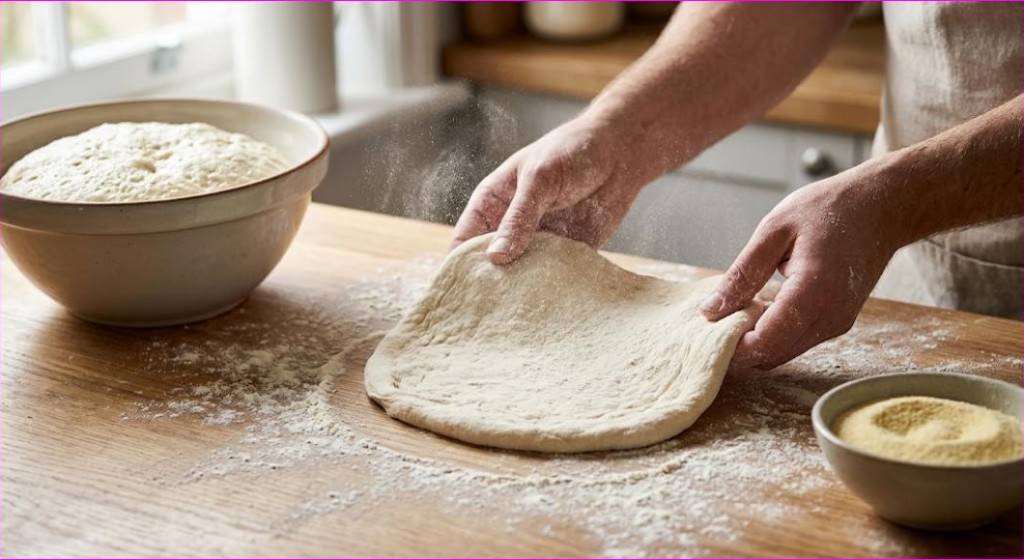
- Working with one ball at a time, press it out from the centre on a floured surface, leaving the outer inch untouched to form the rim. Then lift it and let gravity stretch it over your knuckles, rotating as you go, until it is about 12 inches across.
- Lay the stretched dough on a peel or an inverted baking sheet dusted with semolina. Shake it to check it slides freely before topping.
- Top quickly and lightly. Too much sauce or cheese makes the base soggy and the pizza hard to launch.
- Slide the pizza onto the hot steel and bake 6 to 9 minutes, until the rim is puffed and blistered and the base is browned. Broil for the last minute if the top needs colour.
- Repeat with the second ball. Rest each pizza for a minute before slicing.
Common Mistakes and How to Avoid Them
Dough that shrinks back when stretched The gluten is too tight, which means the dough is either under-rested or too cold. Let the balls sit at room temperature for two to three hours before shaping, and stop stretching for five minutes if it fights back.
Not preheating the stone long enough Twenty minutes gets the oven to temperature but leaves the stone cold in the middle. It needs a full hour to store enough heat to crisp the base in eight minutes. This is the most common reason home pizza has a pale, soft bottom.
Using a rolling pin A rolling pin crushes the gas bubbles that a fermented dough has spent a day developing, and those bubbles are what make the rim puff. Press and stretch by hand, leaving the outer inch alone.
Over-topping the pizza A heavily loaded pizza releases moisture faster than the base can crisp, and it sticks to the peel. A thin layer of sauce and a moderate amount of cheese bakes far better than a loaded one.
Tips for Best Results
- Weigh your ingredients. Volume measurement of flour varies by up to 20 percent and hydration percentage is the whole basis of this recipe.
- Use semolina rather than flour on the peel. It acts like tiny ball bearings and the pizza slides off cleanly; flour burns and tastes bitter.
- Shake the peel before you top the pizza. If it does not slide freely then, it certainly will not once it is loaded.
- If you have no steel or stone, preheat a heavy inverted baking sheet or a cast iron skillet. It is not as good but it is far better than a cold tray.
- Cold-fermented dough can go straight from the fridge into balls two hours before you need it, which makes weeknight pizza realistic.
Variations to Try
Same-day dough. Increase the yeast to 2 teaspoons and let the dough rise at room temperature for 2 hours, then ball and rest 1 hour. Less flavour, but ready in under four hours.
Whole wheat pizza dough. Replace 150 g of the bread flour with whole wheat and add 20 g more water, since whole grain flour absorbs more. The crust is nuttier and slightly denser.
Pan pizza. Press the dough into a well-oiled cast iron skillet or sheet pan, let it rise 2 hours, top and bake at 500°F for 15 minutes. The bottom fries in the oil and turns crisp.
Grilled pizza. Stretch thin, oil both sides, and grill directly over high heat for 2 minutes a side, topping after the first flip.
Storage, Freezing and Reheating
Refrigerate the dough in an oiled container for up to 3 days. The flavour improves for the first 48 hours.
Freeze dough balls individually wrapped for up to 3 months. Thaw overnight in the fridge, then bring to room temperature for 2 to 3 hours before shaping.
Baked pizza keeps 3 days refrigerated. Reheat slices in a dry skillet over medium heat with a lid for 4 minutes — it crisps the base and melts the cheese far better than a microwave.
What to Serve With It
Frequently Asked Questions
Why does my pizza dough keep shrinking back?
The gluten is too tight or the dough is too cold. Let the dough balls come to room temperature for two to three hours, and if it resists while stretching, walk away for five minutes and come back.
How long should pizza dough ferment?
At least 24 hours in the refrigerator, and 48 is better. Long, cold fermentation develops flavour and makes the dough easier to handle. A two-hour room-temperature rise works but tastes noticeably plainer.
Do I need a pizza stone or steel?
Not strictly, but it makes a large difference. A steel conducts heat faster than a stone and gives the best home results. An inverted heavy baking sheet or a cast iron skillet preheated for an hour is a workable substitute.
What flour is best for pizza dough?
Bread flour for a chewy, structured crust in a home oven. Italian 00 flour is finer and better suited to very high heat. All-purpose works but produces a softer, less chewy crust.
Can I freeze pizza dough?
Yes. Freeze individual balls, well wrapped, for up to three months. Thaw overnight in the refrigerator, then let them sit at room temperature for two to three hours before shaping.
Why is my pizza base soggy?
Usually too many toppings, too much sauce, or a base that was not hot enough. Preheat the stone for a full hour, go light on the sauce, and pat wet toppings like fresh mozzarella dry before using them.

Hi! I’m the creator of scooks (Simple Cooks).I share easy, practical recipes and simple cooking ideas to help you enjoy everyday home cooking with confidence.
Happy cooking! 🍽️