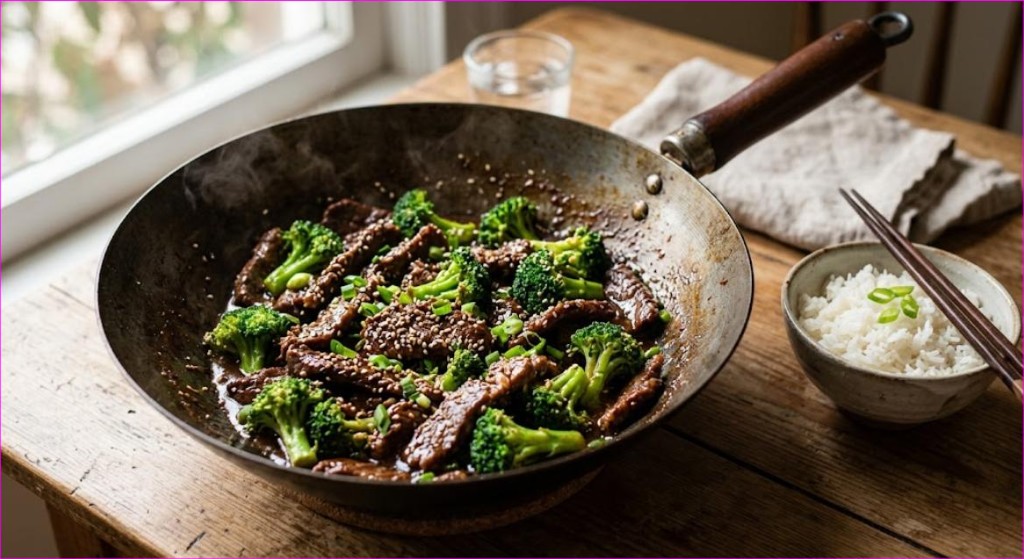
Beef and broccoli is the dish that exposes the gap between a restaurant wok and a home stove. In a takeaway kitchen the beef is silky, the broccoli is bright green with a little char, and the sauce is glossy and clings to everything. At home the same ingredients often produce grey beef, olive-drab broccoli, and a thin puddle at the bottom of the pan.
The difference is not a secret ingredient. It is three techniques: velveting the beef so it stays tender at high heat, blanching or steam-shocking the broccoli so it cooks through without sitting in the pan, and building a sauce with the correct starch ratio so it thickens the moment it hits heat. None of them are difficult, and all three are in the method below.
Total time is about 30 minutes, most of it prep. Once the pan is hot the cooking takes twelve minutes, so have everything chopped, mixed and within arm’s reach before you turn on the heat. Stir frying does not pause while you find the cornstarch.
- Prep20 min
- Cook12 min
- Total32 min
- Serves4 servings
- CourseMain Course
- CuisineChinese-American
Written by Anisha Akter · Updated 22 September 2026
Why This Beef and Broccoli Recipe Works
- Velveting with baking soda and cornstarch keeps thin beef tender even at very high heat.
- The broccoli is par-cooked separately so it hits the pan needing only 90 seconds.
- The sauce is premixed in one bowl, so it goes in at the right moment instead of being assembled in a hot pan.
- Cooking in batches keeps the pan hot enough to sear rather than steam.
- The whole dish uses one skillet or wok and finishes faster than rice takes to cook.
Ingredients and Why They Matter
Flank steak is the traditional cut and the best value. Here is the full list, with notes on the four choices that change the result most.
- 1 lb (450 g) flank steak or sirloin, sliced 1/4 inch thick across the grain
- 1/2 tsp baking soda
- 1 tbsp cornstarch (for the beef)
- 1 tbsp soy sauce (for the beef)
- 1 lb (450 g) broccoli, cut into florets
- 3 tbsp neutral oil, divided
- 4 cloves garlic, minced
- 1 tbsp fresh ginger, minced
- 1/2 cup (120 ml) beef or chicken stock
- 3 tbsp soy sauce
- 2 tbsp oyster sauce
- 1 tbsp Shaoxing wine or dry sherry
- 2 tsp brown sugar
- 1 tbsp cornstarch (for the sauce)
- 1 tsp toasted sesame oil
- Steamed rice, to serve
Key Ingredient Notes
Flank steak. Flank is lean, full-flavoured and inexpensive, and its coarse grain is easy to see so you can slice across it. Sirloin and skirt also work. Always cut across the grain — with thin slices this is the single biggest factor in tenderness.
Baking soda. A half teaspoon rubbed into the beef for 20 minutes raises the surface pH and stops the proteins tightening as they cook. This is the velveting trick restaurants use, and it is why their beef is silky. Rinse it off before cooking or the dish tastes soapy.
Oyster sauce. This is what gives beef and broccoli its characteristic savoury-sweet depth. Soy sauce alone tastes salty and one-dimensional. Vegetarian mushroom stir-fry sauce is a good substitute.
Cornstarch in the sauce. One tablespoon per half cup of liquid gives a sauce that coats without turning gluey. More than that and it goes claggy; less and it slides off the beef onto the plate.
Step-by-Step Instructions
- Toss the sliced beef with the baking soda and 1 tablespoon of water. Leave for 20 minutes at room temperature, then rinse thoroughly under cold water and pat completely dry.
- Toss the rinsed, dried beef with 1 tablespoon cornstarch and 1 tablespoon soy sauce. Set aside while you prepare everything else.
- Whisk together the stock, 3 tablespoons soy sauce, oyster sauce, Shaoxing wine, brown sugar and 1 tablespoon cornstarch in a small bowl. Whisk again right before you use it, since cornstarch settles.
- Bring a pot of water to the boil, add the broccoli florets, and cook exactly 90 seconds. Drain and rinse under cold water to stop the cooking, then dry well. Wet broccoli will steam in the pan and dilute the sauce.
- Heat a wok or large skillet over the highest heat your stove produces until a drop of water evaporates instantly. Add 1 1/2 tablespoons of oil and swirl to coat.
- Add half the beef in a single layer and leave it undisturbed for 60 seconds so it sears. Toss for 30 seconds more, then remove to a plate. Repeat with the remaining oil and beef.
- Lower the heat to medium-high. Add the last 1/2 tablespoon of oil, then the garlic and ginger, and stir for 20 seconds, just until fragrant. Aromatics burn in under a minute at this temperature.
- Add the blanched broccoli and toss for 60 seconds to heat it through and pick up the garlic.
- Whisk the sauce once more and pour it in. It will bubble and thicken within 30 to 45 seconds.
- Return the beef and any resting juices to the pan, toss for 30 seconds until everything is coated and glossy, then turn off the heat and stir in the sesame oil. Serve immediately over rice.
Common Mistakes and How to Avoid Them
Adding raw broccoli to the pan Raw florets need 6 to 8 minutes to cook, and in that time the beef overcooks and the broccoli releases enough water to break the sauce. Blanch for 90 seconds first and the stir fry stays a stir fry.
A pan that is not hot enough Stir frying needs real heat. If you add beef to a medium pan, it poaches in its own juices and turns grey. Preheat until the pan is almost smoking, and use a skillet rather than a nonstick pan, which usually cannot take that temperature.
Not rinsing off the baking soda Baking soda does its work in 20 minutes and then needs to go. Left on the meat it leaves a distinctly soapy, metallic taste. Rinse well and dry thoroughly.
Cooking all the beef at once A pound of beef dumped into a wok drops the pan temperature by well over a hundred degrees. Two batches, sixty seconds each, gives you browning instead of steaming.
Tips for Best Results
- Freeze the steak for 30 minutes before slicing. Firm meat cuts into cleaner, thinner slices than soft meat.
- Prep everything before the pan goes on. Stir frying is twelve minutes of continuous action with no time to chop.
- If you have no Shaoxing wine, dry sherry is the closest substitute. Skip it rather than using rice vinegar, which is too sharp.
- For charred, restaurant-style broccoli, skip the blanch and instead cook the florets in the dry hot pan with a tablespoon of water and a lid for two minutes, then uncover and let them blister.
- Serve the moment it is done. Stir fries lose their gloss and texture within five minutes of leaving the pan.
Variations to Try
Chicken and broccoli. Use thinly sliced chicken thigh and velvet it the same way. Everything else stays identical.
Spicy Szechuan style. Add a tablespoon of chili garlic sauce and a teaspoon of ground Szechuan peppercorn to the sauce mix.
Beef and mixed vegetables. Add sliced bell pepper, snow peas or water chestnuts alongside the broccoli. Add firmer vegetables earlier, softer ones later.
Gluten-free version. Swap tamari for the soy sauce and use a gluten-free oyster sauce. The technique is unchanged.
Storage, Freezing and Reheating
Refrigerate in an airtight container for up to 3 days. The broccoli softens over time but the flavour holds well.
Reheat in a hot skillet for 2 to 3 minutes rather than the microwave, which makes the beef rubbery and the broccoli limp.
Freezing is possible for up to 2 months but the broccoli texture suffers badly. If you plan to freeze, undercook the broccoli by 30 seconds.
What to Serve With It
Frequently Asked Questions
Why is my stir-fried beef tough?
Usually one of two reasons: it was sliced with the grain instead of across it, or the pan was not hot enough so the beef stewed. Velveting with baking soda fixes most remaining toughness.
What does velveting actually do?
Baking soda raises the meat’s surface pH, which stops the proteins from contracting and squeezing out moisture at high heat. The cornstarch coating then forms a thin barrier that keeps juices in. Together they produce the silky texture of restaurant stir fries.
Can I make the sauce ahead?
Yes. Mix it up to three days ahead and refrigerate. Whisk it well before using, because the cornstarch settles firmly at the bottom.
Why is my sauce thin?
Either the cornstarch settled and you poured off mostly liquid, or the pan was not hot enough for the starch to gelatinise. Whisk immediately before pouring, and let the sauce bubble actively for at least 30 seconds.
Can I use frozen broccoli?
You can, but thaw and dry it thoroughly first and skip the blanching step. Frozen broccoli carries a lot of water and is softer to begin with, so add it at the very end.
What is the best pan if I do not have a wok?
A carbon steel or cast iron skillet. Both hold high heat well. Avoid nonstick, which is not rated for the temperatures stir frying needs.

Hi! I’m the creator of scooks (Simple Cooks).I share easy, practical recipes and simple cooking ideas to help you enjoy everyday home cooking with confidence.
Happy cooking! 🍽️