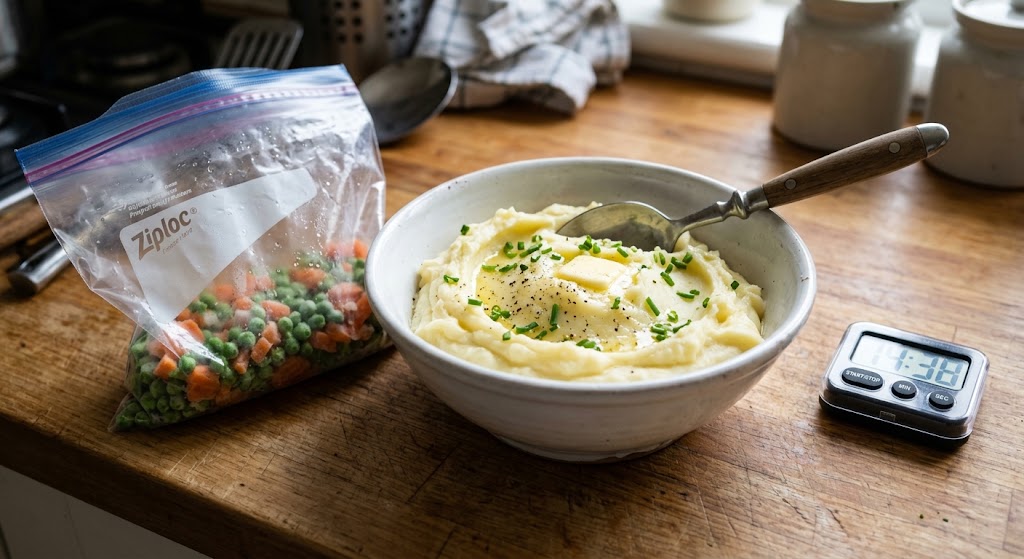
Short answer: Yes, you can freeze mashed potatoes safely if cooled and stored properly in airtight containers or freezer bags within two hours of cooking. They keep well for up to two months and reheat best when thawed slowly in the fridge before warming gently with added moisture to restore creaminess.
Mashed potatoes are a common side dish that often generates questions about freezing and storage. Potatoes contain starch and moisture that can change texture when frozen and thawed, potentially causing graininess or separation. Additionally, improper cooling or packaging can lead to spoilage or freezer burn. Understanding the science behind potato freezing helps maintain quality and safety.
This page covers how to freeze mashed potatoes and cooked potatoes correctly, how to store them in the fridge, and the best methods for reheating mashed, roast potatoes, and fries. It also offers tips for making mashed potatoes ahead for large groups, helping cooks save time and reduce waste while maintaining texture and flavor.
Written by Anisha Akter · Updated 13 September 2026
On this page
Can you freeze mashed potatoes
Yes, you can freeze mashed potatoes safely if cooled and stored properly in airtight containers or freezer bags within two hours of cooking.
Mashed potatoes primarily consist of cooked potato starch and water, which can separate during freezing due to ice crystal formation. When frozen, water expands and can rupture starch granules, leading to a grainy or watery texture upon thawing. Freezing slows microbial growth but does not stop enzymatic changes. For safety, potatoes should be cooled below 5°C (41°F) within two hours of cooking to prevent bacterial proliferation. Using airtight containers or heavy-duty freezer bags minimizes freezer burn and moisture loss. Properly stored mashed potatoes retain quality for up to two months. Thawing slowly in the refrigerator allows reabsorption of moisture, improving texture before reheating. Adding a little extra butter or cream when reheating can help restore creaminess that’s sometimes lost during freezing.
Cool mashed potatoes quickly by spreading them in a shallow container, then transfer to airtight containers or freezer bags, removing excess air before freezing.
Can you freeze cooked potatoes
Yes, cooked potatoes can be frozen, but expect some texture changes; freezing raw potatoes is not recommended because starch converts to sugar, causing discoloration and poor texture.
Cooked potatoes contain gelatinized starch and moisture that form a soft matrix. Freezing creates ice crystals that disrupt cell walls, causing softened or grainy textures upon thawing. Raw potatoes have high starch content that converts to sugar during freezing, leading to off-colors and undesirable sweetness. For cooked potatoes, freezing within two hours of cooking at or below 5°C (41°F) is essential to inhibit bacterial growth. Packaging should be airtight to reduce freezer burn. While texture changes are inevitable, many preparations tolerate freezing well, especially if reheated gently with moisture added. For example, mashed, roasted, or boiled potatoes freeze better than raw or partially cooked potatoes. The key is minimizing moisture loss and oxidation during storage.
Freeze cooked potatoes promptly after cooling and use airtight packaging to preserve quality and safety.
How to store cooked potatoes
Store cooked potatoes in airtight containers in the refrigerator at or below 5°C (41°F) and consume within 3 to 5 days for best safety and quality.
Cooked potatoes have moisture and nutrients that encourage bacterial growth if left at unsafe temperatures. Storing at or below 5°C (41°F) slows microbial activity, extending shelf life. Exposure to air leads to oxidation, causing discoloration and drying. Using airtight containers or wrapping tightly reduces moisture loss and prevents absorption of odors from other foods. Labeling containers with the cooking date helps track freshness. Avoid leaving cooked potatoes at room temperature for more than two hours to limit foodborne illness risk. Also, storing cooked potatoes in a single layer or shallow containers helps them cool evenly and quickly, preventing bacterial growth during cooling.
Cool cooked potatoes quickly to room temperature within two hours, then refrigerate in sealed containers.
How to reheat mashed potatoes
Reheat mashed potatoes gently on the stovetop or in a microwave, adding a splash of milk or butter to restore creaminess and stirring frequently to ensure even heating.
Mashed potatoes can dry out or become grainy when reheated due to moisture loss and starch retrogradation. Heating slowly at low to medium heat prevents scorching and uneven temperature spots. Microwaving requires stirring every 30 seconds to distribute heat evenly. Adding milk, cream, or butter replenishes moisture and fat, softening starch granules and improving mouthfeel. Avoid overheating above 74°C (165°F) as this further dries potatoes and can cause protein denaturation, affecting flavor and texture. Gentle reheating preserves the creamy consistency and taste. Using a double boiler or covering the container during reheating helps retain moisture. If frozen, thaw mashed potatoes overnight in the refrigerator before reheating to reduce textural changes.
Reheat mashed potatoes on low heat, stirring often, and add liquid gradually to reach desired texture.
How to reheat roast potatoes
Reheat roast potatoes in an oven or air fryer at 180°C (350°F) until heated through and crisp, usually 10 to 15 minutes depending on size.
Roast potatoes regain their desirable crispy texture best through dry heat methods like oven or air fryer reheating. Hot air circulation evaporates surface moisture, restoring crunchiness lost during refrigeration. Microwaving causes steaming, which makes potatoes soggy. To ensure food safety, internal temperature should reach 74°C (165°F). Heating time depends on potato size and initial temperature but generally ranges from 10 to 15 minutes. Turning or shaking halfway through improves even browning and crisping. Preheating the oven or air fryer ensures immediate heat exposure, reducing reheating time and improving texture. Avoid covering roast potatoes during reheating as this traps steam and softens the exterior.
Preheat the oven or air fryer, arrange potatoes in a single layer, and flip or shake them halfway through reheating.
How to reheat fries in an air fryer
Reheat fries in an air fryer at 180°C (350°F) for 3 to 5 minutes, shaking the basket halfway through to ensure even crisping.
Air frying uses rapid hot air circulation to evaporate surface moisture and crisp fries without additional oil. The 180°C (350°F) temperature quickly heats fries evenly while preventing burning. Shaking the basket redistributes fries, exposing all surfaces to hot air and avoiding soggy spots. Overcrowding limits airflow and results in uneven reheating. The short reheating time preserves texture and prevents dryness. Avoid microwaving fries, as it steams them, making them limp and unappetizing. For best results, preheat the air fryer for 2-3 minutes before adding fries. Thicker fries may require slightly longer reheating times. Using the air fryer also reduces added fat compared to pan-frying or oven reheating.
Preheat the air fryer and arrange fries in a single layer to maximize airflow and crispness.
Make ahead mashed potatoes for a crowd
Make mashed potatoes ahead by cooking and mashing them, then store in a shallow airtight container in the refrigerator for up to 2 days before reheating gently with added milk or butter.
Preparing mashed potatoes in advance helps manage time and effort when serving many people. After cooking and mashing, spread potatoes in a shallow container to cool quickly and evenly, reducing bacterial risk. Cover tightly with airtight lids or plastic wrap to maintain moisture and prevent flavor transfer. Refrigerated mashed potatoes keep well for 48 hours. When ready to serve, reheat gently on the stovetop or in the oven, stirring frequently and adding milk, cream, or butter to restore smooth texture. Alternatively, mashed potatoes can be frozen in portions but may require more attention to texture restoration during reheating. Planning ahead reduces stress and ensures consistent quality for large meals.
Prepare mashed potatoes a day ahead, cool quickly, cover tightly, and reheat on low heat with added dairy, stirring frequently.
How to avoid problems when freezing and reheating potatoes
- Cool potatoes to below 5°C (41°F) within two hours after cooking to prevent bacterial growth.
- Use airtight containers or heavy-duty freezer bags to minimize freezer burn and moisture loss.
- Avoid freezing raw potatoes as starch converts to sugar, causing texture and color issues.
- Reheat potatoes to an internal temperature of at least 74°C (165°F) to ensure safety.
- Do not overcrowd air fryer baskets to ensure even reheating and crispness.
- Label frozen potatoes with dates and use within two months for best quality.
Recipes that use this
Frequently Asked Questions
Can you freeze mashed potatoes with dairy like cream or butter?
Yes, mashed potatoes made with dairy such as cream or butter can be frozen successfully if cooled quickly and stored in airtight containers. The fat and proteins in dairy may separate slightly upon thawing, causing some watery separation. However, thorough stirring and reheating with additional liquid like milk or cream can reincorporate these components, restoring smooth texture and flavor effectively.
Why do mashed potatoes become grainy after freezing?
Mashed potatoes become grainy after freezing because ice crystals form within the potato matrix and rupture starch granules during freezing. This disrupts the smooth texture as water separates from the starch, a process called retrogradation. Slow thawing in the refrigerator allows water to be gradually reabsorbed, and adding moisture such as milk or butter during reheating helps soften starch granules, improving the mouthfeel and reducing graininess.
Can you refreeze thawed mashed potatoes?
Refreezing thawed mashed potatoes is not recommended because repeated freeze-thaw cycles cause further breakdown of starches and cell structure, leading to increased water separation and a watery or grainy texture. Each thawing phase also increases the risk of bacterial growth if not handled properly. For best quality and safety, use thawed mashed potatoes promptly and avoid refreezing.

Hi! I’m the creator of scooks (Simple Cooks).I share easy, practical recipes and simple cooking ideas to help you enjoy everyday home cooking with confidence.
Happy cooking! 🍽️