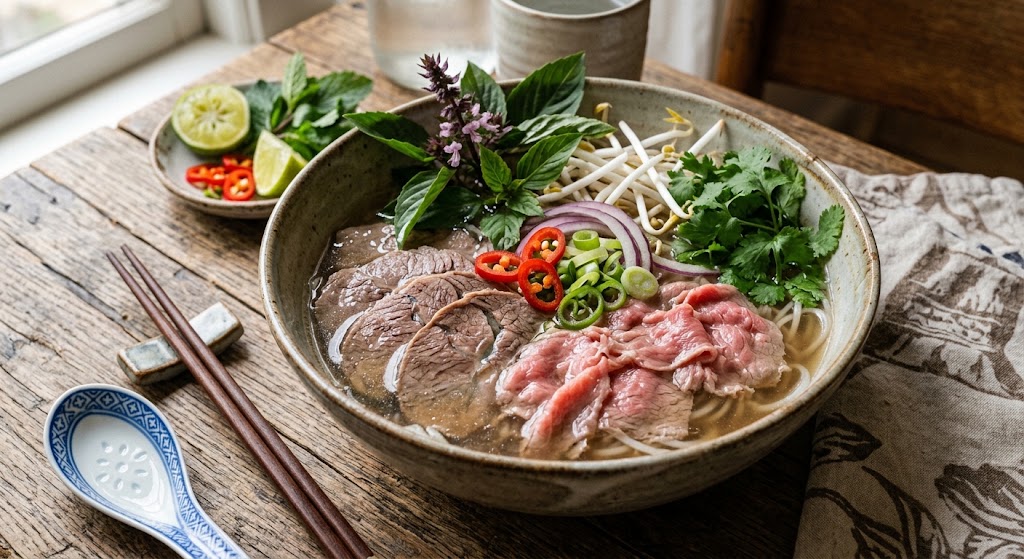
Vietnamese pho is a traditional noodle soup originating from northern Vietnam in the early 20th century, known for its clear, aromatic beef broth, rice noodles, and fresh herbs that create a harmonious balance of flavors. It has become a symbol of Vietnamese cuisine worldwide due to its complex yet approachable profile, combining savory, sweet, and umami notes.
Home cooks often struggle with pho because the broth requires a precise balance of roasting, simmering, and seasoning to develop its signature clarity and depth without cloudiness or overpowering bitterness. Additionally, the correct preparation of the bones and spices is essential to avoid off-flavors or greasy broth, which can make the dish feel heavy or dull.
This recipe delivers a carefully layered beef pho broth, fresh rice noodles, and authentic garnishes in about 4 hours, yielding 6 servings. The method explains every step, from selecting bones to roasting spices, so you can achieve a clear, flavorful soup base that supports tender beef and crisp herbs.
- Prep40 min
- Cook4 hr
- Total4 hr 40 min
- Serves6 servings
- CourseMain Course
- CuisineVietnamese
Written by Anisha Akter · Updated 12 September 2026
Why This Vietnamese Pho Recipe Works
- Roasting beef bones and spices separately develops Maillard reactions that produce deep, complex aromas essential for authentic pho flavor.
- Blanching bones before simmering removes impurities that cause cloudiness, resulting in a clear broth.
- Simmering the broth gently without boiling prevents fat and protein particles from suspending in the liquid, keeping the broth translucent and clean in taste.
- Adding rock sugar balances the savory and aromatic elements with subtle sweetness, enhancing the broth’s roundness without overpowering it.
- Toasting the spices before adding them to the broth releases volatile essential oils, maximizing their fragrance and integrating them evenly into the soup.
Ingredients and Why They Matter
The following ingredients are carefully selected for an authentic and balanced Vietnamese beef pho broth and its classic accompaniments.
- 4 lbs (1.8 kg) beef leg bones with marrow and knuckles
- 1 lb (450 g) beef brisket or chuck, trimmed
- 2 medium yellow onions, halved
- 1 4-inch (10 cm) piece fresh ginger, halved lengthwise
- 6 star anise pods
- 4 whole cloves
- 2 cinnamon sticks, 3 inches (7.5 cm) each
- 1 tbsp coriander seeds
- 1 tsp fennel seeds
- 1 tbsp rock sugar or white sugar
- 1 tbsp salt
- 8 cups (1.9 L) cold water
- 12 oz (340 g) dried flat rice noodles (bánh phở)
- 1 lb (450 g) beef sirloin or eye of round, thinly sliced against the grain
- 1 cup fresh Thai basil leaves
- 1 cup fresh cilantro leaves
- 1 cup fresh mint leaves
- 2 cups bean sprouts, rinsed
- 2 medium limes, cut into wedges
- 3 fresh red Thai bird chilies, thinly sliced
- 1/4 cup hoisin sauce
- 1/4 cup sriracha sauce
Key Ingredient Notes
beef leg bones — Beef leg bones with marrow and knuckles provide collagen and gelatin that create the characteristic body and mouthfeel of pho broth; marrow adds richness while knuckles contribute to clarity and thickness; substitute with beef knuckle bones if leg bones are unavailable but avoid using only marrow bones as the broth can become cloudy and overly fatty.
star anise — Star anise is a key spice that imparts the distinctive licorice aroma essential to pho’s signature flavor; its volatile oils are best released by dry toasting before simmering; if unavailable, a small amount of anise seed can be used but the flavor will be less pronounced and authentic.
rock sugar — Rock sugar gently sweetens the broth without adding sharpness or bitterness, balancing savory and aromatic notes; white granulated sugar may be used but rock sugar’s larger crystals dissolve slowly, providing a smoother sweetness profile.
dried flat rice noodles (bánh phở) — These noodles have a delicate, slippery texture that absorbs the broth without becoming mushy; they differ from fresh noodles in shelf life and texture, so rehydration times must be adjusted precisely; fresh rice noodles can be used as a substitute but require shorter soaking and cooking times to avoid over-softening.
Step-by-Step Instructions
- Preheat the oven to 450°F (230°C). Spread the beef leg bones and halved onions and ginger on a rimmed baking sheet and roast uncovered for 30 minutes until the bones are well browned and the onions and ginger edges are charred to develop deep aromatics.
- While the bones roast, dry toast star anise, cloves, cinnamon sticks, coriander seeds, and fennel seeds in a dry skillet over medium heat, stirring frequently, until fragrant and lightly darkened, about 3 to 5 minutes; transfer immediately to a spice bag or cheesecloth pouch.
- Place the roasted bones, onions, and ginger into a large stockpot and cover with cold water. Bring to a rolling boil over high heat and boil vigorously for 10 minutes to remove impurities.
- Drain the bones and discard the water. Rinse the bones and the pot thoroughly with warm water to remove any scum and residues that cause cloudiness.
- Return the bones, onions, and ginger to the pot. Add 8 cups (1.9 L) cold water, the toasted spice bag, rock sugar, and salt. Bring to a gentle simmer over medium-low heat, adjusting the heat to maintain a bare simmer with only occasional small bubbles breaking the surface. Simmer uncovered for 3 to 4 hours, skimming any foam or fat regularly to keep the broth clear.
- About 30 minutes before the broth is done, add the beef brisket or chuck to the pot and cook until tender, about 25 to 30 minutes depending on thickness, to integrate beef flavor and provide a cooked meat component.
- Remove the brisket and slice thinly against the grain once slightly cooled. Remove the bones and strain the broth through a fine-mesh sieve lined with cheesecloth to ensure clarity and remove solids; discard solids and return broth to the pot.
- Meanwhile, soak the dried flat rice noodles in warm water for 30 minutes or until pliable but still firm, then drain and set aside.
- Bring a large pot of water to a boil. Briefly dip the soaked noodles in the boiling water for 10 to 15 seconds to heat through and separate strands, then drain immediately to avoid overcooking.
- To assemble, divide the noodles among six large bowls. Arrange thinly sliced raw sirloin and sliced cooked brisket on top. Ladle the hot broth (at least 160°F or 71°C to ensure food safety) over the noodles and meat, cooking the raw beef slices gently in the hot liquid.
- Serve pho with fresh herbs, bean sprouts, lime wedges, sliced chilies, hoisin, and sriracha on the side to allow individual customization.
- Garnish each bowl with basil, cilantro, and mint leaves as desired, and squeeze lime wedges over the soup before eating for brightness.
Food safety note: Beef in pho must be cooked to an internal temperature of at least 145°F (63°C) according to USDA guidelines to ensure safety, which is achieved by pouring boiling broth over thin slices of raw beef to cook it gently. Keep the broth at a rolling simmer during cooking, and reheat leftovers to 165°F (74°C) before serving. For food safety and detailed temperature guidance, visit FoodSafety.gov.
Common Mistakes and How to Avoid Them
Not roasting bones and spices
Skipping roasting results in a pale, flavorless broth lacking depth and the characteristic pho aroma; always roast bones and toast spices separately to develop Maillard flavors and release essential oils.
Boiling broth vigorously
Boiling the broth causes fat and protein particles to suspend in the liquid, creating a cloudy and greasy broth with harsh flavors; maintain a gentle simmer with only occasional small bubbles to keep clarity.
Skipping bone blanching
Not blanching bones before simmering leaves impurities that cloud the broth and cause off-flavors; blanch bones in boiling water for 10 minutes, then rinse before starting the clear broth simmer.
Overcooking noodles
Soaking or cooking noodles too long makes them mushy and breaks the delicate texture essential to pho; soak dried noodles until just pliable and briefly dip in boiling water for 10-15 seconds before serving to maintain texture.
Tips for Best Results
- Use cold water to start the broth to extract maximum collagen and flavor from bones slowly.
- Keep the spice bag sealed tightly to prevent loose spices in the broth, which can cause bitterness.
- Skim fat frequently during simmering to maintain broth clarity and prevent greasy mouthfeel.
- Slice raw beef sirloin very thinly using a sharp knife or freeze it briefly for easier slicing.
- Serve all garnishes separately to retain their freshness and allow each person to customize their bowl.
Variations to Try
Chicken Pho (Pho Ga) — Substitute beef bones and meat with a whole chicken or chicken carcass; roast chicken bones and aromatics similarly, and adjust simmer time to about 2 hours for a lighter broth.
Vegetarian Pho — Use a combination of charred onions, ginger, dried shiitake mushrooms, and vegetable stock as the broth base; omit meat and add tofu or seitan as protein alternatives.
Gluten-Free Pho — Ensure that hoisin and sriracha sauces are gluten-free and use certified gluten-free rice noodles; verify all condiments to avoid gluten contamination.
Spicy Pho — Add fresh bird’s eye chilies to the broth during simmering and offer extra sliced chilies and chili oil at the table for heat lovers.
Storage, Freezing and Reheating
- Store leftover broth in an airtight container in the refrigerator for up to 3 days; fat will solidify on top and can be skimmed off before reheating.
- Keep noodles separate from broth to avoid sogginess; reheat broth to a rolling simmer and briefly dip noodles in hot water before serving.
- Pho is best eaten fresh; reheated noodles tend to lose their texture and become overly soft, so avoid freezing the assembled soup.
Serve it with
Frequently Asked Questions
What cuts of beef are best for Vietnamese pho?
Beef leg bones with marrow and knuckles are best for the broth, while brisket or chuck provide tender cooked meat, and sirloin or eye of round sliced very thin is ideal for raw slices that cook quickly in hot broth.
How long should I simmer pho broth for clear flavor?
Simmer the broth gently for 3 to 4 hours, skimming impurities regularly and keeping the heat low to develop a deep flavor while maintaining clarity and preventing cloudiness.
Can I use fresh noodles instead of dried for pho?
Yes, fresh rice noodles can be used but require much shorter soaking and cooking times to avoid becoming mushy, usually just a quick blanch in boiling water before serving.
Why do I need to blanch the bones before making pho broth?
Blanching removes blood and impurities that cause cloudiness and off-flavors, resulting in a clearer, cleaner-tasting broth essential for authentic pho.
How do I safely cook the raw beef slices in pho?
Thinly sliced raw beef is cooked safely by ladling boiling broth over them in the bowl, which quickly raises the temperature past 145°F (63°C), ensuring the meat is fully cooked as recommended by USDA.
Can I prepare pho broth in advance?
Pho broth can be prepared a day or two in advance and refrigerated to allow flavors to meld further; reheat gently to a rolling simmer before serving to maintain clarity and safety.

Hi! I’m the creator of scooks (Simple Cooks).I share easy, practical recipes and simple cooking ideas to help you enjoy everyday home cooking with confidence.
Happy cooking! 🍽️