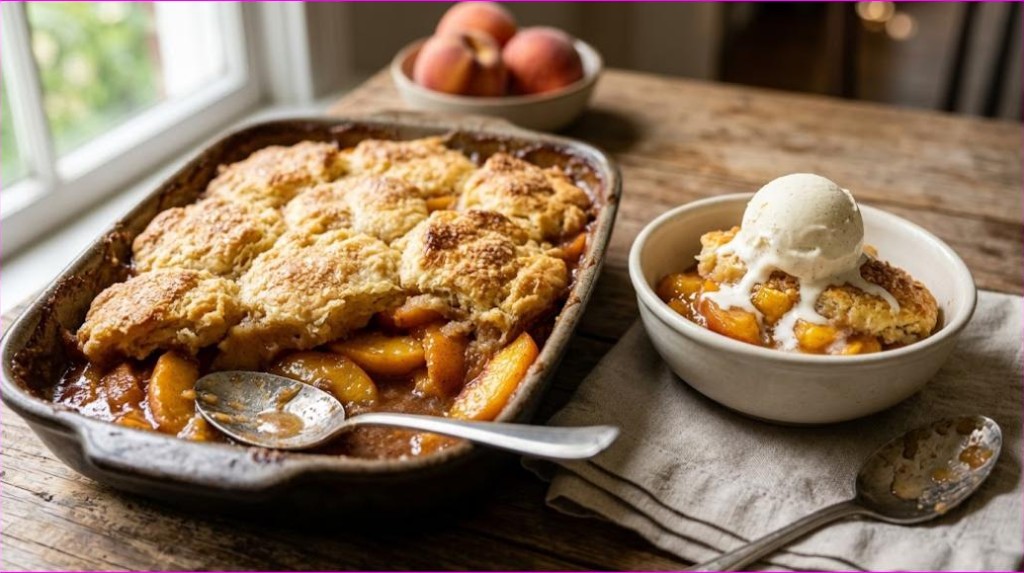
Peach cobbler is a Southern dessert built on a simple idea: fruit on the bottom, dough on top, baked until the juices bubble up around the edges. The name comes from the cobbled appearance of the dropped biscuit topping, which is the traditional form, though cake-batter and pie-crust versions are common too.
The problems are predictable. The filling runs like soup because peaches are about 89 percent water and most recipes under-thicken them. The topping stays raw underneath because it is sitting on wet fruit that steams it from below. And the whole thing tastes flat because peaches lose acidity when cooked and nobody adds any back.
This recipe solves all three: the fruit is macerated and thickened with cornstarch, the biscuit topping is dropped in separate mounds so steam can escape between them, and lemon juice keeps the flavour bright. It takes about 65 minutes and serves eight.
- Prep20 min
- Cook45 min
- Total1 hr 5 min
- Serves8 servings
- CourseDessert
- CuisineAmerican
Written by Anisha Akter · Updated 25 September 2026
Why This Peach Cobbler Recipe Works
- Macerating the peaches first draws out their juice so you can see exactly how much liquid you are thickening.
- Cornstarch rather than flour gives a clear, glossy filling instead of a cloudy, pasty one.
- The filling is heated before the topping goes on, which activates the starch and gets the bake started.
- Dropped biscuit mounds leave gaps for steam to escape, so the undersides bake instead of steaming.
- A sprinkle of coarse sugar on the biscuits gives a crunchy contrast to the soft fruit.
Ingredients and Why They Matter
Fresh peaches in season are best, but this works year-round with frozen. The notes below explain the adjustments.
- For the filling: 3 lb (1.4 kg) ripe peaches, peeled and sliced 1/2 inch thick (about 8 cups)
- 3/4 cup (150 g) granulated sugar
- 3 tbsp cornstarch
- 2 tbsp lemon juice
- 1 tsp vanilla extract
- 1/2 tsp ground cinnamon
- 1/4 tsp freshly grated nutmeg
- Pinch of salt
- For the topping: 1 1/2 cups (190 g) all-purpose flour
- 1/4 cup (50 g) granulated sugar
- 2 tsp baking powder
- 1/2 tsp baking soda
- 1/2 tsp salt
- 6 tbsp (85 g) cold unsalted butter, cubed
- 3/4 cup (180 ml) cold buttermilk
- 2 tbsp coarse or turbinado sugar, for sprinkling
Key Ingredient Notes
Ripe but firm peaches. Rock-hard peaches never soften properly and taste sour; overripe ones collapse into mush. A peach that yields slightly to gentle pressure at the shoulders is right. Freestone varieties are much easier to pit than clingstone.
Cornstarch. Cornstarch sets into a clear, glossy gel and has roughly twice the thickening power of flour. Flour-thickened cobbler filling looks cloudy and can taste raw and pasty. Three tablespoons for eight cups of peaches is the working ratio.
Cold butter and cold buttermilk. Cold butter stays in distinct pieces in the dough, and those pieces create steam pockets in the oven that make the biscuit light. Warm butter blends in and produces a dense, heavy topping.
Lemon juice. Peaches lose most of their perceived acidity when cooked and sweetened. Two tablespoons of lemon juice will not make the cobbler taste lemony — it makes the peaches taste more like peaches.
Step-by-Step Instructions
- Heat the oven to 400°F (200°C).
- To peel the peaches easily, score a small X in the base of each, drop them into boiling water for 40 seconds, then straight into ice water. The skins slip off.
- Toss the sliced peaches with the sugar, lemon juice, vanilla, cinnamon, nutmeg and salt in a large bowl. Let them sit for 15 minutes to macerate and release their juice.
- Sprinkle the cornstarch over the peaches and toss thoroughly so no dry pockets remain. Tossing it in at the end prevents the lumps you get from adding starch to dry fruit.
- Pour the filling into a 9×13 baking dish or a 3-quart casserole and bake for 10 minutes while you make the topping. Pre-heating the filling gets the starch working and stops the topping sitting on cold fruit.
- Whisk the flour, sugar, baking powder, baking soda and salt in a bowl.
- Add the cold cubed butter and rub it in with your fingertips or cut it in with a pastry blender until the largest pieces are pea-sized. Work quickly so the butter stays cold.
- Pour in the cold buttermilk and stir with a fork just until a shaggy dough forms. Do not knead it — over-worked biscuit dough turns tough.
- Take the hot filling out of the oven. Drop the dough in 10 to 12 rough mounds over the surface, leaving visible gaps between them for steam to escape.
- Sprinkle the coarse sugar generously over the biscuit tops.
- Bake for 30 to 35 minutes, until the biscuits are deep golden and a skewer pushed into the thickest mound comes out clean, and the filling is bubbling thickly around the edges.
- Cool for at least 20 minutes before serving. The filling thickens considerably as it cools. Serve warm with vanilla ice cream.
Common Mistakes and How to Avoid Them
Not enough thickener Peaches release far more liquid than people expect. Under-thickened filling floods the dish and the biscuits float. Three tablespoons of cornstarch per eight cups of fruit is the baseline, and juicy late-season peaches may need a fourth.
Spreading the topping over the whole surface A continuous sheet of dough traps steam underneath and the bottom never bakes. Separate mounds with gaps between them let the steam out and give you biscuits that are cooked through.
Warm butter in the biscuit dough If the butter softens while you work it in, you lose the steam pockets that make the topping light. Cube the butter and put it back in the freezer for ten minutes if your kitchen is warm.
Serving it straight out of the oven Hot cornstarch filling is at its thinnest. Twenty to thirty minutes of cooling lets it set into something spoonable rather than pourable.
Tips for Best Results
- Taste a peach before you decide on sugar. Peak-season fruit may need only half a cup; pale supermarket peaches may need the full three quarters.
- If your peaches are under-ripe, leave them in a paper bag on the counter for a day or two. They soften, though they will not get sweeter.
- Put the baking dish on a sheet pan. Cobbler bubbles over more often than not.
- A quarter teaspoon of almond extract in the filling amplifies the peach flavour — peaches and almonds are botanically related and the pairing works.
- If the biscuits brown before they are cooked through, tent loosely with foil and continue baking.
Variations to Try
Frozen peach cobbler. Use 8 cups of frozen sliced peaches straight from the freezer, add an extra tablespoon of cornstarch, and increase the initial filling bake to 20 minutes.
Canned peach cobbler. Drain three 29-oz cans well and reduce the sugar to 1/3 cup, since canned peaches are packed in syrup. Reduce the cornstarch to 2 tablespoons.
Peach and blackberry cobbler. Replace 2 cups of the peaches with blackberries. The colour is dramatic and the tartness balances the sweetness well.
Cake-batter cobbler. The Southern shortcut version: melt butter in the dish, pour over a simple batter of flour, sugar, milk and baking powder, spoon the fruit on top, and bake. The batter rises around the fruit.
Storage, Freezing and Reheating
Cover and keep at room temperature for up to 2 days, or refrigerate for up to 5. The biscuit topping softens over time, which is unavoidable.
Reheat in a 350°F oven for 15 to 20 minutes to re-crisp the topping. The microwave heats it but leaves the biscuits soggy.
Freeze the baked cobbler for up to 3 months, well wrapped. Thaw overnight in the fridge and reheat in a 350°F oven for 30 minutes.
What to Serve With It
Frequently Asked Questions
Why is my peach cobbler runny?
Not enough thickener, or it was served too hot. Use three tablespoons of cornstarch for eight cups of peaches, and let the cobbler cool for at least twenty minutes so the starch can set.
Do I have to peel the peaches?
No, but the skins can turn tough and stringy in the oven. Blanching for forty seconds makes peeling take about five minutes for the whole batch, which is worth it.
Can I use canned or frozen peaches?
Yes to both. Drain canned peaches well and cut the sugar by about half since they are packed in syrup. Use frozen peaches straight from the freezer with an extra tablespoon of cornstarch.
What is the difference between cobbler, crisp and crumble?
Cobbler has a biscuit or batter topping. A crisp has oats in its streusel topping. A crumble is a streusel of flour, butter and sugar without oats. All three are baked fruit desserts.
Why is my biscuit topping raw underneath?
It was spread in a solid sheet over the fruit, which trapped steam. Drop it in separate mounds with gaps so steam escapes, and preheat the filling before the topping goes on.
How ripe should the peaches be?
Ripe enough to yield to gentle pressure at the shoulders, but not soft or bruised. Under-ripe peaches stay firm and sour; overripe ones turn to mush in the oven.

Hi! I’m the creator of scooks (Simple Cooks).I share easy, practical recipes and simple cooking ideas to help you enjoy everyday home cooking with confidence.
Happy cooking! 🍽️