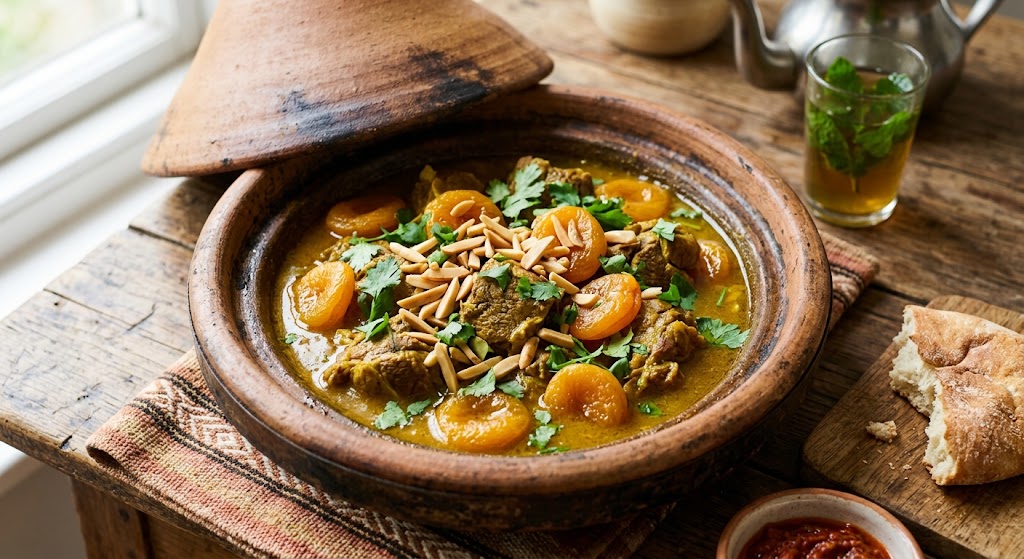
Moroccan tagine is a traditional North African slow-cooked stew named after the conical clay pot it is traditionally cooked in, which retains moisture and concentrates flavors. This dish combines tender meat with a blend of aromatic spices and fruits or vegetables, reflecting centuries of culinary influences including Berber, Arab, and Mediterranean traditions. The tagine pot’s unique shape aids in cooking the ingredients evenly while keeping them moist.
Home cooks often struggle with tagine because it requires slow, controlled cooking and balanced seasoning to avoid dry meat or overly sweet or bland flavors. The complexity of layering spices and the long cooking time make timing and temperature control essential, while the distinctive slow simmering process is key to achieving tender meat and a rich sauce.
This recipe provides detailed instructions for cooking a lamb and apricot Moroccan tagine, including spice blends, layering, and cooking times, yielding 6 servings in about 2 hours and 35 minutes, including prep. It guides through ingredient selection, marination, and slow simmering techniques to ensure a successful and flavorful dish.
- Prep35 min
- Cook2 hr
- Total2 hr 35 min
- Serves6 servings
- CourseMain Course
- CuisineMoroccan
Written by Anisha Akter · Updated 12 September 2026
Why This Moroccan Tagine Recipe Works
- Browning the lamb in batches raises the pan temperature to above 300 °F (150 °C), promoting Maillard browning which develops deep flavor without steaming the meat.
- Simmering the tagine covered at low heat maintains moisture by condensing steam back into the stew, tenderizing the meat while preventing drying out.
- Soaking dried apricots before cooking rehydrates them for even texture and allows them to release natural sweetness gradually during cooking.
- Toasting whole spices briefly before grinding intensifies their essential oils, enhancing aroma and flavor complexity in the dish.
- Layering ingredients with aromatics and spices at the base allows gradual flavor release into the cooking liquid, ensuring balanced taste throughout the tagine.
Ingredients and Why They Matter
The ingredients include fresh, dried, and ground spices, meat, and fresh produce essential for authentic Moroccan tagine.
- 2 lb (900 g) boneless lamb shoulder, cut into 2-inch (5 cm) cubes
- 1 cup (150 g) dried apricots, rinsed and soaked in warm water for 30 minutes
- 2 medium onions, finely chopped (about 1 cup / 160 g)
- 3 cloves garlic, minced
- 1/4 cup (15 g) fresh cilantro, chopped
- 1/4 cup (15 g) fresh parsley, chopped
- 2 tbsp (30 ml) olive oil
- 1 tsp (2 g) ground cinnamon
- 1 tsp (2 g) ground ginger
- 1 tsp (2 g) ground turmeric
- 1 tsp (2 g) sweet paprika
- 1/2 tsp (1 g) ground cumin
- 1/2 tsp (1 g) ground coriander
- 1/2 tsp (1 g) cayenne pepper (optional, adjust to taste)
- 1/2 tsp (1 g) freshly ground black pepper
- 1 tsp (5 g) salt
- 1 preserved lemon, rinsed, pulp removed, rind thinly sliced
- 1 tbsp (15 g) coriander seeds
- 1 tsp (2 g) cumin seeds
- 1 cup (240 ml) low-sodium chicken or lamb broth
- 1 tbsp (15 g) honey
- 1/4 cup (40 g) slivered almonds, toasted
- Lemon wedges, for serving
Key Ingredient Notes
Lamb shoulder — Lamb shoulder is preferred for its balance of connective tissue and fat which breaks down during slow cooking, resulting in tender, flavorful meat; lean cuts like leg would dry out, while fattier cuts provide richness and moisture. Substitute with beef chuck for a similar texture but adjust cooking times accordingly.
Preserved lemon — Preserved lemon rind adds a unique citrus brightness and slight saltiness essential for authentic Moroccan flavor; fresh lemon lacks this depth and saltiness. If unavailable, substitute with a mix of finely grated lemon zest and a pinch of salt, though the flavor will be less complex.
Dried apricots — Dried apricots contribute natural sweetness and a soft, tender texture that contrasts with the savory meat, balancing the dish; fresh apricots lack concentration and firmness. Soaking them before cooking ensures even hydration and prevents toughness.
Whole spices (coriander and cumin seeds) — Toasting whole coriander and cumin seeds before grinding releases essential oils, producing more intense aroma and flavor than pre-ground spices; this step deepens the dish’s complexity. If whole seeds are unavailable, use fresh ground spices but reduce quantity slightly to avoid bitterness.
Step-by-Step Instructions
- Toast coriander and cumin seeds in a dry skillet over medium heat for 2-3 minutes until fragrant, shaking frequently to avoid burning; grind them finely using a mortar and pestle or spice grinder, then set aside.
- Heat a large heavy-bottomed pot or a traditional tagine over medium-high heat and add half the olive oil. When hot, add lamb cubes in a single layer without crowding and sear for 3-4 minutes per side until deeply browned, then transfer to a plate. Repeat with remaining lamb and oil, ensuring browning without steaming.
- Reduce heat to medium, add onions and a pinch of salt to the pot, and cook, stirring occasionally, until soft and translucent, about 8 minutes. Add garlic and cook for 1 minute until fragrant, being careful not to burn.
- Add all ground spices: cinnamon, ginger, turmeric, paprika, cayenne, black pepper, and the freshly ground toasted coriander and cumin seeds. Stir continuously for 30 seconds to toast the spices and release their oils, which enhances flavor and aroma.
- Return the lamb to the pot and stir to coat with the spice and onion mixture. Add chopped cilantro, parsley, sliced preserved lemon rind, soaked apricots (drained), broth, and honey. Stir gently to combine all ingredients evenly.
- Bring the mixture to a gentle simmer, then reduce heat to low and cover the pot with a tight-fitting lid or the tagine lid. Simmer gently for 1 hour and 45 minutes, checking once halfway to stir gently and ensure the bottom is not sticking.
- After 1 hour 45 minutes, uncover and increase heat slightly to medium-low. Cook uncovered for an additional 15 minutes to thicken the sauce and concentrate flavors. Taste and adjust salt or honey if needed.
- Meanwhile, toast slivered almonds in a dry skillet over medium heat for 3-4 minutes until golden and fragrant, shaking the pan frequently to avoid burning.
- Serve the tagine hot, garnished with toasted almonds and fresh cilantro sprigs, accompanied by lemon wedges and traditional Moroccan couscous or flatbread to soak up the sauce.
Food safety note: Ensure lamb reaches an internal temperature of at least 145 °F (63 °C) with a 3-minute rest to meet USDA food safety standards; slow simmering at low heat for over 2 hours will safely cook the meat thoroughly. Keep raw lamb separate from other ingredients and utensils, and wash hands and surfaces after handling raw meat. For more on safe cooking temperatures, visit FoodSafety.gov.
Common Mistakes and How to Avoid Them
Skipping the soaking of dried apricots
Not soaking dried apricots leads to uneven texture and can cause them to remain tough or dry in the finished dish, disrupting the balance of softness and moisture; always soak apricots in warm water for at least 30 minutes before use to rehydrate them evenly.
Adding all spices at once without toasting
Adding ground spices directly without toasting them in the pan prevents the release of essential oils, resulting in dull flavor and aroma; briefly cooking spices with the onions releases more flavor and deepens the dish’s complexity.
Overcrowding the pan when browning lamb
Crowding the pan lowers the temperature causing the meat to steam instead of brown, which inhibits Maillard reaction and flavor development; brown lamb in batches to maintain high pan temperature for effective searing.
Cooking at too high heat during simmering
Cooking the tagine uncovered at high heat causes rapid evaporation, toughens the meat, and can burn the sauce; maintain a low simmer with the pot covered to retain moisture and tenderize the meat properly.
Tips for Best Results
- Use a traditional Moroccan clay tagine pot or a heavy-bottomed enameled Dutch oven to mimic authentic slow cooking and moisture retention.
- Trim excess fat from lamb shoulder to avoid greasy sauce but retain some fat for flavor and moisture during slow cooking.
- Adjust cayenne pepper quantity based on your preferred spice level; omit for a mild version.
- Reserve some fresh herbs for garnish to add a fresh contrast to the slow-cooked flavors.
- Serve the tagine with couscous or flatbread to soak up the flavorful sauce and balance the richness of the meat and fruit.
Variations to Try
Chicken Tagine — Substitute lamb with bone-in, skin-on chicken thighs and reduce cooking time to about 1 hour 15 minutes, ensuring chicken is cooked through, reaching 165 °F (74 °C) internal temperature.
Vegetarian Tagine — Replace meat with a combination of root vegetables like carrots, sweet potatoes, and chickpeas; increase broth to maintain moisture and cook covered for 1 hour until vegetables are tender.
Spicy Tagine — Increase cayenne pepper to 1 tsp or add harissa paste during the onion cooking stage for a more pronounced heat and depth of flavor.
Nut-Free Tagine — Omit toasted almonds and garnish with chopped fresh parsley and a squeeze of lemon instead to accommodate nut allergies without compromising flavor.
Storage, Freezing and Reheating
- Refrigerate leftovers in an airtight container for up to 3 days; the flavors develop further after resting but sauce may thicken and require gentle reheating with added broth or water.
- Reheat gently on the stovetop over low heat, stirring occasionally to prevent sticking and to restore sauce consistency.
- Freeze the cooked tagine in airtight containers for up to 2 months; thaw overnight in the refrigerator before reheating to maintain texture and flavor.
- Avoid freezing toasted almonds; add fresh almonds after reheating leftovers to preserve crunchiness.
Serve it with
Frequently Asked Questions
What is the best meat cut for Moroccan tagine?
Lamb shoulder is ideal for Moroccan tagine because it contains enough connective tissue and fat to become tender and flavorful during the long, slow cooking process; leaner cuts like leg can dry out, while fattier cuts provide richness but may need trimming.
Can I use a regular pot instead of a tagine?
Yes, a heavy-bottomed pot with a tight-fitting lid can substitute for a traditional tagine, helping retain moisture and cook evenly; the key is low, slow simmering with the lid on to mimic the tagine’s steam circulation.
How do I prevent the tagine from drying out?
Maintain a low simmer with the pot covered to allow condensation to drip back into the stew, and add broth as needed to keep the liquid level sufficient; avoid high heat and uncovered cooking for long periods.
What does preserved lemon add to the tagine?
Preserved lemon rind adds a fermented citrus aroma and salty tang unique to Moroccan cuisine, balancing the sweetness of dried fruit and richness of meat; fresh lemon lacks this complexity and saltiness.
Can I prepare tagine in advance?
Yes, tagine flavors often improve after resting overnight in the refrigerator; reheat gently on low heat with a splash of broth to restore sauce texture before serving.
Is it necessary to toast the spices?
Toasting spices briefly in the pan with onions releases their essential oils and intensifies aroma and flavor, which is important for the characteristic complexity of Moroccan tagine.

Hi! I’m the creator of scooks (Simple Cooks).I share easy, practical recipes and simple cooking ideas to help you enjoy everyday home cooking with confidence.
Happy cooking! 🍽️