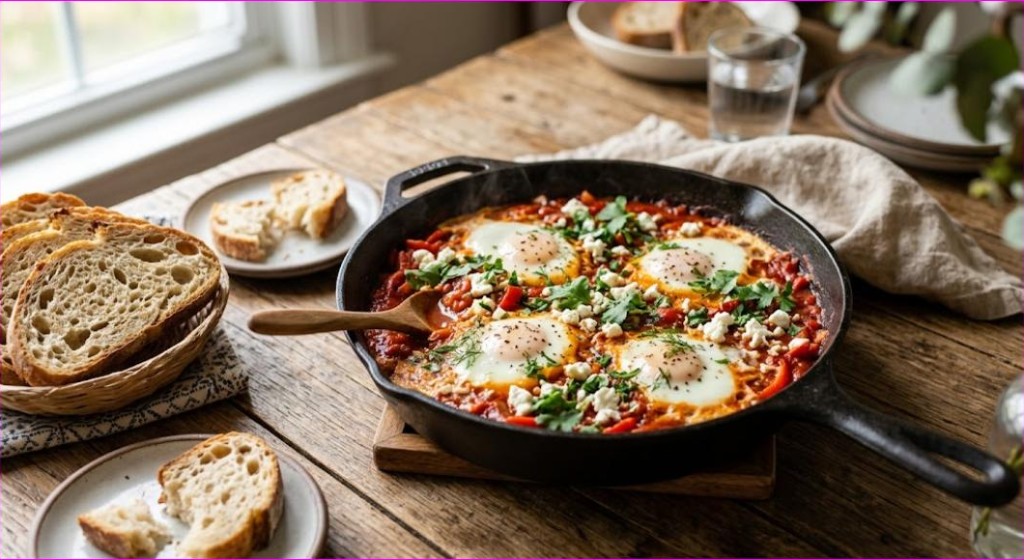
Shakshuka is eggs poached in a spiced tomato and pepper sauce, eaten across North Africa and the Levant and now on brunch menus everywhere. The name comes from an Arabic word meaning mixed up, which describes both the dish and the relaxed way it is usually made.
It looks simple, and it is, but there is one genuinely tricky moment: getting the egg whites fully set while the yolks stay liquid. Eggs sitting in a hot tomato sauce cook from underneath much faster than from above, so left uncovered the bottoms overcook while the tops stay raw. The fix is a lid, low heat, and knowing what to look for.
The other thing that separates a good shakshuka from a watery one is sauce reduction. Tomatoes hold a lot of water, and eggs cannot poach properly in a thin liquid. Everything below takes about 45 minutes and serves four with good bread.
- Prep15 min
- Cook30 min
- Total45 min
- Serves4 servings
- CourseBreakfast
- CuisineMiddle Eastern
Written by Anisha Akter · Updated 24 September 2026
Why This Shakshuka Recipe Works
- The peppers and onions cook down slowly until sweet, which gives the sauce depth without added sugar.
- Spices are bloomed in oil, releasing flavour compounds that will not come out in water.
- The sauce is reduced until thick before the eggs go in, so the whites set in place rather than spreading.
- A lid traps steam and cooks the tops of the eggs at the same rate as the bottoms.
- Feta added before the eggs softens into the sauce and provides salty contrast to the sweet peppers.
Ingredients and Why They Matter
Good canned tomatoes matter more here than almost anything else. Whole peeled tomatoes crushed by hand give better texture than pre-crushed.
- 3 tbsp olive oil
- 1 large onion, diced
- 2 red bell peppers, diced
- 1 jalapeño or red chili, finely chopped (optional)
- 4 cloves garlic, sliced
- 2 tsp ground cumin
- 2 tsp sweet paprika
- 1/2 tsp caraway seeds, crushed
- 1/4 tsp cayenne pepper
- 1 tbsp tomato paste
- 28 oz (800 g) can whole peeled tomatoes
- 1 tsp salt, plus more to taste
- 1/2 tsp sugar
- 4 oz (115 g) feta, crumbled
- 6 large eggs
- Fresh cilantro or parsley, chopped
- Crusty bread or pita, to serve
Key Ingredient Notes
Whole peeled canned tomatoes. Crushing them by hand gives you a mix of pulp and chunks that reduces into a sauce with body. Pre-crushed tomatoes are often thinner and include added puree that can taste flat. San Marzano style tomatoes are worth the small premium.
Red bell peppers. Cooked slowly, red peppers turn genuinely sweet and give the sauce its characteristic rounded flavour. Green peppers are more bitter and grassy, which works but produces a noticeably sharper dish.
Caraway seeds. A signature spice in Tunisian shakshuka and the flavour that makes people ask what the dish is. Crush them lightly before adding. If you have no caraway, a pinch of fennel seed is a reasonable stand-in.
Feta. Salty, tangy and firm enough to hold its shape in pockets rather than melting into the sauce. Sheep’s milk feta has more character than cow’s milk versions. Add it before the eggs so it warms through.
Step-by-Step Instructions
- Heat the olive oil in a large deep skillet with a lid over medium heat. Add the onion and bell peppers with a pinch of salt and cook 12 to 15 minutes, stirring occasionally, until genuinely soft and beginning to caramelise at the edges. Do not rush this — it is where the sweetness comes from.
- Add the garlic and chili and cook 1 minute more.
- Add the cumin, paprika, caraway and cayenne and stir in the hot oil for 30 seconds until fragrant.
- Stir in the tomato paste and cook 2 minutes, letting it darken against the pan.
- Add the canned tomatoes, crushing each one with your hand or the back of a spoon as it goes in. Add the salt and sugar.
- Simmer uncovered for 12 to 15 minutes, stirring now and then, until the sauce has thickened noticeably and a spoon dragged through it leaves a channel that fills in slowly. Taste and adjust the salt.
- Scatter two thirds of the feta over the sauce.
- Use the back of a spoon to make six wells in the sauce, spacing them evenly. Crack one egg into each well. The wells should be deep enough that the whites sit in the sauce rather than running across the surface.
- Season the eggs with a little salt and pepper, cover the pan, and reduce the heat to low.
- Cook covered for 6 to 9 minutes. Start checking at 6. The whites should be opaque all the way through and the yolks should still wobble when you shake the pan gently.
- Scatter the remaining feta and the herbs over the top and serve straight from the pan with bread for scooping.
Common Mistakes and How to Avoid Them
Adding the eggs to a thin sauce If the sauce is watery, the whites spread across the surface into thin sheets and cook unevenly. Reduce the sauce until it holds the shape of a spoon channel before you crack anything in.
Cooking the eggs uncovered Without a lid, the bottoms of the eggs cook against the hot sauce while the tops stay translucent. By the time the whites are set on top, the yolks are hard. A lid cooks the eggs from both directions.
Rushing the peppers and onions Eight minutes is not enough. Fifteen minutes over medium heat is what turns raw peppers into something sweet and jammy. This step is most of the flavour in the dish.
Too much heat under the eggs On medium or high, the sauce bubbles vigorously and the egg bottoms overcook in two minutes. Drop to low the moment the eggs go in.
Tips for Best Results
- Crack each egg into a small bowl first, then slide it into its well. This prevents shell fragments and broken yolks in the pan.
- If the whites are set but the yolks are still too loose for your taste, uncover and cook another minute rather than leaving the lid on, which will overshoot.
- A cast iron skillet holds heat evenly and goes straight to the table, which suits a dish you eat communally from the pan.
- The sauce can be made up to four days ahead. Reheat it, make the wells, and add the eggs — breakfast in nine minutes.
- Serve with something to scoop: challah, pita, sourdough. Shakshuka eaten with a fork misses half the point.
Variations to Try
Green shakshuka. Replace the tomatoes with a base of spinach, chard, leek and herbs, loosened with stock. Lighter and faster, about 20 minutes total.
Shakshuka with merguez. Brown sliced merguez sausage first and cook the vegetables in the rendered spiced fat. Removes the need for cayenne.
Chickpea shakshuka. Add a drained can of chickpeas with the tomatoes for a more substantial dinner version.
Dairy-free shakshuka. Leave out the feta and finish with a drizzle of good olive oil, toasted pine nuts and extra herbs.
Storage, Freezing and Reheating
The sauce keeps 4 days refrigerated and freezes for 3 months. Store it separately from the eggs.
Cooked shakshuka with eggs does not store well, because reheating turns the yolks hard and rubbery. Cook only as many eggs as you will eat.
To serve later, refrigerate the sauce, then reheat it in a skillet until bubbling and add fresh eggs. It takes ten minutes.
What to Serve With It
Frequently Asked Questions
How do I get the egg whites set but the yolks runny?
Reduce the sauce until thick, make deep wells, drop the heat to low, and cover the pan. Check at six minutes. The lid is the key — it cooks the tops of the eggs by steam at the same rate the bottoms cook in the sauce.
Can I make shakshuka ahead of time?
Make the sauce ahead — up to four days refrigerated or three months frozen. Add the eggs only when you are ready to eat. Cooked eggs do not reheat well.
Is shakshuka spicy?
It is warmly spiced rather than hot. The cumin, paprika and caraway do the work. Adjust the cayenne and fresh chili to control the heat, or leave both out entirely.
What do I serve with shakshuka?
Bread for scooping is essential — pita, challah or crusty sourdough. A simple herb salad, olives, or labneh alongside rounds it out.
Can I use fresh tomatoes?
Yes, in peak season. Use about 2 lb of ripe tomatoes, peeled and chopped, and expect to simmer longer since fresh tomatoes carry more water than canned.
How many eggs should I use?
Six eggs in a 12-inch skillet gives comfortable spacing for four people. Crowding the pan makes the whites run together and cook unevenly.

Hi! I’m the creator of scooks (Simple Cooks).I share easy, practical recipes and simple cooking ideas to help you enjoy everyday home cooking with confidence.
Happy cooking! 🍽️