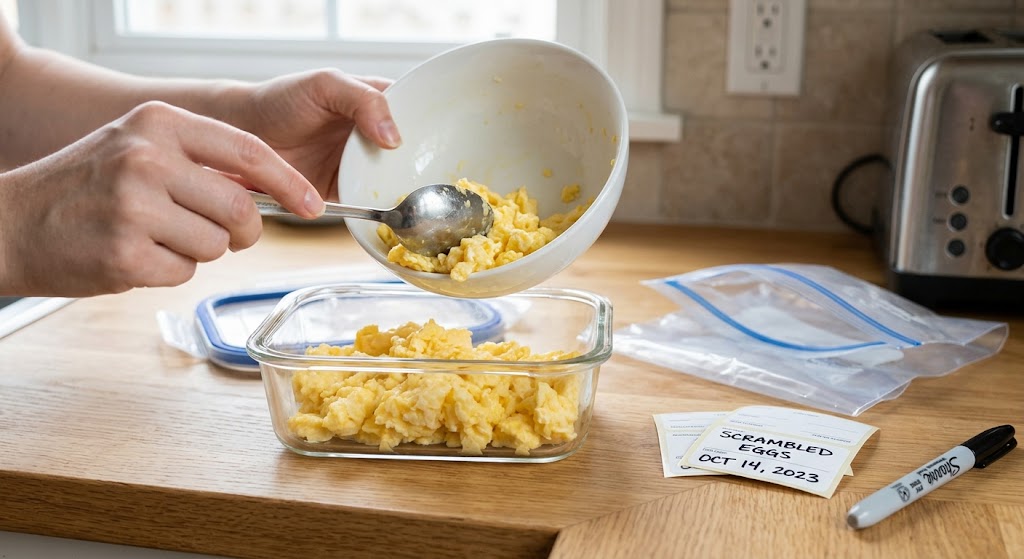
Short answer: Yes, you can freeze scrambled eggs. Freeze them promptly in airtight containers or freezer bags, then reheat gently to avoid rubbery texture and maintain food safety. Proper cooling and freezing within two hours of cooking is essential to prevent bacterial growth.
Scrambled eggs are a popular breakfast staple, but leftovers often raise questions about storage and safety. Eggs are perishable and can deteriorate quickly if not handled properly. Freezing cooked eggs helps extend their shelf life, but the process affects texture and requires careful handling to avoid foodborne illness.
This page explains whether you can freeze scrambled eggs, how to do it correctly, and the best methods to reheat them. It helps home cooks safely preserve eggs without sacrificing too much quality, making meal prep more convenient and reducing food waste.
Written by Anisha Akter · Updated 13 September 2026
Can you freeze scrambled eggs
Yes, scrambled eggs can be frozen if cooled and stored properly in airtight containers or freezer bags within two hours of cooking.
Scrambled eggs contain proteins and water that change when frozen. Freezing halts bacterial growth by keeping eggs below 0°F (-18°C), but ice crystals can form and alter the texture. Cooking denatures proteins, so freezing cooked eggs is safer than freezing raw eggs. However, freezing and thawing can cause eggs to become watery or rubbery due to protein coagulation and moisture separation. The proteins in eggs, primarily ovalbumin and ovomucin, undergo structural changes when frozen, leading to moisture loss upon thawing. To minimize texture changes, it is critical to cool eggs quickly and store them in shallow, airtight containers or freezer bags to reduce exposure to air and prevent freezer burn. Proper packaging also limits oxidation, which can affect flavor.
Cool scrambled eggs to room temperature within 30 minutes, then transfer to airtight containers or freezer bags, removing as much air as possible. Label with date and freeze promptly, ideally within two hours of cooking.
How to reheat scrambled eggs
Reheat frozen scrambled eggs gently on low heat or in short microwave bursts to prevent rubbery texture and ensure even warming.
Reheating frozen scrambled eggs requires slow, gentle heat to avoid overcooking. High heat causes egg proteins to tighten excessively, making eggs rubbery or dry. Microwave reheating in short 20-30 second bursts with stirring helps distribute heat evenly and prevents hot spots. Alternatively, reheat in a nonstick pan over low heat, stirring frequently to break up clumps and ensure uniform warming. Eggs should be reheated to an internal temperature of 165°F (74°C) to ensure food safety by destroying potential pathogens. Thawing eggs overnight in the refrigerator before reheating improves texture by allowing moisture to redistribute and reduces reheating time, thereby minimizing protein overcoagulation.
For best texture, thaw scrambled eggs in the fridge overnight, then reheat on low heat with frequent stirring or in the microwave in short bursts, stirring between intervals to distribute heat evenly.
How to avoid problems freezing and reheating scrambled eggs
- Cool scrambled eggs quickly after cooking to prevent bacterial growth before freezing.
- Use airtight containers or freezer bags with minimal air to prevent freezer burn and moisture loss.
- Freeze scrambled eggs within two hours of cooking to maintain safety and quality.
- Label containers with the freezing date and consume within 1 to 2 months for best texture and flavor.
- Avoid reheating eggs multiple times to reduce food safety risks and texture degradation.
- Do not freeze scrambled eggs that have been sitting at room temperature for more than two hours.
Recipes that use this
Frequently Asked Questions
Can I freeze raw beaten eggs for scrambling later?
Yes, raw beaten eggs can be frozen safely in airtight containers or ice cube trays. When freezing raw eggs, it is best to lightly beat them first to prevent yolk thickening. Once frozen, thaw them overnight in the refrigerator and stir well before cooking. This method often preserves the texture and flavor better than freezing cooked scrambled eggs, but freezing scrambled eggs after cooking is still safe and convenient for leftovers.
Why do scrambled eggs become rubbery after freezing and reheating?
Scrambled eggs become rubbery after freezing and reheating because freezing causes ice crystals to form inside the egg proteins, disrupting their structure. When reheated, especially at high temperatures, the proteins tighten excessively and expel moisture, leading to a dry, rubbery texture. Gentle reheating and proper thawing reduce these effects by allowing moisture to redistribute and preventing overcooking.
How long can I keep scrambled eggs in the freezer?
Frozen scrambled eggs maintain best quality for 1 to 2 months when stored at 0°F (-18°C) or below. Beyond this period, texture and flavor progressively decline due to moisture loss and oxidation, though the eggs remain safe to eat if kept frozen continuously. For optimal taste and texture, consume them within this timeframe.

Hi! I’m the creator of scooks (Simple Cooks).I share easy, practical recipes and simple cooking ideas to help you enjoy everyday home cooking with confidence.
Happy cooking! 🍽️