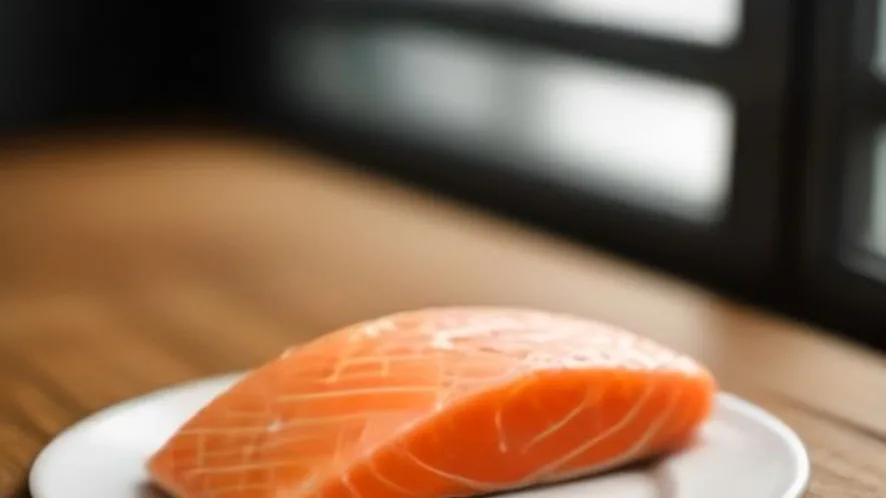
Short answer: Salmon becomes dry because it is overcooked, usually when its internal temperature exceeds about 60°C (140°F), which causes muscle fibers to contract and squeeze out moisture. Cooking salmon to 50-55°C (122-131°F) keeps it moist and tender.
Salmon drying out is a common problem caused by overcooking. When salmon cooks past about 60°C (140°F), its muscle fibers contract tightly, forcing moisture out and leaving the flesh dry. Different cooking methods and times affect moisture retention, and understanding this helps avoid dryness and texture issues.
This page explains why salmon can be dry, mushy, or fall apart, and also why shrimp becomes rubbery. It provides clear reasons based on food science and practical tips for home cooks to achieve perfectly cooked seafood every time.
Written by Anisha Akter · Updated 13 September 2026
On this page
Why is my salmon dry
Salmon is dry because it has been overcooked past 60°C (140°F), causing its muscle proteins to contract and expel moisture, resulting in dry, tough flesh.
As salmon cooks, the heat causes the muscle fibers, which contain water and proteins, to denature and contract. At temperatures above 60°C (140°F), these muscle fibers shrink significantly, forcing the moisture within the cells out into the surrounding environment. This moisture loss leads to a dry and tough texture. Additionally, the connective tissue in salmon begins to break down at higher temperatures, which can further contribute to a less juicy mouthfeel. Different cooking methods, such as grilling, baking, or pan-frying, can accelerate moisture loss if the heat is too intense or the cooking time is too long. Maintaining an internal temperature between 50-55°C (122-131°F) allows the salmon to remain moist and tender while still being safely cooked.
Use a probe thermometer to monitor salmon’s internal temperature precisely. Remove the fish from heat once it reaches 50-55°C (122-131°F) and let it rest for a few minutes; this allows residual heat to complete cooking without drying it out.
Why is my salmon mushy
Salmon becomes mushy when it is undercooked or cooked too quickly at very high heat, which prevents proper protein coagulation and causes a soft, loose texture.
When salmon is cooked below 50°C (122°F), its proteins have not fully coagulated, meaning they have not set firmly. This results in a soft, almost raw texture that feels mushy in the mouth. Conversely, cooking salmon too quickly at very high heat can cause the outer layers to overcook while the inside remains undercooked, leading to uneven texture and mushiness. Additionally, freezing and thawing salmon improperly can damage the muscle fibers by forming large ice crystals, which rupture cell walls and cause a mushy texture when cooked. Acidic marinades can also break down protein structures excessively if left on too long, contributing to mushiness.
Cook salmon gently and evenly to an internal temperature of 50-55°C (122-131°F). Marinate acidic mixtures for no longer than 30 minutes, and thaw frozen salmon slowly in the refrigerator overnight to preserve muscle structure.
Why does my salmon fall apart
Salmon falls apart when it is handled too roughly during or after cooking or when it is overcooked, weakening the muscle fibers that hold it together.
The muscle fibers in salmon act as structural support, holding the flesh intact. Overcooking salmon beyond 60°C (140°F) causes these fibers to shrink and lose their strength, making the flesh delicate and flaky to the point of breaking apart easily. Rough handling with forks or spatulas while flipping or plating can cause the fragile flesh to disintegrate. Additionally, salmon with a high fat content can be softer and more prone to falling apart if not handled carefully. Cooking methods that involve excessive stirring or agitation, like in stews or certain sauces, can also cause the fish to break down prematurely.
Use a wide, flat spatula to gently turn salmon, and avoid excessive movement during cooking. Cook salmon to medium doneness (50-55°C/122-131°F) to maintain structural integrity and serve immediately.
Why is my shrimp rubbery
Shrimp becomes rubbery when overcooked above 65°C (149°F), causing its muscle proteins to contract excessively and toughen the texture.
Shrimp muscle fibers are tightly packed and contain less connective tissue than fish, so they cook very quickly. When heated above 65°C (149°F), the proteins contract strongly, squeezing out moisture and resulting in a tough, rubbery texture. Shrimp also have a curved shape that straightens as they cook; overcooking causes excessive curling, which is a visual indicator of toughness. Cooking shrimp for 2-3 minutes until they turn pink and opaque is generally sufficient. Leaving shrimp in hot water or on heat too long after the initial cooking can continue to cook it via residual heat, worsening rubberiness.
Cook shrimp just until they turn pink and opaque, usually 2-3 minutes, depending on size. Remove immediately from heat and serve or cool rapidly to stop cooking.
How to avoid dry salmon and other seafood texture issues
- Use a digital thermometer to monitor salmon’s internal temperature precisely for perfect doneness.
- Allow salmon to rest briefly after cooking to redistribute juices and finish cooking gently.
- Handle salmon gently with appropriate tools like wide spatulas to prevent breaking the flesh.
- Avoid cooking shrimp and salmon at excessively high heat to preserve tender texture.
- Thaw frozen seafood slowly in the refrigerator to maintain muscle integrity and prevent texture damage.
- Limit marinating time in acidic solutions to avoid excessive protein breakdown and mushiness.
Recipes that use this
Frequently Asked Questions
Can I fix dry salmon after cooking?
Once salmon is dry from overcooking, the lost moisture cannot be restored. However, serving it with moist sauces, dressings, or side dishes can improve the eating experience by adding moisture and flavor.
Why does salmon sometimes taste fishy?
A fishy taste often indicates older or improperly stored salmon due to oxidation and bacterial growth. Fresh salmon has a mild, slightly sweet flavor; fishiness is not caused by cooking temperature but by freshness and storage conditions.
Is pink salmon safe to eat?
Salmon is considered safe when it reaches an internal temperature of 63°C (145°F) according to USDA guidelines. Many chefs prefer cooking it to 50-55°C (122-131°F) for texture, but this carries a slight food safety risk unless using high-quality, fresh fish. Pink color alone does not indicate safety.

Hi! I’m the creator of scooks (Simple Cooks).I share easy, practical recipes and simple cooking ideas to help you enjoy everyday home cooking with confidence.
Happy cooking! 🍽️