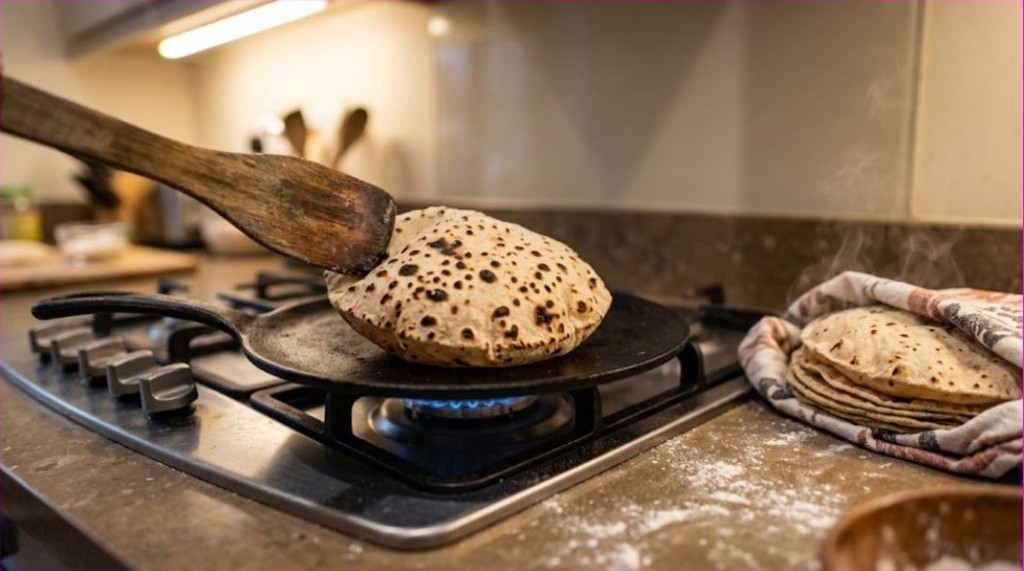
A tawa is one of the most-used pans in an Indian kitchen, and the right one depends heavily on what you’re cooking most: a flat cast iron tawa suits roti and paratha, while a slightly concave one is built for spreading dosa batter thin and evenly. Here’s how the main styles compare.
What Actually Matters
Flat versus concave is a real functional split
A roti or paratha tawa is flat, or very slightly convex, so the bread makes even contact and can be flipped and pressed. A dosa tawa is subtly concave, which keeps thin batter from running off the edge as you spread it outward from the centre. Using one for the other is possible but consistently harder, and it is the main reason households often keep two.
Heat retention is what makes bread puff
When dough hits the pan, moisture inside turns to steam and inflates it. That needs the surface to stay hot as the cold dough lands. Cast iron and carbon steel have the thermal mass to do this; thin non-stick aluminium loses surface heat quickly and recovers slowly, which is why rotis often puff less reliably on it.
Seasoning versus coating is a maintenance trade
Cast iron and carbon steel build a natural non-stick surface through polymerised oil, which improves with use but needs to be kept dry and re-oiled. Factory non-stick works immediately and needs no seasoning, but the coating degrades over a few years and cannot be restored. Neither is better in the abstract; it depends on how much upkeep you want.
The Main Types and Who Each One Suits
Cast Iron Tawa
Heavy, excellent at retaining and evenly distributing heat, and improves with age as it builds seasoning — a favorite for roti and paratha in traditional kitchens.
- Suits: Roti and paratha with excellent heat retention.
- Key features: Heavy cast iron body, naturally non-stick once seasoned, long lifespan.
Non-Stick Aluminum Tawa
Lightweight and easy to clean, with a factory non-stick coating that needs no seasoning, though it doesn’t retain heat as well as cast iron.
- Suits: Easy cleanup and lower-maintenance daily use.
- Key features: Lightweight aluminum, factory non-stick coating, quick heat-up.
Carbon Steel Tawa
A middle ground between cast iron and aluminum — lighter than cast iron but still seasons over time to develop natural non-stick properties.
- Suits: Those who want cast iron-style seasoning in a lighter pan.
- Key features: Lighter than cast iron, seasons with use, good heat conductivity.
Concave Dosa Tawa
Features a very slight upward curve toward the edges rather than a perfectly flat surface, which helps keep dosa batter contained while spreading it thin from the center out.
- Suits: Dosa, uttapam, and other thin fermented batter crepes.
- Key features: Slightly concave surface, usually cast iron or seasoned steel, wide flat cooking area.
Soapstone Tawa
Made from natural soapstone, valued for exceptional heat retention and a naturally non-stick surface once conditioned, though heavier and slower to heat than metal options.
- Suits: Those seeking a traditional, naturally non-stick stone surface.
- Key features: Natural soapstone material, excellent heat retention, requires initial conditioning.
Electric Tawa / Griddle
A standalone countertop appliance with its own heating element, useful for cooking away from a stovetop or for consistent, adjustable temperature control.
- Suits: Dorm rooms, offices, or supplementing stovetop cooking.
- Key features: Built-in heating element, adjustable temperature dial, no stovetop required.
Pre-Seasoned Traditional Tawa
A cast iron or carbon steel tawa that arrives already seasoned by the manufacturer, letting you skip the initial seasoning process before first use.
- Suits: First-time cast iron users who want to start cooking right away.
- Key features: Factory pre-seasoning, ready to use out of the box, standard cast iron durability.
What I Use and Why
I use a cast iron tawa for roti and a separate concave one for dosa, and the honest cost of that is weight and maintenance rather than money. The cast iron pan is heavy enough that flipping with one hand takes some getting used to.
The seasoning mistake I made early was washing it with soap and leaving it to air-dry on the rack. It developed a light rust film within two days in a humid kitchen. Now it goes back on a low flame for a minute after washing to drive off every trace of moisture, then gets a wipe of oil.
How to Choose
Before comparing specific models, it helps to narrow the field on these points:
- Flat vs. slightly concave surface, depending on roti/paratha vs. dosa use
- Material — cast iron, non-stick aluminum, or carbon steel
- Heat retention and even heating across the surface
- Weight and handle comfort for flipping breads
- Seasoning and maintenance requirements
If roti and paratha are your priority, a flat cast iron or carbon steel tawa gives the best heat retention for even browning. For dosa specifically, look for the subtle concave shape, which genuinely helps with spreading batter thin without it running off the edges. Cast iron and carbon steel need to be seasoned and kept dry to avoid rust, while non-stick aluminum trades some heat performance for lower maintenance — pick based on how much upkeep you’re willing to do.
Care and Common Mistakes
Dry cast iron and carbon steel on the heat, not on a rack. Residual surface water is what causes rust, and thirty seconds over a low flame removes it completely.
Do not use metal spatulas or abrasive scourers on non-stick tawas. Once the coating is scratched it deteriorates rapidly from that point outward.
Preheat properly before the first roti. A pan that is not fully up to temperature gives a pale, leathery first bread; most cooks sacrifice one to get the pan right, which is normal rather than a fault.
Frequently Asked Questions
What’s the difference between a tawa for roti and one for dosa?
A roti or paratha tawa is typically flat, while a dosa tawa has a very slight concave curve toward the edges, which helps contain thin batter as you spread it outward from the center with a ladle.
How do I season a new cast iron tawa?
Wash it, dry it completely, rub a thin layer of oil over the surface, and heat it on the stove until it just starts to smoke, then let it cool. Repeat this a few times before regular use, and avoid soap-heavy washing afterward to preserve the seasoning.
Is non-stick or cast iron better for a tawa?
Cast iron generally gives better heat retention and browning for breads like roti and paratha, while non-stick is easier to maintain and clean. Many households keep both for different purposes.

Hi! I’m the creator of scooks (Simple Cooks).I share easy, practical recipes and simple cooking ideas to help you enjoy everyday home cooking with confidence.
Happy cooking! 🍽️