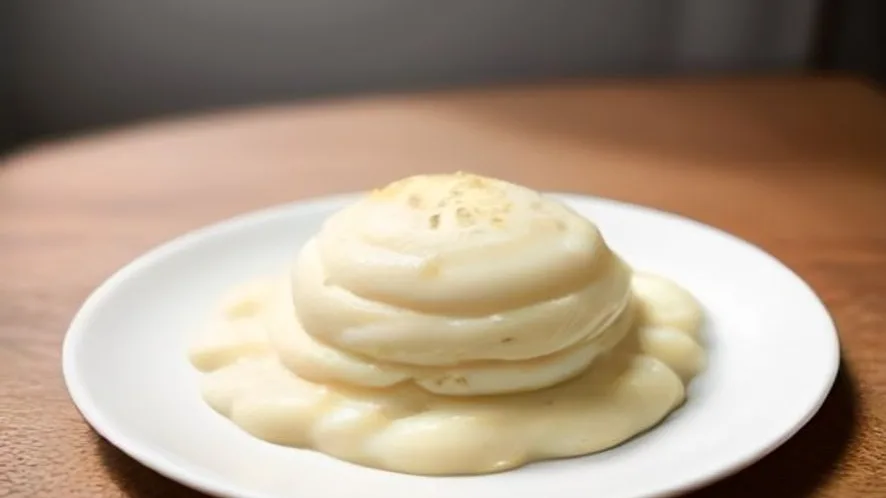
Short answer: Mayonnaise splits because the oil separates from the egg yolk emulsifier when added too quickly or if the ingredients are at very different temperatures, causing the emulsion to break. Gentle, gradual mixing and consistent temperature prevent this separation.
Mayonnaise splitting happens when its stable emulsion breaks and oil separates from the egg yolks and other liquids. This is often due to adding oil too fast or temperature differences between ingredients, which destabilize the emulsion of fat droplets suspended in water-based liquid. Emulsions rely on proteins and lecithin in egg yolks to keep oil and water mixed, but these delicate bonds can be disrupted by heat, agitation, or ingredient imbalance.
This page explains why mayonnaise splits and offers practical fixes for curdled sauces, broken hollandaise, and split cream sauces. It also covers how to adjust sauce thickness without flour, helping cooks salvage sauces mid-preparation and improve results. These techniques assist home cooks and professionals alike in recovering sauces and achieving the right texture and stability.
Written by Anisha Akter · Updated 13 September 2026
On this page
Why did my mayonnaise split
Mayonnaise splits because oil was added too quickly or the ingredients were at different temperatures, breaking the emulsion between oil and egg yolk.
Mayonnaise is an oil-in-water emulsion stabilized primarily by lecithin and proteins found in egg yolks. When oil is incorporated too rapidly, the egg yolk’s emulsifying agents cannot coat and suspend the oil droplets properly, causing them to coalesce and separate. Furthermore, temperature plays a critical role: if the oil and egg yolks differ significantly in temperature—such as cold oil added to warm yolks—the emulsification process is disrupted. Emulsions tend to break when temperatures exceed roughly 50°C (122°F) or when agitation is inconsistent. The result is visible oil separation and a watery, curdled texture.
Add oil very slowly at first, whisking steadily to allow the egg yolk to fully emulsify each droplet. Ensure all ingredients are at a similar room temperature (around 20-22°C, 68-72°F) before starting.
How to fix a curdled sauce
To fix a curdled sauce, whisk in a small amount of cold liquid or an egg yolk to re-emulsify and smooth the texture.
Curdling in sauces occurs when proteins denature and coagulate unevenly, often due to overheating or the addition of acid. This causes the sauce to separate into lumps and liquid, losing its smooth texture. Adding a cold liquid such as water, cream, or milk lowers the sauce’s temperature and dilutes the protein concentration, allowing the proteins to relax and rebind. Alternatively, whisking in a fresh egg yolk provides additional lecithin and proteins, helping to re-establish the emulsion by trapping fat droplets and binding water molecules. This repair works best if done promptly before the proteins fully coagulate and the curdled texture sets in.
Off the heat, whisk a tablespoon of cold liquid or a fresh egg yolk into the sauce gradually, then gently reheat while stirring to restore smoothness.
How to fix a broken hollandaise
Fix broken hollandaise by whisking a fresh egg yolk in a clean bowl, then slowly adding the broken sauce to re-emulsify.
Hollandaise sauce breaks when the emulsion of butter fat and egg yolks separates, often caused by overheating above 60°C (140°F) or sudden temperature changes. The lecithin and proteins in egg yolks normally stabilize this emulsion, but excessive heat causes proteins to coagulate and fat to separate, resulting in a grainy, oily texture. To fix it, start with a fresh egg yolk in a clean bowl and whisk it vigorously to create a new base. Then, very slowly add the broken sauce in small amounts while whisking continuously. This gradual incorporation allows the fresh yolk’s emulsifiers to trap the fat droplets again, rebuilding a smooth, stable sauce. Using a double boiler or gentle heat during this process prevents further breaking.
Use a double boiler to control temperature carefully and add the broken hollandaise drop by drop to the fresh yolk while whisking constantly.
How to fix split cream sauce
Fix split cream sauce by gently reheating while whisking and adding a splash of cold cream or milk to rebind the emulsion.
Cream sauces split when the fat separates from the watery phase, often due to overheating above 80°C (176°F) or prolonged boiling. The heat causes milk proteins to denature and coagulate unevenly, disrupting the stable emulsion and resulting in visible fat droplets and a grainy or oily appearance. To repair, gently warm the sauce over low heat while whisking continuously to redistribute the fat evenly. Adding a small amount of cold cream or milk lowers the temperature and introduces fresh fat and proteins, which help to rebind the emulsion. This combination restores the smooth, creamy texture characteristic of a well-made cream sauce.
Avoid boiling cream sauces; reheat gently and stir constantly, adding cold cream or milk gradually to bring the sauce back together.
How to thicken sauce without flour
Thicken sauce without flour by reducing it over low heat, adding cornstarch slurry, or using pureed vegetables or egg yolks as natural thickeners.
Reducing a sauce by simmering evaporates water, concentrating solids and increasing viscosity naturally, but requires patience and careful stirring to avoid scorching. Cornstarch slurry, made from mixing one part cornstarch with two parts cold water, thickens sauces rapidly when heated above 95°C (203°F) as starch granules swell and gelatinize, creating a smooth texture without gluten. Pureed cooked vegetables add fiber and body, providing thickness and flavor without flour or starch. Egg yolks can thicken sauces by coagulating proteins gently between 60-70°C (140-158°F), adding richness and silkiness. Each method suits different types of sauces and dietary needs, offering versatile options to adjust consistency without flour.
Simmer sauce gently to reduce or whisk in a cornstarch slurry slowly while heating until thickened; avoid boiling after adding egg yolks to prevent curdling.
How to thin a sauce that is too thick
Thin a sauce by gradually whisking in warm water, stock, milk, or cream until the desired consistency is reached.
Thick sauces contain high concentrations of solids or fats, leading to increased viscosity and sometimes pastiness. Adding a compatible warm liquid dilutes the solids and lowers viscosity, improving pourability and mouthfeel. Using warm liquid (around 40-50°C or 104-122°F) integrates smoothly without causing shock to proteins or emulsifiers that could destabilize the sauce. The choice of liquid depends on the sauce base and flavor profile—stock for savory sauces, cream or milk for richer ones. Adding liquid slowly while whisking prevents lumps and ensures a uniform texture, allowing precise control over final thickness.
Add liquid a tablespoon at a time while whisking to avoid over-thinning and maintain a smooth, even sauce texture.
How to avoid sauce splitting and texture problems
- Add oil very slowly when making emulsified sauces like mayonnaise to avoid overwhelming the emulsifier.
- Keep all ingredients at similar room temperature before combining to stabilize emulsions.
- Use gentle, controlled heat below 60°C (140°F) for egg-based sauces to prevent protein coagulation.
- Stir sauces continuously when reheating to distribute heat evenly and prevent curdling.
- Avoid boiling cream sauces; simmer gently to maintain emulsion.
- Thicken sauces gradually and carefully to avoid lumps or breakdown of texture.
Recipes that use this
Frequently Asked Questions
Can I use mustard to help prevent mayonnaise from splitting?
Yes, mustard contains natural emulsifiers such as mucilage and compounds that strengthen oil-water emulsions. Adding about one teaspoon of mustard early in the mayonnaise preparation helps stabilize the mixture by enhancing the emulsifier network, reducing the risk of splitting and improving overall texture and flavor.
Why does cream sauce sometimes separate when reheated?
Cream sauces separate because overheating causes milk fat to separate from water and milk proteins to denature and coagulate, breaking the emulsion. Reheating gently below 80°C (176°F) while whisking continuously helps maintain a smooth texture by evenly redistributing fat and preventing protein clumping, thus avoiding separation.
How long can homemade mayonnaise be safely stored?
Homemade mayonnaise should be refrigerated immediately and used within 3 to 4 days for safety. Because it contains raw egg yolks, it can harbor harmful bacteria if left at room temperature too long. Always keep it chilled, use clean utensils to avoid contamination, and discard if the mayonnaise develops off odors, discoloration, or mold.

Hi! I’m the creator of scooks (Simple Cooks).I share easy, practical recipes and simple cooking ideas to help you enjoy everyday home cooking with confidence.
Happy cooking! 🍽️