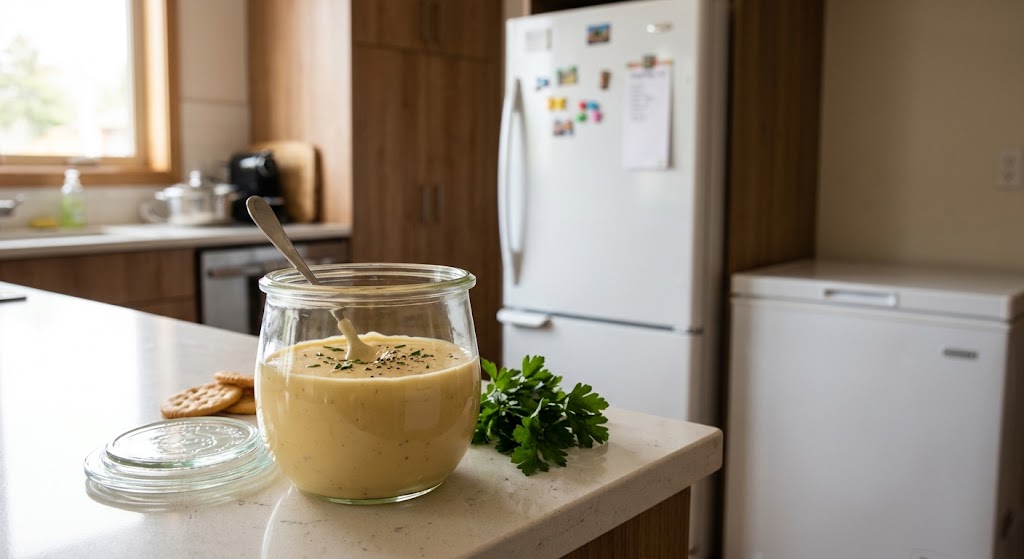
Short answer: Yes, you can freeze cheese sauce, but it often becomes grainy or separates when thawed due to fat and protein separation caused by ice crystals. Reheating gently and stirring can help restore some smoothness, though the original texture rarely fully returns.
Cheese sauce is a creamy, dairy-based condiment commonly used in many dishes, but its high fat and protein content make freezing tricky. When frozen, water in the sauce forms ice crystals that disrupt the emulsion of fat and proteins, leading to separation and graininess upon thawing. This can affect the sauce’s texture and mouthfeel, making it less appealing.
This page explains whether cheese sauce can be frozen safely, how long homemade cheese sauce lasts in the fridge, and practical tips for preserving its texture. It is designed to help home cooks and meal preppers maintain sauce quality during storage, ensuring food safety and minimizing waste.
Written by Anisha Akter · Updated 13 September 2026
Can you freeze cheese sauce
Yes, you can freeze cheese sauce, but it often becomes grainy or separates when thawed due to fat and protein separation caused by ice crystals.
Cheese sauce is an emulsion of fat, water, and milk proteins that creates its creamy texture. When frozen, the water content turns into ice crystals, which expand and disrupt this emulsion. The fat globules and proteins separate, causing the sauce to become grainy, curdled, or watery after thawing. The extent of separation depends on the fat content, the type of cheese used, and how the sauce was prepared. For example, sauces made with processed cheese or added stabilizers may freeze better. The freezing temperature should be -18°C (0°F) or lower to prevent bacterial growth during storage.
Freeze cheese sauce in airtight, freezer-safe containers, leaving about 1 to 2 cm (½ to ¾ inch) headspace to allow for expansion. Thaw the sauce slowly in the refrigerator overnight and reheat gently over low heat, stirring constantly to help recombine the ingredients and improve texture.
How long does homemade sauce last in the fridge
Homemade cheese sauce lasts 3 to 4 days in the fridge when stored in an airtight container at or below 4°C (40°F).
Because cheese sauce contains dairy, it is highly perishable and susceptible to bacterial growth. The USDA recommends storing dairy-based products at or below 4°C (40°F) to slow bacterial proliferation and maintain safety. Homemade cheese sauce should be kept in airtight containers to limit exposure to air, which can cause oxidation and spoilage. After 3 to 4 days, the risk of harmful bacteria such as Listeria monocytogenes increases, and the sauce may develop off-flavors, sour smells, or visible mold. Always inspect the sauce for any signs of spoilage before use, and discard if doubtful.
Store cheese sauce in small, airtight containers placed in the coldest part of the fridge, typically near the back. Label containers with the preparation date to track storage time and use within 4 days for safety and best quality.
How to avoid texture and spoilage issues with cheese sauce
- Cool cheese sauce rapidly to room temperature before refrigerating to minimize bacterial growth.
- Use fresh, high-quality cheese and dairy ingredients to improve sauce stability and flavor.
- Avoid overheating cheese sauce during reheating to prevent protein coagulation and curdling.
- Store sauce in small portions to reduce repeated temperature fluctuations and exposure to air.
- Use airtight, freezer-safe containers to prevent freezer burn and moisture loss during freezing.
- Stir sauce well before freezing to distribute fat and proteins evenly and reduce separation.
Recipes that use this
Frequently Asked Questions
Can I reheat frozen cheese sauce without it separating?
You can reheat frozen cheese sauce gently over low heat, stirring constantly to prevent separation. Avoid boiling, as temperatures above 80°C (176°F) cause milk proteins to tighten and squeeze out water, leading to curdling. Adding a splash of milk or cream during reheating can help restore creaminess and smooth texture.
Is it safe to freeze cheese sauce with added spices or vegetables?
Freezing cheese sauce with spices is generally safe as spices maintain their flavor after freezing. However, vegetables may lose texture or become mushy after thawing due to cell wall breakdown from ice crystals. For optimal texture, freeze the sauce separately from chunky ingredients and combine after thawing.
What is the best container for freezing cheese sauce?
The best containers are airtight, freezer-safe plastic or glass containers with tight-fitting lids or heavy-duty freezer bags. Removing as much air as possible before sealing reduces ice crystal formation and freezer burn, which degrade texture and flavor. Label containers with the date and contents for easy identification.

Hi! I’m the creator of scooks (Simple Cooks).I share easy, practical recipes and simple cooking ideas to help you enjoy everyday home cooking with confidence.
Happy cooking! 🍽️