Meatloaf has a reputation problem, and it is deserved by most of the meatloaf that gets made. Dense, dry, grey, crumbling into the gravy — that is what people picture. But the failure modes are well understood and every one of them has a straightforward fix.
Dryness comes from too little fat and a panade that is too small. Crumbling comes from under-binding or over-mixing, which sound contradictory but are not. Greyness comes from baking in a loaf pan where the sides steam instead of roast. And a glaze that slides off was applied too early or contained too little sugar to caramelise.
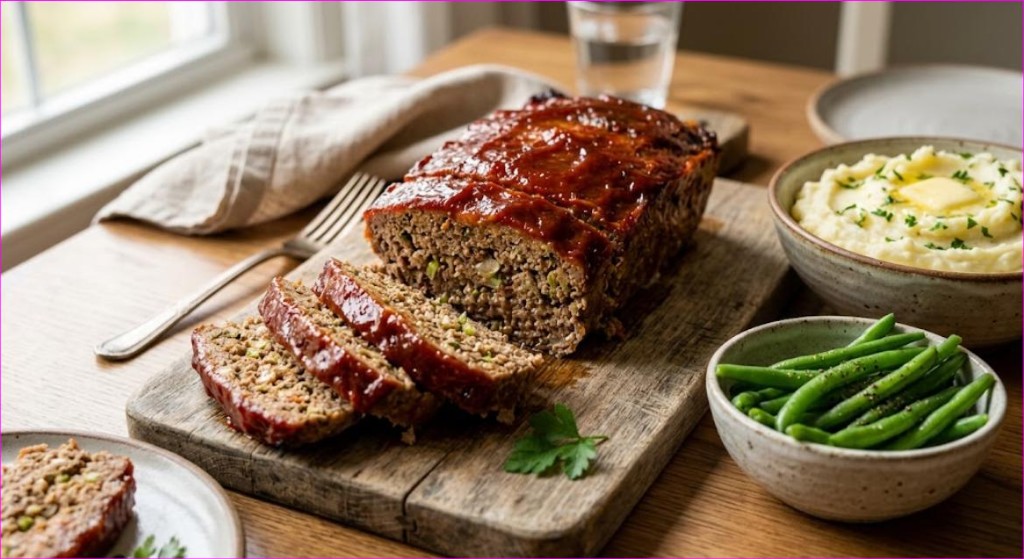
This version is baked free-form on a sheet pan, which gives you a browned crust on all four sides, and glazed in two stages so the surface lacquers instead of burning. It takes about eighty minutes, serves six, and makes exceptional sandwiches the next day.
- Prep20 min
- Cook1 hr
- Total1 hr 20 min
- Serves6 servings
- CourseMain Course
- CuisineAmerican
Written by Anisha Akter · Updated 24 September 2026
Why This Meatloaf Recipe Works
- A milk-and-breadcrumb panade traps moisture inside the meat as it cooks, which is what keeps the loaf tender.
- 80/20 ground beef mixed with pork gives enough fat to stay juicy through an hour in the oven.
- Baking free-form on a sheet pan browns all four sides instead of steaming two of them.
- The glaze goes on in two coats, the second in the final fifteen minutes, so it caramelises without scorching.
- Mixing by hand and stopping early keeps the texture tender rather than springy.
Ingredients and Why They Matter
The panade ratio is the most important number in this recipe. Everything else has room for preference.
- 1 lb (450 g) ground beef, 80/20
- 1/2 lb (225 g) ground pork
- 1 cup (60 g) fresh breadcrumbs or 3/4 cup panko
- 1/2 cup (120 ml) whole milk
- 1 medium onion, grated or very finely diced
- 3 cloves garlic, minced
- 2 large eggs
- 2 tbsp Worcestershire sauce
- 2 tbsp chopped fresh parsley
- 1 1/2 tsp salt
- 1 tsp freshly ground black pepper
- 1 tsp dried thyme
- For the glaze: 1/2 cup ketchup, 2 tbsp brown sugar, 1 tbsp cider vinegar, 1 tsp Dijon mustard
Key Ingredient Notes
The panade (breadcrumbs soaked in milk). Starch and milk proteins form a gel that physically traps moisture inside the meat mixture. Without a panade, the meat proteins contract during cooking and squeeze out water, which is why lean meatloaf turns dry. One cup of breadcrumbs to half a cup of milk per one and a half pounds of meat is the working ratio.
A beef and pork mix. Pork adds fat and a milder, sweeter flavour that balances beef’s mineral edge. If you use only beef, use 80/20 and not leaner. The classic supermarket meatloaf mix of beef, pork and veal works well too.
Grated onion. Grating releases the onion’s juice into the mixture and eliminates the raw crunchy pieces you get from dicing. If you dice, cook the onion first — raw diced onion does not soften enough in an hour.
Brown sugar in the glaze. Sugar is what caramelises. A ketchup-only glaze stays wet and tastes flat. Two tablespoons of brown sugar plus the acid from vinegar gives you a glossy, tangy lacquer.
Step-by-Step Instructions
- Heat the oven to 350°F (175°C) and line a rimmed baking sheet with foil or parchment.
- Combine the breadcrumbs and milk in a large bowl and leave for 5 minutes until the bread has absorbed the liquid and looks like a paste. This is the panade.
- Add the grated onion, garlic, eggs, Worcestershire, parsley, salt, pepper and thyme to the panade and mix thoroughly. Getting the seasoning evenly distributed now means less handling of the meat later.
- Add the ground beef and pork. Mix with your hands using a light lifting and folding motion until just combined, about 30 seconds. Stop the moment you no longer see streaks of unmixed meat.
- Whisk the glaze ingredients together in a small bowl.
- Turn the mixture onto the baking sheet and shape it into a loaf roughly 9 inches long, 5 inches wide and 2 inches tall. Smooth the surface and pat the sides so there are no cracks.
- Brush half the glaze over the top and sides in an even layer.
- Bake for 40 minutes.
- Brush on the remaining glaze and return to the oven for 15 to 25 minutes, until an instant-read thermometer in the centre reads 160°F (71°C).
- If you want a darker crust, broil for 2 to 3 minutes at the end, watching closely — the sugar in the glaze goes from caramelised to burnt quickly.
- Rest the meatloaf on the pan for 15 minutes before slicing. The juices redistribute and the loaf firms up enough to cut cleanly.
Common Mistakes and How to Avoid Them
Over-mixing the meat Working ground meat hard develops myosin, the same protein that makes sausage springy. In a meatloaf that means a dense, bouncy texture. Mix with your fingertips for thirty seconds and stop, even if it looks slightly uneven.
Skipping the panade Bread soaked in milk is the single reason a meatloaf stays moist through an hour of dry heat. Dry breadcrumbs stirred in without liquid do the opposite — they absorb moisture from the meat.
Using a loaf pan A loaf pan traps rendered fat and steam against three sides of the loaf, giving you a pale, boiled exterior and a greasy bottom. Shaping free-form on a sheet pan lets the fat drain and all four sides brown.
Glazing only at the start A glaze applied at the beginning of a 60-minute bake burns and turns bitter. Half at the start builds a base layer, half in the final fifteen minutes gives the shine.
Tips for Best Results
- Use a thermometer rather than time. Loaf thickness varies more than oven temperature, and 160°F is the number that matters.
- Cook a teaspoon of the mixture in a small skillet before shaping the loaf and taste it. It is the only way to check the seasoning without eating raw meat.
- If your mixture feels wet and slack, add a few more breadcrumbs. If it feels stiff, add a splash of milk. Ground meat moisture varies between packages.
- Let the shaped loaf rest in the fridge for 30 minutes before baking if you have time. It holds its shape better in the oven.
- Save the drippings on the pan. Whisked with a little flour and stock they make a fast gravy.
Variations to Try
Bacon-wrapped meatloaf. Lay strips of bacon over the shaped loaf, overlapping slightly, before the first glaze. Adds fat, smoke and a crisp exterior.
Turkey meatloaf. Use 1 1/2 lb ground turkey thigh, not breast, and add 2 tablespoons of olive oil to compensate for the lower fat. Bake to 165°F.
Italian-style meatloaf. Swap the thyme for oregano and basil, add 1/2 cup grated Parmesan, and use marinara in place of the ketchup glaze.
Meatloaf muffins. Divide the mixture into a 12-cup muffin tin. Bake at 375°F for 25 minutes. Faster, and every portion gets a glazed crust.
Storage, Freezing and Reheating
Refrigerate whole or sliced for up to 4 days. Meatloaf slices more cleanly when fully cold, which is why leftover sandwiches are so good.
Reheat slices in a covered skillet with a splash of stock over medium-low heat, or in a 325°F oven for 15 minutes.
Freeze cooked slices or the whole loaf, wrapped tightly, for up to 3 months. You can also freeze the raw shaped loaf and bake it from frozen, adding about 30 minutes.
What to Serve With It
Frequently Asked Questions
Why does my meatloaf fall apart?
Usually too little binder or not enough fat. Two eggs and a proper panade for a pound and a half of meat should hold it together. Also let it rest fifteen minutes — a hot meatloaf is much more fragile than a rested one.
Should I bake meatloaf in a loaf pan or free-form?
Free-form on a sheet pan gives a far better crust and lets the fat drain away. A loaf pan produces a softer, paler, greasier result. If you use a pan, place the loaf on a rack inside it.
What internal temperature should meatloaf reach?
160°F (71°C) for beef and pork; 165°F (74°C) if you use poultry. Check with an instant-read thermometer in the thickest part.
Can I make meatloaf ahead?
Yes. Shape it, cover, and refrigerate up to 24 hours before baking. Add about 10 minutes to the cooking time since it starts cold.
Why is my meatloaf dry?
Too lean a meat, no panade, or overcooking. Use 80/20 beef, include the milk-soaked breadcrumbs, and pull it from the oven at 160°F rather than guessing.
Can I use oats instead of breadcrumbs?
Yes. Use 3/4 cup of rolled oats soaked in the same half cup of milk. The texture is slightly heartier but it binds and retains moisture just as well.

Hi! I’m the creator of scooks (Simple Cooks).I share easy, practical recipes and simple cooking ideas to help you enjoy everyday home cooking with confidence.
Happy cooking! 🍽️