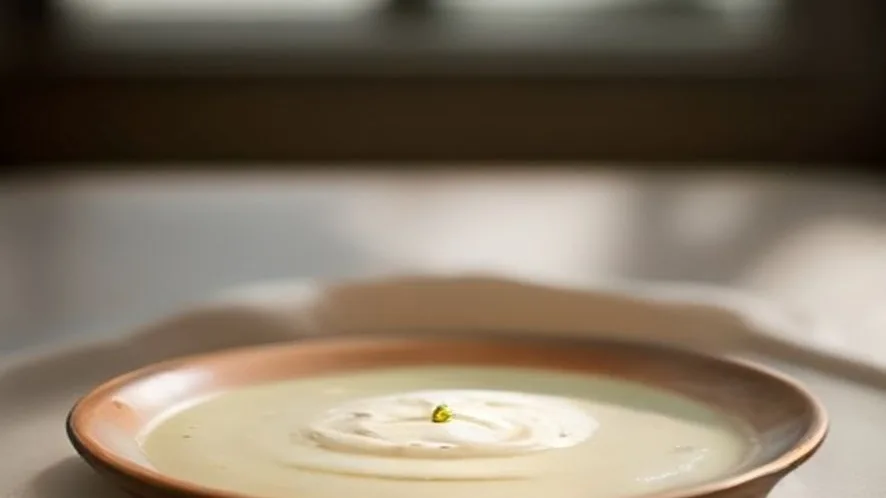
Short answer: Yes, you can freeze soup with cream in it, but the cream often separates and changes texture after thawing. To minimize this, cool the soup quickly, store airtight, and reheat gently while stirring to help recombine the cream.
Cream-based soups are popular but freezing them can cause the cream to separate, resulting in a grainy or curdled texture. This happens because freezing breaks the emulsion of fat and water in the cream, causing the fat to clump and the liquid to separate. Understanding this helps manage expectations and find ways to preserve soup quality.
This page explains if and how you can freeze cream soups, how to freeze chilli safely, how long soups and homemade stocks last in the fridge, the best ways to store stock, and how to reheat soups without the cream separating. It helps cooks preserve leftovers and plan meals without wasting food.
Written by Anisha Akter · Updated 13 September 2026
On this page
Can you freeze soup with cream in it
Yes, you can freeze soup with cream, but expect some separation and texture changes after thawing.
Cream is an emulsion of fat and water stabilized by proteins. Freezing causes ice crystals to disrupt this emulsion, separating fat from liquid and creating a grainy or curdled texture. The temperature drop to around -18 0C (0b0F) breaks the structure, and thawing cannot fully restore it. However, the soup remains safe to eat and the flavor is intact. The severity of separation depends on the cream’s fat content: higher fat creams (such as heavy cream with 36-40% fat) tend to hold better than lighter creams or milk-based creams.
Cool the soup quickly before freezing in airtight containers. When reheating, do so gently over low heat while stirring constantly to help re-emulsify the cream as much as possible.
Can you freeze chilli
Yes, chilli freezes well and can be stored frozen for up to 4 months without significant loss of flavor or texture.
Chilli, typically made from meat, beans, tomatoes, and spices, freezes effectively because its ingredients are stable at freezing temperatures (-18b0C or 0b0F). Freezing halts bacterial growth and enzymatic reactions that cause spoilage. Properly cooled and stored in airtight containers, chilli maintains its texture and flavor when thawed and reheated. The thick, hearty texture of chilli also helps it hold up well to freezing compared to more delicate soups. However, if the chilli contains dairy or cream, the same separation issues as cream soups may occur upon thawing.
Allow chilli to cool to room temperature before transferring to freezer-safe containers. Leave some headspace for expansion and label with date. Thaw overnight in the fridge for best results.
How long does soup last in the fridge
Soup lasts safely in the fridge for 3 to 4 days when stored properly at or below 4b0C (40b0F).
Refrigeration slows bacterial growth but does not stop it completely. Most soups, including those with dairy or meat, should be consumed within 3 to 4 days to avoid foodborne illness. Higher fridge temperatures accelerate spoilage. After this period, bacteria like Listeria or Salmonella can multiply to unsafe levels. Additionally, texture and flavor degrade over time, especially in cream-based soups, which may separate or develop off flavors. Acidic ingredients like tomatoes can also alter soup pH, affecting shelf life. Always check for off smells, mold, or unusual textures before consuming.
Store soup in shallow, airtight containers to cool it quickly and keep it cold. Always reheat to at least 74b0C (165b0F) before serving.
How long does homemade stock last
Homemade stock lasts 3 to 4 days in the fridge and up to 6 months when frozen at -18b0C (0b0F).
Fresh stock is rich in nutrients and proteins that provide a fertile environment for bacterial growth if not stored properly. At refrigerator temperatures (4b0C or 40b0F), bacterial growth slows, limiting safe storage to 3 to 4 days. Freezing stock at -18b0C (0b0F) or below halts microbial activity, preserving its safety and flavor for up to 6 months. Over extended freezing, some flavor and aroma compounds may degrade, but stock remains safe to consume well beyond this period if kept frozen continuously. Stock with added salt or acid may last slightly longer due to inhibitory effects on bacteria, but refrigeration guidelines remain the same.
Cool stock rapidly by placing the pot in an ice bath before refrigerating. Freeze in portioned containers for convenience and label with date.
How to store homemade stock
Store homemade stock in airtight containers, cooled quickly, refrigerated for up to 4 days or frozen for longer storage.
Proper storage of homemade stock is crucial to prevent spoilage and maintain quality. After cooking, stock should be cooled rapidly to below 21b0C (70b0F) within two hours, then further cooled to below 4b0C (40b0F) within four hours to minimize bacterial growth. Using shallow containers increases surface area, accelerating cooling. Airtight containers prevent contamination and reduce moisture loss. When freezing, leave about 2.5 cm (1 inch) of headspace to allow for expansion, preventing container cracking. Label containers with the date to track freshness. Avoid prolonged storage in the fridge beyond 4 days to reduce risk of spoilage. Avoid leaving stock at room temperature for extended periods, as this can promote bacterial growth.
Divide stock into small, shallow portions in freezer-safe airtight containers or heavy-duty freezer bags. Cool the stock quickly in an ice bath before transferring to storage to reduce time in the temperature danger zone.
How to reheat soup without separating
Reheat soup gently over low heat, stirring frequently to prevent the cream from separating.
Cream-based soups contain emulsified fat and water stabilized by proteins. Heating above 80b0C (176b0F) causes these proteins to denature and tighten, squeezing out water and causing curdling or separation. To maintain a smooth texture, reheat the soup slowly over low heat, stirring constantly to distribute heat evenly and help the emulsion stay intact. Using a double boiler or indirect heat method can also prevent hot spots that cause separation. Avoid boiling the soup during reheating, as temperatures above 100b0C (212b0F) accelerate breakdown of the emulsion. Adding a small amount of fresh cream or milk at the end of reheating can also help restore creaminess.
Heat soup slowly on the stove over low heat or in a double boiler, stirring often. Remove from heat just before boiling and serve immediately for best texture.
How to avoid texture and safety issues with creamy soups and stocks
- Cool soups and stocks quickly before storing to prevent bacterial growth.
- Use airtight containers to minimize exposure to air and prevent freezer burn.
- Label containers with date to track storage times and ensure freshness.
- Avoid boiling cream soups during reheating to maintain smooth texture.
- Freeze soups without cream when possible, adding cream fresh after thawing.
- Portion soups before freezing to speed up thawing and reduce waste.
Recipes that use this
Frequently Asked Questions
Can I add cream to soup after freezing it?
Yes, adding cream to soup after thawing is an effective way to avoid texture changes caused by freezing. Heat the thawed soup thoroughly and stir in fresh cream at the end of reheating. This preserves the smooth, creamy texture that freezing often disrupts, especially since freezing breaks the emulsion of fat and water in cream, causing separation.
Is it safe to refreeze soup once thawed?
Refreezing soup is safe only if it was thawed in the refrigerator and not left at room temperature. Each freeze-thaw cycle can degrade texture and flavor, especially in cream-based soups where the emulsion may break down further. Limit refreezing to maintain food safety and quality.
Can I freeze soup in glass containers?
Glass containers can be used for freezing if they are labeled freezer-safe and you leave enough headspace for expansion, typically about 2.5 cm (1 inch). Avoid sudden temperature changes, such as moving directly from freezer to hot water, to prevent cracking. Plastic or silicone containers are generally more forgiving for freezing due to their flexibility.

Hi! I’m the creator of scooks (Simple Cooks).I share easy, practical recipes and simple cooking ideas to help you enjoy everyday home cooking with confidence.
Happy cooking! 🍽️