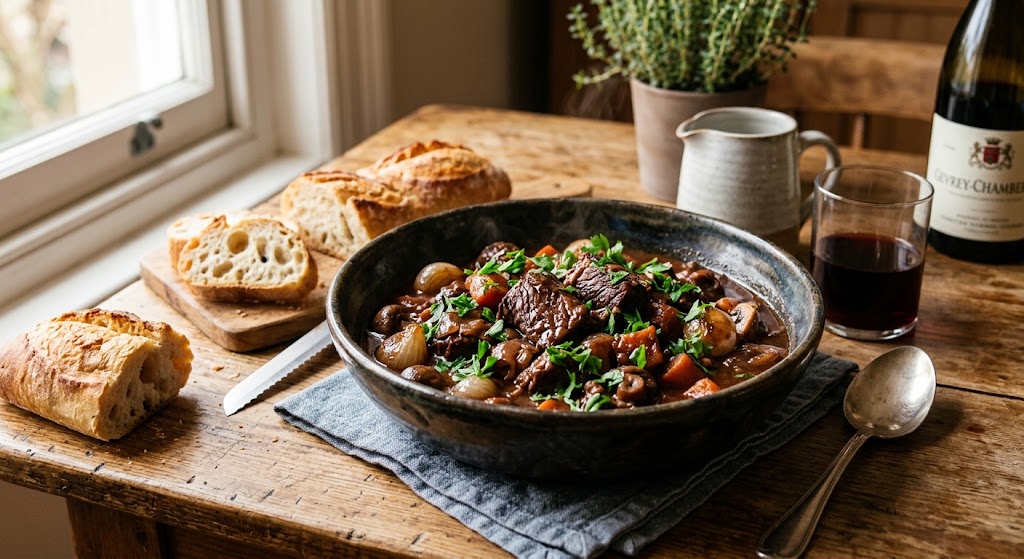
Beef Bourguignon is a classic French stew originating from the Burgundy region, known for its rich red wines which impart deep flavor to the dish. Traditionally, it combines slow-braised beef with red wine, aromatic vegetables, and herbs to create a luxurious and hearty meal. Its historical roots date back centuries as a peasant dish elevated by quality local ingredients.
Home cooks often struggle with beef bourguignon due to the challenge of achieving tender beef without overcooking and a sauce that is both flavorful and properly thickened. Overcooking or using the wrong cut of beef can cause tough meat, while insufficient reduction can yield a thin sauce. Understanding the braising technique and ingredient balance is essential to avoid these common pitfalls.
This recipe delivers a step-by-step approach using classic braising and finishing techniques to ensure tender beef and a deeply flavored sauce. Total preparation and cooking time is about 3 hours, yielding 6 servings suitable for a family dinner or special occasion.
- Prep30 min
- Cook2 hr 30 min
- Total3 hr
- Serves6 servings
- CourseMain Course
- CuisineFrench
Written by Anisha Akter · Updated 12 September 2026
A note on method: This method uses a heavy Dutch oven braised in the oven instead of a traditional tandoor or open fire, which is standard for beef bourguignon and does not compromise authenticity.
Why This Beef Bourguignon Recipe Works
- Browning the beef in small batches raises the pan temperature above 300°F (150°C), initiating the Maillard reaction which creates rich flavors and a good crust without steaming the meat.
- Sweating vegetables gently in butter releases their natural sugars and softens them without browning, which builds a subtle flavor base for the sauce.
- Deglazing the pan with red wine loosens browned bits, dissolves flavorful caramelized compounds, and extracts wine tannins to deepen the sauce complexity.
- Slow braising in the oven at 325°F (160°C) breaks down connective tissue in the beef collagen into gelatin, tenderizing the meat and enriching the sauce texture.
- Finishing the sauce by reducing it and adding beurre manié (butter and flour paste) thickens the sauce to a velvety consistency and balances acidity while preserving the wine’s aromatic notes.
Ingredients and Why They Matter
The ingredients list includes both the meat and aromatics essential for traditional beef bourguignon.
- 3 lb (1.4 kg) beef chuck, cut into 2-inch (5 cm) cubes
- Salt and freshly ground black pepper
- 3 tbsp (45 ml) vegetable oil
- 6 oz (170 g) pearl onions, peeled
- 8 oz (225 g) button mushrooms, cleaned and halved
- 2 large carrots, peeled and sliced 1/2 inch (1.3 cm) thick
- 2 medium yellow onions, sliced into 1/2 inch (1.3 cm) wedges
- 4 cloves garlic, minced
- 2 tbsp (30 g) tomato paste
- 2 cups (480 ml) dry Burgundy red wine or Pinot Noir
- 2 cups (480 ml) beef stock, preferably homemade or low-sodium
- 2 bay leaves
- 4 sprigs fresh thyme
- 2 tbsp (30 g) unsalted butter, softened
- 2 tbsp (16 g) all-purpose flour
- Fresh parsley, chopped, for garnish
Key Ingredient Notes
Beef chuck — Beef chuck is rich in connective tissue and marbling, which breaks down during slow braising into gelatin that enriches the sauce and ensures tender meat; lean cuts dry out or become tough. If unavailable, use brisket or short ribs but adjust cooking time accordingly.
Burgundy red wine — Using a dry Burgundy or Pinot Noir wine provides authentic acidity and fruitiness that complements beef and vegetables; avoid sweet or cooking wines which alter the sauce flavor negatively. Substitute with other dry red wines like Merlot if necessary.
Beurre manié — A paste made from equal parts softened butter and flour, beurre manié is added at the end to thicken the sauce smoothly without lumps, offering a glossy finish; it also mellows acidity. Cornstarch slurry can substitute but may yield a less rich texture.
Pearl onions — Pearl onions provide mild sweetness and texture contrast; peeling them by cutting off the root end and removing the skin manually preserves their shape and flavor. Shallots or small diced yellow onions can substitute if pearl onions are unavailable but change texture.
Step-by-Step Instructions
- Preheat your oven to 325°F (160°C) and pat beef cubes dry with paper towels to remove surface moisture, which helps achieve proper browning.
- Season the beef cubes generously with salt and pepper. Heat 2 tablespoons of vegetable oil in a large heavy-bottomed Dutch oven over medium-high heat until shimmering but not smoking.
- Add beef in small batches, avoiding overcrowding, and sear on all sides until a deep brown crust forms, about 3-4 minutes per batch; transfer browned beef to a plate to rest.
- Add pearl onions and sliced carrots to the same pot with 1 tablespoon of butter, reducing heat to medium-low to sweat the vegetables for about 5 minutes, stirring occasionally to soften without browning.
- Add sliced yellow onions and minced garlic, cooking gently for another 5 minutes until softened and translucent but not colored, which preserves sweetness.
- Stir in tomato paste and cook for 1-2 minutes to remove raw flavor and slightly caramelize the paste, enhancing depth in the sauce.
- Pour in the red wine, scraping the bottom of the pot with a wooden spoon to deglaze and dissolve browned bits; bring to a simmer and reduce by about one-third, approximately 10 minutes, concentrating the flavors.
- Return the beef and any accumulated juices to the pot; add beef stock, bay leaves, and thyme sprigs; bring to a simmer on the stovetop, then cover with a tight-fitting lid and transfer the pot to the preheated oven.
- Cook in the oven for about 2 to 2½ hours, checking once after 1½ hours; the beef should be fork-tender but not falling apart, and the sauce thickened and flavorful.
- While the beef cooks, sauté mushrooms in a separate pan with 1 tablespoon butter over medium heat until golden brown and their moisture evaporates, about 7-10 minutes; set aside.
- Once the beef is tender, remove the pot from the oven and discard bay leaves and thyme stems; skim any excess fat from the surface.
- Make the beurre manié by mixing softened butter and flour into a smooth paste; stir it into the stew over medium heat and simmer gently for 5-10 minutes until the sauce thickens to a glossy, coat-the-back-of-a-spoon consistency.
- Add sautéed mushrooms and pearl onions back to the stew, warming through for 3-5 minutes to integrate flavors before serving.
- Adjust salt and pepper to taste; garnish with chopped fresh parsley and serve hot with crusty bread or buttered noodles.
Food safety note: Beef should be cooked to a minimum internal temperature of 145°F (63°C) according to USDA guidelines, but slow braising at 325°F (160°C) for over 2 hours ensures thorough cooking and breakdown of connective tissue for tenderness. To ensure safety and quality, use a food thermometer when uncertain. For more food safety details, visit FoodSafety.gov.
Common Mistakes and How to Avoid Them
Overcrowding the pan during browning
Adding too much beef at once lowers pan temperature and causes steaming rather than browning, resulting in less flavor development and pale meat; brown the beef in small batches to maintain high heat and proper Maillard reaction.
Skipping wine reduction
Not reducing the wine before adding liquid dilutes the sauce and leaves a raw alcohol taste; simmer the wine until it reduces by one-third to concentrate flavor and cook off alcohol.
Cooking at too high a temperature
Braiding at temperatures above 350°F (175°C) can cause the meat to dry out and toughen; maintain a low oven temperature around 325°F (160°C) for gentle collagen breakdown and tender meat.
Adding flour directly to the stew
Sprinkling flour into the stew without mixing with butter causes lumps and uneven thickening; always prepare beurre manié by blending flour with softened butter before stirring into the sauce.
Tips for Best Results
- Peeling pearl onions by cutting off the root end and removing the skin manually preserves their shape and flavor.
- Allow the beef to rest after browning to retain juices and improve texture during braising.
- Use a wooden spoon to scrape browned bits from the bottom of the pan when deglazing to incorporate all flavor compounds into the sauce.
- Finish with fresh parsley for a bright herbal note that balances the rich sauce.
- Sauté mushrooms separately to evaporate moisture and develop a golden color before adding back to the stew for better texture.
Variations to Try
Vegetarian Bourguignon — Replace beef with hearty vegetables like eggplant, mushrooms, and seitan; use vegetable stock and omit the beurre manié for a lighter sauce, adjusting cooking times accordingly.
Instant Pot Beef Bourguignon — Sear beef and vegetables using the sauté function, then pressure cook at high pressure for 35 minutes with natural release for faster preparation; finish sauce by simmering with beurre manié on stovetop.
Gluten-Free Version — Omit all-purpose flour and substitute beurre manié with a slurry of cornstarch and cold water added at the end to thicken the sauce without gluten.
White Wine Bourguignon — Use dry white Burgundy or Sauvignon Blanc instead of red wine for a lighter, slightly tangier sauce; adjust vegetable choices by adding leeks and pearl onions for complementary flavors.
Storage, Freezing and Reheating
- Store leftover beef bourguignon in an airtight container in the refrigerator for up to 3 days, as the flavors deepen with time.
- Reheat gently on the stove over low heat to prevent overcooking the beef and breaking the sauce.
- Beef bourguignon freezes well for up to 3 months; thaw in the refrigerator overnight and reheat slowly to maintain texture.
- Avoid freezing the sautéed mushrooms separately as their texture may become mushy upon thawing.
Serve it with
Frequently Asked Questions
Can I use other cuts of beef besides chuck for beef bourguignon?
Chuck is preferred for its balance of fat and connective tissue that breaks down during braising, yielding tender meat and rich sauce; brisket or short ribs can be used but may require longer cooking times to become tender.
Why does my beef bourguignon sauce turn out too thin?
A sauce that is too thin usually means insufficient reduction of liquid or skipping the beurre manié; reducing the wine and stock before braising and finishing with a butter-flour paste thickens the sauce properly.
Can I make beef bourguignon ahead of time?
Yes, beef bourguignon benefits from resting overnight in the refrigerator, which allows flavors to meld and improves taste; gently reheat before serving.
What type of wine is best for beef bourguignon?
Dry Burgundy or Pinot Noir wines are preferred for their acidity and complementary flavors; other dry red wines like Merlot can substitute without significantly altering the dish.
Is beef bourguignon traditionally thickened with flour?
Yes, beurre manié, a mixture of butter and flour, is used to thicken the sauce smoothly and add richness while preserving the wine’s aromatic qualities.
What side dishes pair well with beef bourguignon?
Classic accompaniments include buttered noodles, mashed potatoes, or crusty French bread to soak up the rich sauce, along with steamed green vegetables for balance.

Hi! I’m the creator of scooks (Simple Cooks).I share easy, practical recipes and simple cooking ideas to help you enjoy everyday home cooking with confidence.
Happy cooking! 🍽️