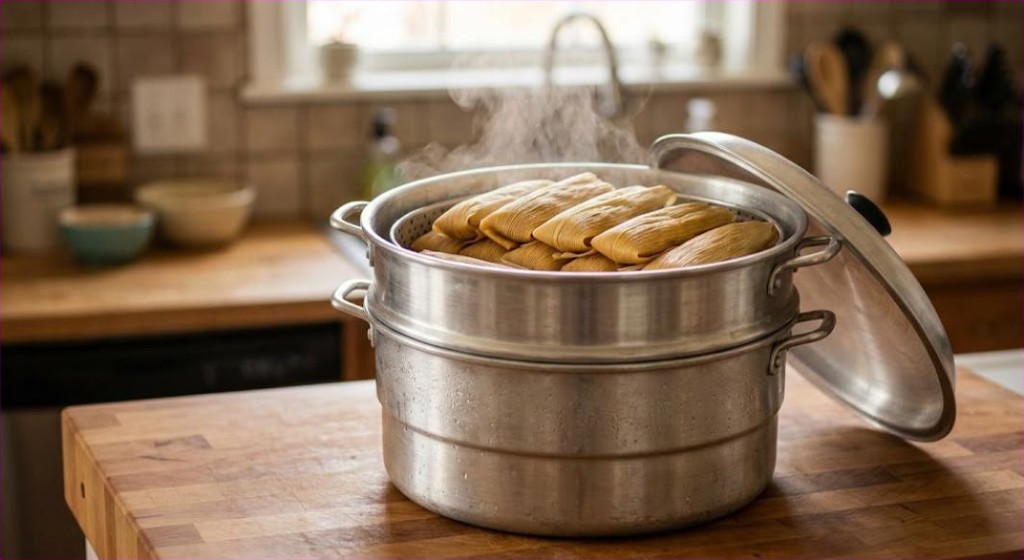
A dedicated tamale steamer (tamalera) solves one very specific problem: holding a large number of tamales upright, packed snugly, above simmering water for over an hour without them tipping over or drying out. You can improvise with a stockpot and a steamer basket, but a purpose-built option makes a big batch much less fussy.
What Actually Matters
Capacity should match your actual batch, not your ambition
Tamales are almost always made in large batches because the process rewards it, but a pot sized for forty tamales is slow to come to steam and awkward to store if you usually make a dozen. Work backwards from how many you realistically make in one session, and remember that tamales freeze extremely well, so a modest pot used twice beats a large one used once.
The rack height decides whether it steams or boils
Tamales must sit above the water line for the full hour or more of cooking. If the insert sits too low, the bottom layer boils, the masa becomes waterlogged, and it never sets properly. A purpose-built tamalera has this geometry designed in; an improvised setup needs you to check it deliberately before loading.
The Main Options and Who Each One Suits
Stainless Steel Tamale Steamer Pot
A tall stockpot-style vessel with a fitted perforated insert, designed specifically to hold tamales upright above the waterline for the full steaming time.
- Suits: Regular tamale makers who want a durable, long-lasting pot.
- Key features: Stainless steel construction, included perforated insert, tight-fitting lid.
Aluminum Tamalera
A lighter-weight, faster-heating alternative to steel, traditional in many Mexican households and typically more affordable.
- Suits: Budget-conscious buyers who still want a dedicated tamale pot.
- Key features: Lightweight aluminum body, quick heat-up, classic tamalera shape.
Multi-Tier Steamer Insert
An insert designed to fit inside a pot you already own, sometimes with multiple perforated tiers to separate tamales into batches.
- Suits: Cooks who don’t want to buy a whole new dedicated pot.
- Key features: Fits standard stockpots, multiple tier option, more storage-friendly than a full tamalera.
Electric Tamale Steamer
A countertop electric appliance with a built-in heating element, removing the need for stovetop space and offering more consistent, hands-off steaming.
- Suits: Big batches without tying up a stovetop burner for over an hour.
- Key features: Built-in heating element, consistent temperature control, frees up stovetop space.
Stockpot and Steamer Basket Combo
A DIY-friendly setup pairing a large stockpot you likely already own with a separate expandable steamer basket to hold tamales above the water.
- Suits: Occasional tamale makers who don’t want dedicated equipment.
- Key features: Uses existing cookware, expandable basket fits various pot sizes, lower upfront cost.
Large-Capacity Commercial-Style Steamer
Sized for very large batches, common among households that make tamales for holidays or in bulk to freeze and share.
- Suits: Big family gatherings or holiday tamale-making traditions.
- Key features: High capacity, often 40+ tamale capacity, heavier and larger than home-scale pots.
Compact Steamer for Small Batches
A smaller-footprint option for making a dozen or so tamales at a time, without the bulk of a large tamalera.
- Suits: Small households or testing a new tamale recipe before scaling up.
- Key features: Smaller capacity, easier storage, quicker to heat than large pots.
What I Use and Why
I use a tall stockpot with a separate expandable steamer basket rather than a dedicated tamalera, because tamale-making happens twice a year in my kitchen and a single-purpose pot could not justify the cupboard space. It works, with one caveat: the expandable basket flexes under a full load, so I add a folded strip of foil underneath for support.
The mistake that cost me a batch was not the equipment but the water. I topped the pot up with cold water partway through, the temperature dropped, and the steaming effectively stalled for several minutes. Boiling water from a kettle, always, is the fix.
How to Choose
Before comparing specific models, it helps to narrow the field on these points:
- Capacity — how many tamales it holds standing upright
- Whether it includes a steamer rack/insert or needs one added
- Material — aluminum heats faster, stainless steel is more durable
- Lid fit, to minimize steam loss over a long cook
- Compatibility with your stovetop, including induction if relevant
Match the steamer size to how often you actually make tamales in bulk — a large commercial-style pot is overkill if you’re only steaming a dozen at a time, and a small pot is frustrating if tamale-making is a big annual tradition. Whatever size you choose, make sure the perforated insert sits well above the waterline so the tamales steam rather than boil, and check the water level periodically during the long cook to avoid running dry.
Care and Common Mistakes
Check the water level every twenty minutes and top up with boiling water. Running dry scorches the base and stops the cook; this is the single most common way a batch of tamales is ruined.
Pack the tamales upright and snug, but leave them room to expand slightly. Wedged in too tightly, they cannot swell as the masa sets, and the texture suffers.
Lay a damp cloth over the tamales under the lid. It moderates dripping condensation and helps keep the top layer as moist as the bottom, which otherwise cook unevenly.
Frequently Asked Questions
Can I steam tamales without a dedicated tamalera?
Yes — a large stockpot with an expandable steamer basket or an improvised rack (like a layer of crumpled foil balls under a heatproof plate) works fine, as long as the tamales stay above the simmering water.
How full should the water level be when steaming tamales?
The water should sit below the steamer insert, never touching the tamales directly, and you’ll need to check and top up with hot water every 20-30 minutes during the roughly hour-long steam.
How many tamales fit in a standard steamer?
A typical home stovetop tamalera holds around 20-30 tamales standing upright, though this varies with pot diameter — larger commercial-style steamers can hold 40 or more.

Hi! I’m the creator of scooks (Simple Cooks).I share easy, practical recipes and simple cooking ideas to help you enjoy everyday home cooking with confidence.
Happy cooking! 🍽️